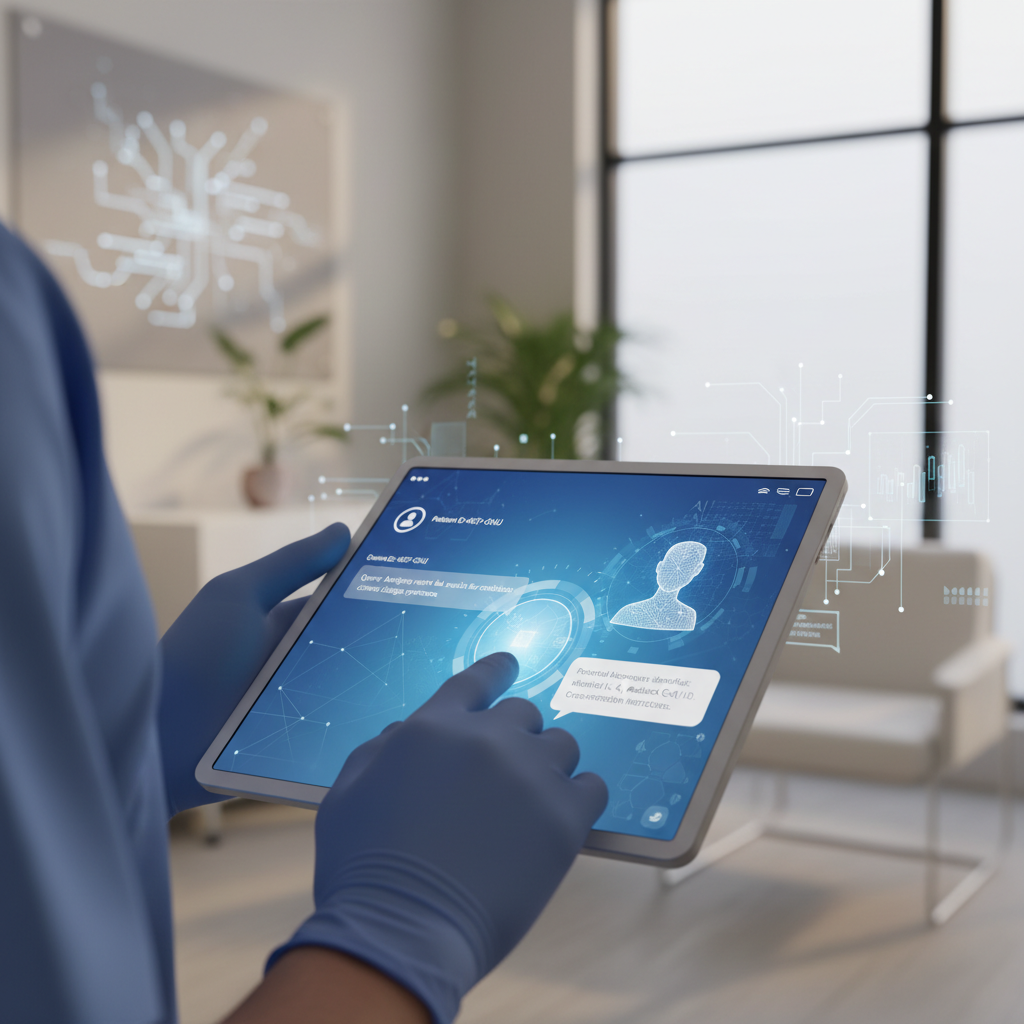
Exciting news is reverberating through the healthcare community as OpenAI announces a pivotal development: ChatGPT for Clinicians is now available for free to verified U.S. physicians, nurse practitioners, and pharmacists. This specialized version of their renowned AI chatbot is designed to be a powerful assistant, poised to revolutionize how medical professionals approach their daily tasks.
The move represents a significant stride towards integrating advanced artificial intelligence into the core functions of healthcare. By offering this tool without charge, OpenAI aims to foster broader adoption and gather critical feedback, ultimately enhancing clinical care, streamlining documentation, and supercharging research efforts across the nation.
In an era where healthcare professionals frequently grapple with immense administrative burdens and the constant demand for up-to-date information, solutions that enhance efficiency are not just beneficial, but essential. ChatGPT for Clinicians emerges as a promising resource, built to tackle these very challenges head-on.
Empowering Healthcare Professionals with AI
What exactly sets ChatGPT for Clinicians apart from the standard version? This tailored iteration is specifically fine-tuned with the unique needs and strict requirements of the medical field in mind. While retaining the core conversational capabilities of ChatGPT, it focuses on delivering information and assistance relevant to clinical practice.
It acts as an intelligent assistant, capable of rapidly processing vast amounts of medical knowledge and presenting it in an easily digestible format. This dedicated tool is engineered to support, not replace, the expert judgment of healthcare providers, ensuring that AI remains a valuable adjunct in patient care.
The objective is to equip clinicians with a resource that can help navigate the complexities of modern medicine more efficiently. Whether it’s finding quick answers to complex medical questions or drafting communications, this AI aims to free up precious time for patient interaction and critical decision-making.
Transforming Clinical Workflows: Use Cases
The application of ChatGPT for Clinicians spans three critical areas: direct clinical care, administrative documentation, and vital research activities. Each domain stands to benefit significantly from AI-driven assistance, promising a future of more streamlined and effective healthcare operations.
When it comes to clinical care, the AI can assist in a multitude of ways, from quickly recalling drug dosages and interactions to generating patient education materials in understandable language. It can also help clinicians explore differential diagnoses by summarizing relevant clinical guidelines and evidence-based practices, all within seconds.
Documentation, often cited as a major contributor to clinician burnout, is another area ripe for transformation. ChatGPT for Clinicians can help draft initial patient notes, summarize lengthy consultation reports, or even generate clear, concise referral letters, thereby significantly reducing administrative overhead and improving accuracy.
For those engaged in research, the AI can be an invaluable partner in navigating the ever-growing volume of scientific literature. It can assist in performing rapid literature reviews, synthesizing key findings from numerous studies, drafting grant proposals, or even brainstorming hypotheses for new research projects, accelerating discovery.
The Strategic Move: Why Free Access?
OpenAI’s decision to offer ChatGPT for Clinicians for free to verified professionals in the U.S. is a strategic one, designed to accelerate AI integration into healthcare. This initiative not only democratizes access to advanced AI but also encourages a broader user base to explore its potential and provide real-world feedback.
The verification process is crucial, ensuring that only qualified medical professionals gain access to this specialized tool. This approach underscores a commitment to responsible deployment, acknowledging the sensitivity and importance of medical data and practice.
By making this powerful resource accessible, OpenAI is fostering an environment of innovation and learning within the healthcare sector. It aims to demonstrate AI’s tangible benefits, paving the way for further development and refinement of AI tools specifically tailored for medical applications.
Looking Ahead: The Future of AI in Medicine
The introduction of free access to ChatGPT for Clinicians marks a significant milestone in the journey toward a more efficient and patient-centric healthcare system. This initiative has the potential to alleviate some of the pervasive challenges faced by medical professionals today, from information overload to administrative fatigue.
It reinforces the vision of AI as a powerful assistive technology, designed to augment human capabilities rather than replace them. The ultimate goal is to empower clinicians with advanced tools, enabling them to focus more on patient care and less on peripheral tasks, ultimately leading to improved health outcomes.
For verified U.S. physicians, nurse practitioners, and pharmacists, this is an exciting opportunity to explore the cutting edge of medical technology. We encourage eligible professionals to leverage this free resource and be part of shaping the future of AI in clinical practice.
Source: OpenAI Newsroom
