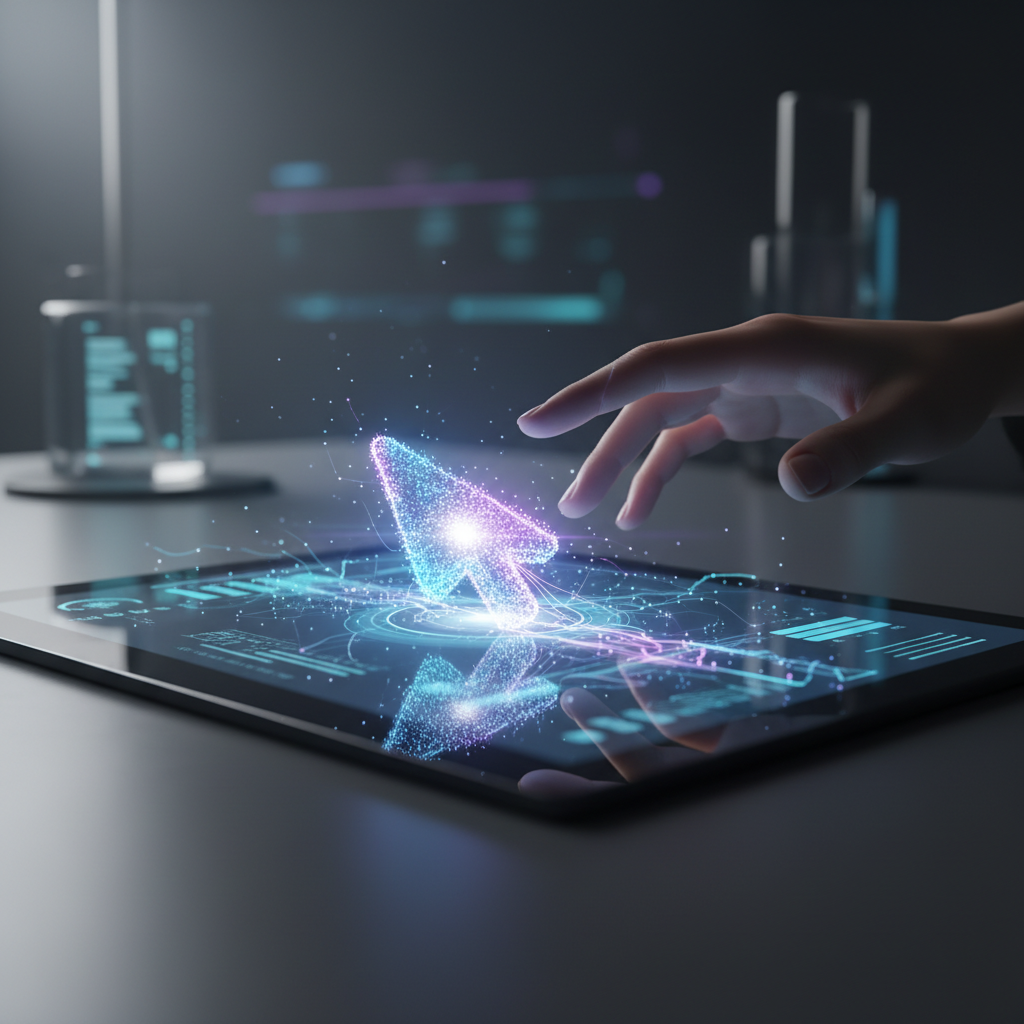
Get ready to rethink how you interact with your computer! Google DeepMind, a pioneer in artificial intelligence, is shaking up a fundamental aspect of our digital lives: the mouse pointer. Leveraging the immense capabilities of its Gemini AI, DeepMind has unveiled a groundbreaking system designed to make clicking and navigating far more intuitive and efficient than ever before.
This isn’t just about moving a cursor; it’s about an AI-powered co-pilot that anticipates your next move, effectively reinventing the traditional “click.” Imagine a world where your mouse pointer doesn’t just respond to your commands, but actively predicts your intentions, guiding itself to your desired target with astonishing accuracy. This futuristic vision is now becoming a reality, all thanks to the sophisticated intelligence of Gemini.
The Gemini AI’s Predictive Power
At the heart of this innovation is Google DeepMind’s Gemini AI, an advanced large language model known for its multimodal reasoning capabilities. Unlike conventional mouse interfaces that rely solely on direct user input, this new system constantly analyzes your behavior, context, and on-screen elements. It studies your gaze, past interactions, and the layout of the interface to predict where you intend to click next.
Think of it as having a highly intelligent assistant for your cursor. As you browse a webpage, compose an email, or work within an application, the AI subtly nudges the pointer towards likely targets. This predictive functionality significantly reduces the manual effort required for precise mouse movements, transforming a common interaction into a fluid and almost telepathic experience.
Redefining User Experience and Productivity
The implications of an AI-powered mouse pointer are vast, promising a paradigm shift in how we interact with digital interfaces. For everyday users, this means a smoother, faster, and less fatiguing computing experience. It could dramatically cut down the time spent hunting for small buttons or links, boosting overall productivity.
Beyond general usage, this technology holds immense potential for specific applications:
- Accessibility: For individuals with motor impairments, precise mouse control can be a significant challenge. This predictive system could offer a transformative solution, making computers far more accessible and easier to navigate.
- Gaming: While direct user control is paramount in many games, certain genres or tasks could benefit from AI assistance, reducing strain during repetitive actions or enabling quicker target acquisition.
- Professional Workflows: Designers, video editors, and data analysts who spend hours on intricate tasks could experience reduced hand and wrist strain, leading to improved comfort and sustained productivity.
- New Interaction Paradigms: This innovation paves the way for hybrid input methods, where AI augments traditional controls, potentially leading to more natural and intuitive ways of interacting with complex software.
The Future of Human-Computer Interaction
Google DeepMind’s AI mouse pointer is more than just a clever gimmick; it represents a significant step forward in the evolution of human-computer interaction. By offloading some of the cognitive and physical burden of pointing and clicking to artificial intelligence, we’re moving towards interfaces that are not just responsive, but truly intelligent and anticipatory. This could be a precursor to completely new forms of interaction, where computers understand our intent even before we fully articulate it.
This technology aligns with a broader trend of AI integrating more deeply into user interfaces, making technology more natural and less demanding. As AI models like Gemini continue to advance, we can expect even more sophisticated predictive capabilities, potentially leading to systems that learn individual user habits over time, providing a truly personalized and effortless digital experience. The days of solely commanding our cursors might soon be behind us, ushering in an era of intelligent, collaborative interaction.
Source: Google News – AI Search
