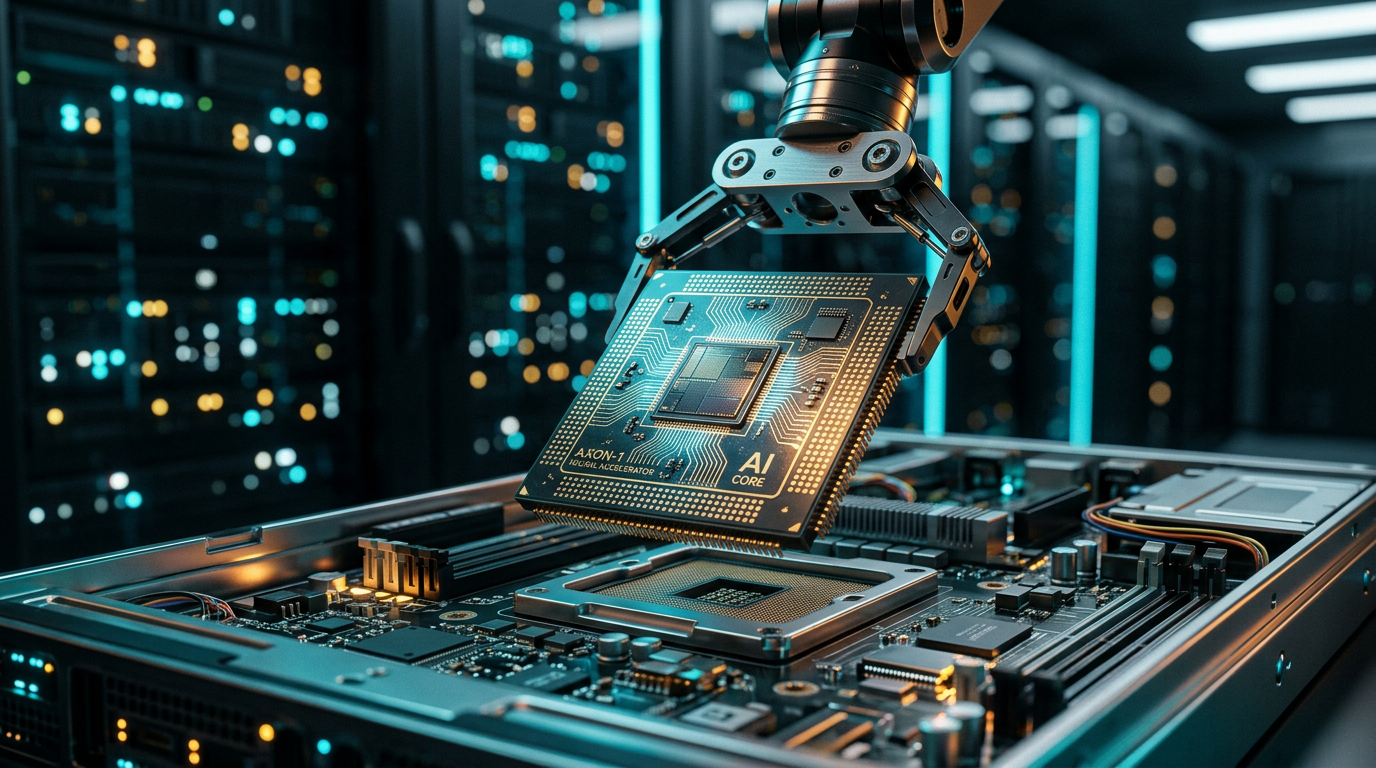
According to reports from Tekedia, Google is exploring a move into custom AI chip design with semiconductor firm Marvell, signaling a strategic push to reduce dependence on traditional GPU suppliers. This initiative would be another step in Google’s long-running effort to optimize its infrastructure for generative AI and large-scale model workloads. The reported talks reflect broader industry pressure to diversify hardware sources as demand for AI compute continues to explode.
If realized, the collaboration would combine Google’s software and AI expertise with Marvell’s chip-design and datacenter connectivity experience. Both companies have incentives to speed development: Google to improve cost and performance for its cloud and AI services, and Marvell to expand beyond its core networking and storage markets. Observers view the move as a direct challenge to the longstanding dominance of Nvidia in datacenter AI accelerators.
Why Google Is Betting on Custom Chips
There are several reasons Google might prefer custom silicon over off-the-shelf GPUs. Custom chips can be tuned for specific model architectures to deliver better performance per watt, lower latency, and potentially lower total cost of ownership at the scale Google operates. This vertical integration also helps control supply chain and feature roadmaps.
Google already has experience with in-house hardware, having developed its Tensor Processing Units (TPUs) for years to run machine learning workloads internally and in Google Cloud. Those chips gave Google an edge for both training and inference tasks, and a renewed push would build on that foundation. Custom designs allow Google to introduce unique capabilities that general-purpose GPUs may not offer.
Key potential advantages include:
- Performance tuning: Hardware optimized for specific models can increase throughput and energy efficiency.
- Cost control: Reducing reliance on third-party GPUs may lower procurement and operational expenses over time.
- Supply diversification: Working with multiple vendors reduces exposure to supply shocks and single-vendor lock-in.
What Marvell Brings to the Table
Marvell is known for high-performance networking silicon, storage adapters, and custom SoC work for datacenter customers, making it a sensible partner for a cloud-scale AI project. The company has expertise in integrating compute, networking and I/O capabilities that matter when training large models across many servers. That systems-level know-how could help Google build chips that are optimized not only for raw compute but for real-world datacenter deployment.
Marvell’s business model often centers on bespoke designs and long-term partnerships with cloud providers and enterprise customers. This background means Marvell can potentially adapt its architectures to Google’s exact needs and manufacturing pathways. If the reported discussions are accurate, Marvell could either design the silicon or provide key components and IP to accelerate Google’s efforts.
For Marvell, partnering with Google would be a major win that elevates the company’s profile in AI infrastructure. It would also represent an opportunity to scale manufacturing and secure ongoing revenue from cloud deployments. Strong adoption by Google could influence other hyperscalers and enterprises to consider Marvell-based alternatives.
Broader Industry Implications
A serious Google–Marvell effort would send ripples across the AI hardware market, intensifying competition with Nvidia and increasing momentum for custom accelerators. Nvidia’s GPUs currently lead in performance, software ecosystem, and developer familiarity, but the landscape is shifting as cloud operators and large tech firms seek tailored solutions. More custom designs could fragment the market but also spur innovation and drive down costs.
Other hyperscalers have pursued similar strategies: Amazon has invested in Graviton CPUs and Trainium/Inferentia accelerators, and Meta and Microsoft have explored custom silicon and partnerships to optimize their stacks. A new Google–Marvell platform would join this trend, giving customers additional hardware choices in the cloud. Increased competition typically accelerates improvements across price, power efficiency, and architecture diversity.
Still, ecosystem considerations matter. Software libraries, tooling, and developer support are crucial for adoption, and Nvidia’s CUDA ecosystem remains a high barrier to entry. Any new hardware must deliver not only raw performance but also an accessible software stack to win broad market share.
Challenges and Timeline
Designing and deploying custom chips is complex and time-consuming, with risks that include engineering delays, manufacturing bottlenecks, and software integration challenges. Moving from early design to datacenter-scale deployment can take years and requires close coordination with foundries and system integrators. Companies that underestimate these hurdles can see costs and timelines balloon.
Reports suggest the talks are exploratory rather than finalized, meaning timelines are uncertain and there is no guarantee of a commercial product. If Google and Marvell reach an agreement, expect multi-year development cycles followed by phased rollouts in Google’s internal datacenters and cloud offerings. The ultimate impact will depend on performance, cost, and how quickly the software ecosystem adapts.
In short, a Google–Marvell partnership would be an important signal that major cloud providers are accelerating efforts to diversify away from GPU-centric AI stacks. Whether it ultimately narrows Nvidia’s lead will depend on engineering execution, ecosystem support, and how fast the market embraces new hardware models. For now, the move is another clear indicator of how competitive and strategic the AI hardware race has become.
Source: Google News – AI Search
