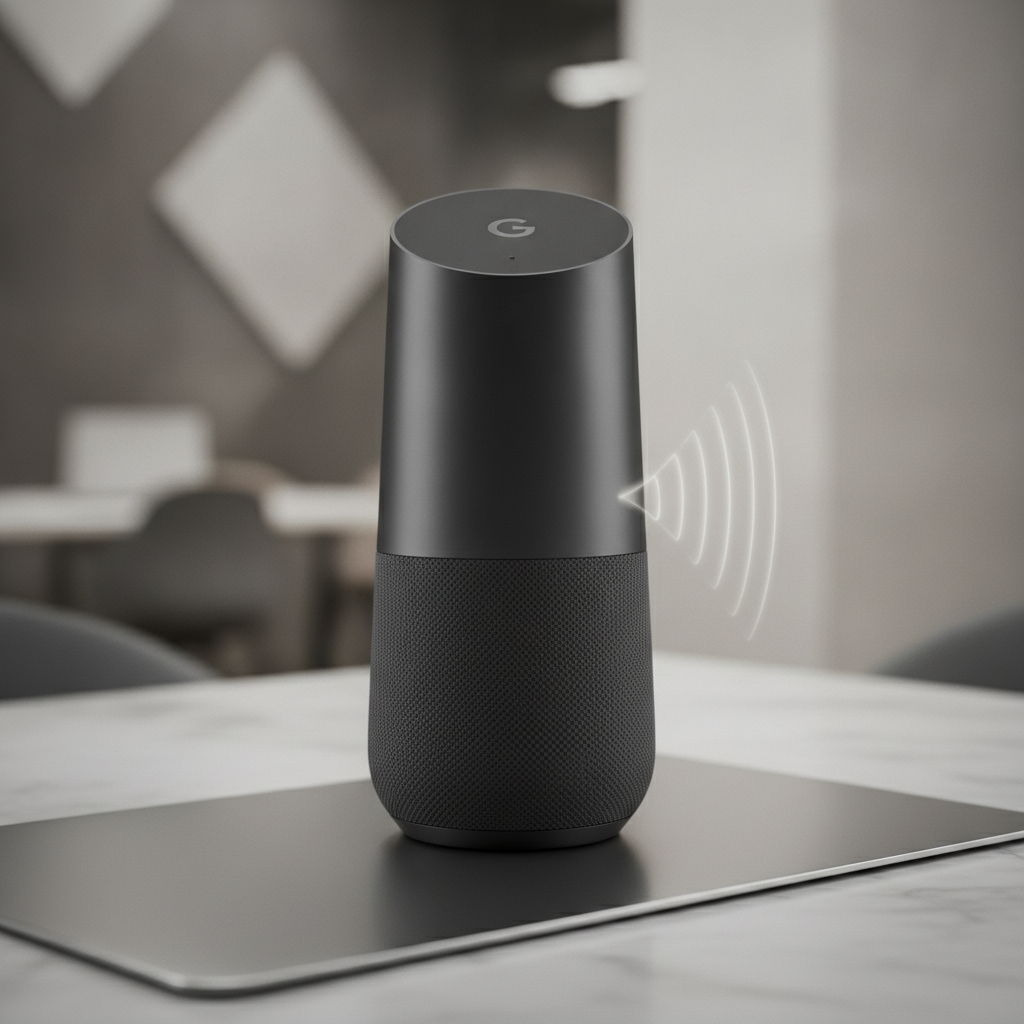
When the original Google Home Speaker first arrived on the scene, it wasn’t just another gadget; it was a statement. This sleek device represented Google’s ambitious leap into the burgeoning world of smart home technology, promising to bring the power of its AI-driven Assistant right into our living rooms. It aimed to be the central brain for a connected home, answering queries, playing music, and controlling smart devices with just your voice. However, as many quickly discovered, while it excelled as an AI hub, its primary function as a speaker sometimes felt like an afterthought.
The Dawn of Smart Living
From an aesthetic perspective, the Google Home Speaker was a breath of fresh air. Its minimalist design, featuring a smooth, matte white plastic top and a customizable fabric base, allowed it to blend seamlessly into almost any home decor. Unlike some more industrial-looking tech, this speaker felt like a piece of furniture, designed to be seen but not to shout for attention.
Interaction with the device primarily happens through voice commands, making the physical controls secondary. Still, a touch-sensitive top panel provided intuitive controls for adjusting volume, playing or pausing music, and manually activating the Google Assistant. This thoughtful design ensured that whether you preferred talking or touching, your experience remained straightforward and user-friendly.
Your Personal AI Companion: Google Assistant
Where the Google Home truly shone was in its integration with the Google Assistant, transforming it into a remarkably intelligent digital companion. With a simple “Hey Google,” you could ask it virtually anything: from current weather forecasts and news headlines to complex calculations and language translations. Its ability to understand natural language and provide relevant, conversational responses made everyday tasks feel effortless and futuristic.
Beyond answering questions, the Google Home Speaker became the command center for a growing ecosystem of smart home devices. It effortlessly connected with popular brands like Philips Hue, Nest, and countless others, allowing users to control their lights, thermostats, and door locks with simple voice commands. This seamless integration positioned it as an indispensable tool for anyone building a connected living space.
Of course, music playback was also a core feature, offering compatibility with major streaming services such as Spotify, YouTube Music, Pandora, and more. Users could request specific songs, artists, or genres, and the speaker would dutifully oblige. This convenience, however, led many to critically evaluate its sound capabilities, often finding them to be a mixed bag.
The Sound Story: An Acoustic Compromise?
This brings us to the elephant in the room: the audio performance. The original Google Home Speaker garnered a reputation for being an AI powerhouse that, in some ways, “forgot it was supposed to be a speaker.” While it delivered clear vocals and handled midrange frequencies adequately for podcasts and voice responses, the overall sound profile lacked the depth and richness audiophiles crave.
Its single, upward-firing driver combined with dual passive radiators simply couldn’t produce the robust bass or expansive soundstage found in dedicated audio speakers. For casual listening or background music, it was perfectly acceptable, but if you were hoping for a device to power your next house party or truly immerse you in your favorite tunes, you might find it falling short. It prioritizes clarity for speech and ambient audio over high-fidelity music reproduction.
Connectivity options were robust, featuring both Wi-Fi and Bluetooth, ensuring versatility in how you streamed audio. The Wi-Fi connection was particularly crucial for its smart capabilities and seamless multi-room audio functionality. If you owned multiple Google Home or Nest speakers, you could easily group them together for synchronized playback throughout your home, a feature that significantly enhanced its utility.
Is the Google Home Speaker Right for You?
So, who is the original Google Home Speaker for? It’s undeniably a fantastic device for anyone deeply embedded in the Google ecosystem or looking for a powerful, intuitive smart home hub. Its Google Assistant integration is truly top-tier, making everyday life more convenient and connecting various smart devices with remarkable ease.
However, if your primary goal is to find a speaker for serious music listening, you might need to manage your expectations or consider alternatives. The Google Home excels as an AI-driven smart assistant and a central controller for your connected home, offering unparalleled convenience and intelligence. While its audio performance is competent for background listening and spoken word, it ultimately shines brightest as a gateway to smart living rather than an audiophile’s dream device.
Source: Google News – AI Search
