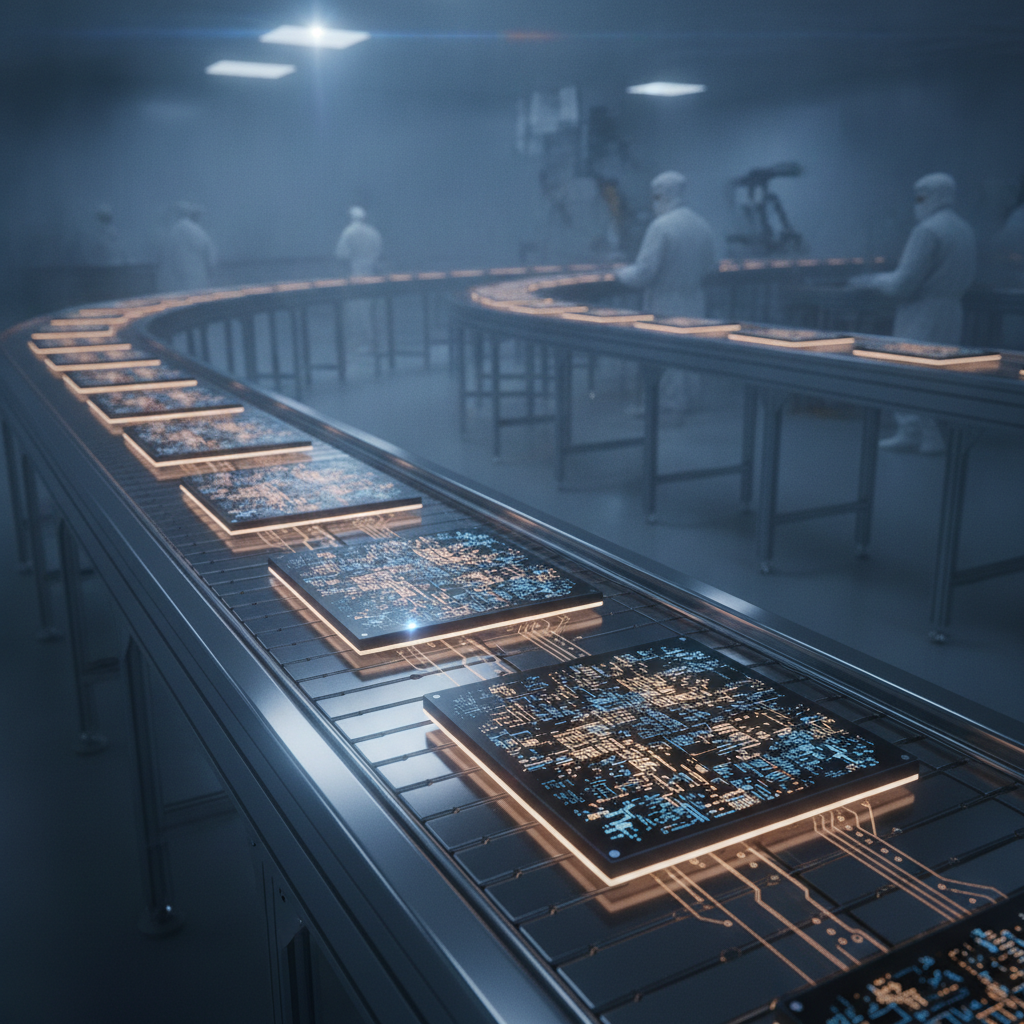
In a significant development reshaping the landscape of AI chip manufacturing, search giant Google has reportedly placed a massive order for 3 million Tensor Processing Units (TPUs) with Intel. This strategic move marks a substantial shift from Google’s traditional reliance on Taiwan Semiconductor Manufacturing Company (TSMC) for its custom silicon. The decision underscores the immense pressure on leading-edge foundries and the intensifying global competition for AI hardware resources.
Google’s TPUs are custom-designed Application-Specific Integrated Circuits (ASICs) specifically optimized to accelerate machine learning workloads. These powerful chips are the backbone of Google’s AI infrastructure, powering everything from its search algorithms and Translate services to its Google Cloud AI platform. This colossal order with Intel signifies a clear intent from Google to diversify its chip supply chain, ensuring robust capacity for its expanding AI ambitions.
The Strategic Shift in AI Chip Manufacturing
For years, Google has been a key client for TSMC, entrusting the Taiwanese foundry with the production of its custom silicon, including generations of TPUs and its Google Tensor chips for Pixel smartphones. This new partnership with Intel represents a pivotal moment, signaling a strategic realignment in Google’s manufacturing strategy. It highlights the growing importance of securing diverse production capabilities in an era of unprecedented demand for specialized AI hardware.
The decision to onboard Intel for such a large volume of critical AI accelerators is a testament to Intel’s evolving capabilities and Google’s proactive approach to supply chain resilience. While the exact process node Intel will use for these TPUs remains undisclosed, this collaboration could involve various aspects of Intel’s manufacturing prowess. This could range from advanced packaging solutions to specific fabrication processes, leveraging Intel’s extensive global foundry network.
TSMC’s Capacity Crunch and Surging AI Demand
The primary driver behind Google’s diversification appears to be the well-documented strain on TSMC’s manufacturing capacity. TSMC, as the world’s leading pure-play semiconductor foundry, is currently stretched thin trying to meet the insatiable global demand for advanced chips. The explosive growth of AI has led to an unprecedented rush for cutting-edge silicon, with companies like Nvidia, AMD, and various hyperscalers all vying for TSMC’s most advanced process nodes.
This intense competition has created bottlenecks, making it challenging for even major clients like Google to secure the vast quantities of chips they need on their preferred timelines. The high demand for GPUs and other AI accelerators has placed immense pressure on foundry lead times and pricing. Consequently, companies are increasingly exploring alternative manufacturing partners to mitigate risks and ensure uninterrupted supply for their critical technologies.
Intel Foundry Services Steps Up to the Plate
This massive Google order represents a monumental win for Intel Foundry Services (IFS), Intel’s dedicated business unit aimed at manufacturing chips for external clients. Under CEO Pat Gelsinger, Intel has aggressively pursued a strategy to become a major player in the global foundry market, directly competing with industry titans like TSMC and Samsung Foundry. This Google deal provides significant validation for Intel’s ambitious foundry roadmap and its ongoing investments in advanced manufacturing technologies.
The contract for 3 million TPUs injects substantial revenue into IFS and demonstrates Intel’s capability to handle high-volume, advanced manufacturing for a premier tech client. It underscores Intel’s renewed commitment to leveraging its extensive manufacturing facilities and expertise to serve a broader customer base. This partnership not only strengthens Intel’s position in the foundry space but also signals its increasing relevance in the rapidly expanding AI chip ecosystem.
Implications for the AI Semiconductor Landscape
Google’s move to Intel for its TPUs holds significant implications for the broader semiconductor industry. It highlights a growing trend among tech giants to diversify their supply chains, reducing dependence on any single foundry, even one as dominant as TSMC. This diversification is becoming a critical strategic imperative in an era defined by geopolitical uncertainties and volatile supply chain dynamics.
Furthermore, this collaboration underscores the intensifying competition in the AI hardware market, where custom silicon is increasingly vital for achieving performance and efficiency advantages. As more companies develop their own specialized AI chips, the demand for advanced foundry services will only continue to surge. Intel’s resurgence as a major foundry player offers crucial capacity and a competitive alternative, fostering a more robust and resilient global semiconductor ecosystem for the future of AI.
Source: Google News – AI Search
