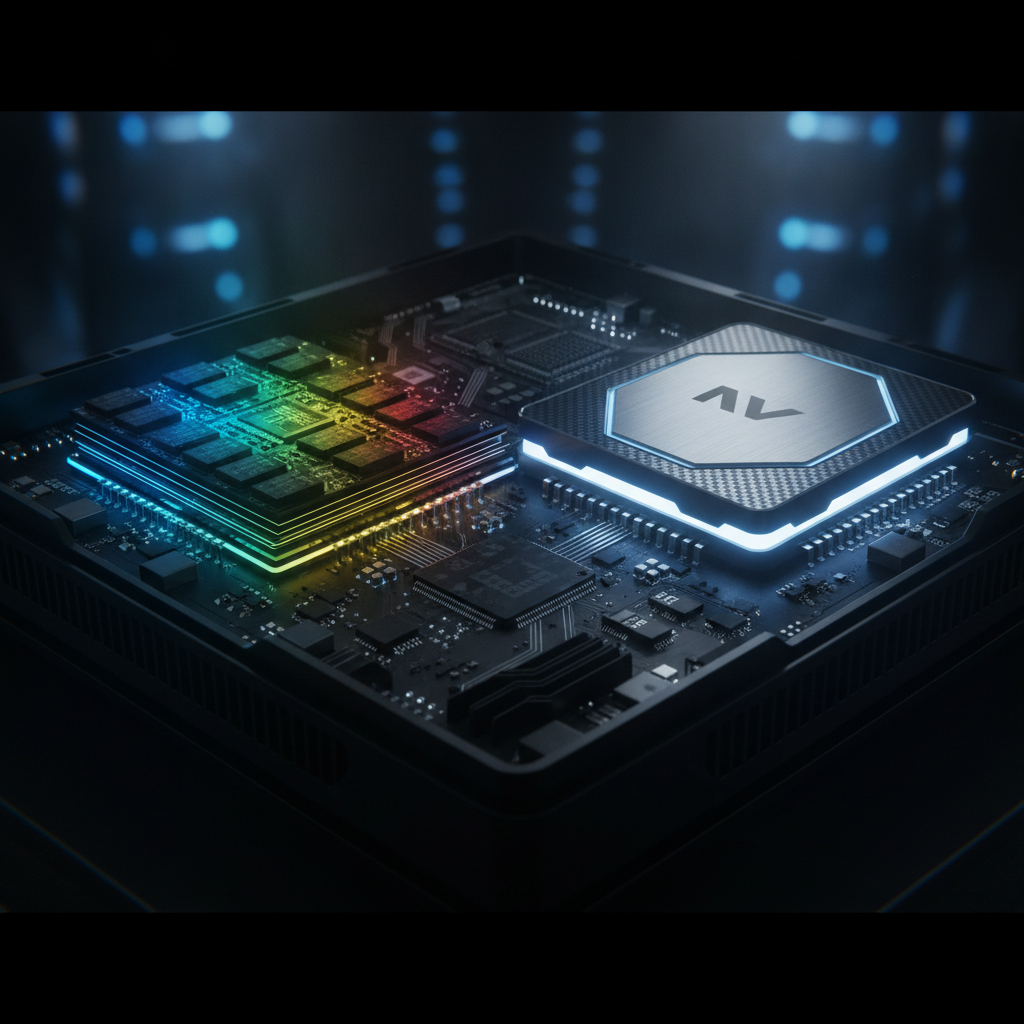
Google is making a bold move in the fiercely competitive world of artificial intelligence hardware. Recent reports indicate the tech giant is actively engaging with existing Nvidia customers, aiming to sway them towards its proprietary Tensor Processing Units, or TPUs. This aggressive sales push marks a significant escalation in the ongoing “AI chip wars” and signals a potential reshaping of the market landscape.
For years, Nvidia has stood as the undisputed heavyweight champion in AI computing. Its powerful Graphics Processing Units (GPUs), particularly the H100 and A100 models, have become the de facto standard for training and deploying complex AI models across countless industries. This dominance has cemented Nvidia’s position as a critical infrastructure provider for the global AI boom.
However, the insatiable demand for AI processing power, coupled with the immense costs and supply chain challenges associated with top-tier GPUs, has opened the door for challengers. Companies are constantly seeking more efficient, cost-effective, and specialized hardware solutions to fuel their AI ambitions. This burgeoning need provides the perfect opportunity for Google to flex its own silicon muscle.
The AI Chip Wars Intensify
Google’s strategy isn’t entirely new; they’ve been developing TPUs for nearly a decade, initially for their own internal AI workloads like search and Google Photos. Now, they’re extending this battle-tested technology directly to external clients through Google Cloud. This shift from internal utility to aggressive external market engagement signals a serious intent to capture a larger slice of the lucrative AI hardware pie.
Tensor Processing Units are custom-designed Application-Specific Integrated Circuits (ASICs) meticulously engineered for machine learning tasks. Unlike general-purpose GPUs, TPUs are optimized for the specific matrix multiplications and convolutions that lie at the heart of deep learning algorithms. This specialization often translates to superior performance and energy efficiency for certain AI workloads.
The core of Google’s pitch to Nvidia customers likely centers on these very advantages. They’re emphasizing the cost-effectiveness and performance benefits that TPUs can offer, particularly for large-scale AI training and inference. Imagine a significant reduction in operational expenditure for massive AI projects – that’s a compelling argument for any enterprise.
Beyond Raw Power: Ecosystem and Efficiency
Beyond raw performance metrics, Google also leverages its comprehensive cloud ecosystem. Integrating TPUs seamlessly within Google Cloud provides developers with a unified platform for data storage, processing, and AI model deployment. This end-to-end solution can streamline workflows and potentially reduce complexity compared to managing disparate hardware and software stacks.
Google is likely targeting businesses heavily invested in specific deep learning applications, such as natural language processing, computer vision, and recommendation systems. These are areas where the specialized architecture of TPUs can truly shine. By offering a compelling alternative, Google aims to disrupt the status quo and foster broader adoption of its custom AI silicon.
What This Means for the Future of AI
This direct challenge to Nvidia has profound implications for the entire AI hardware market. It could spur further innovation from both major players, leading to even more advanced and efficient AI chips in the years to come. The increased competition is generally a positive development for consumers, promising more choices and potentially lower costs for AI infrastructure.
For developers and businesses, this means more options when deciding on their foundational AI infrastructure. Cloud providers will also need to adjust their strategies, ensuring they offer competitive AI hardware options. The era of a single dominant AI chip provider might be drawing to a close, ushering in a more diverse and dynamic landscape.
Ultimately, Google’s aggressive TPU sales effort isn’t just about selling more hardware; it’s about solidifying its position as a holistic AI solutions provider. By offering compelling alternatives to Nvidia’s industry-standard GPUs, Google is making a strong play for the future of AI computing, one where specialized silicon plays an increasingly vital role. The AI chip wars have indeed entered a fascinating new phase.
Source: Google News – AI Search
