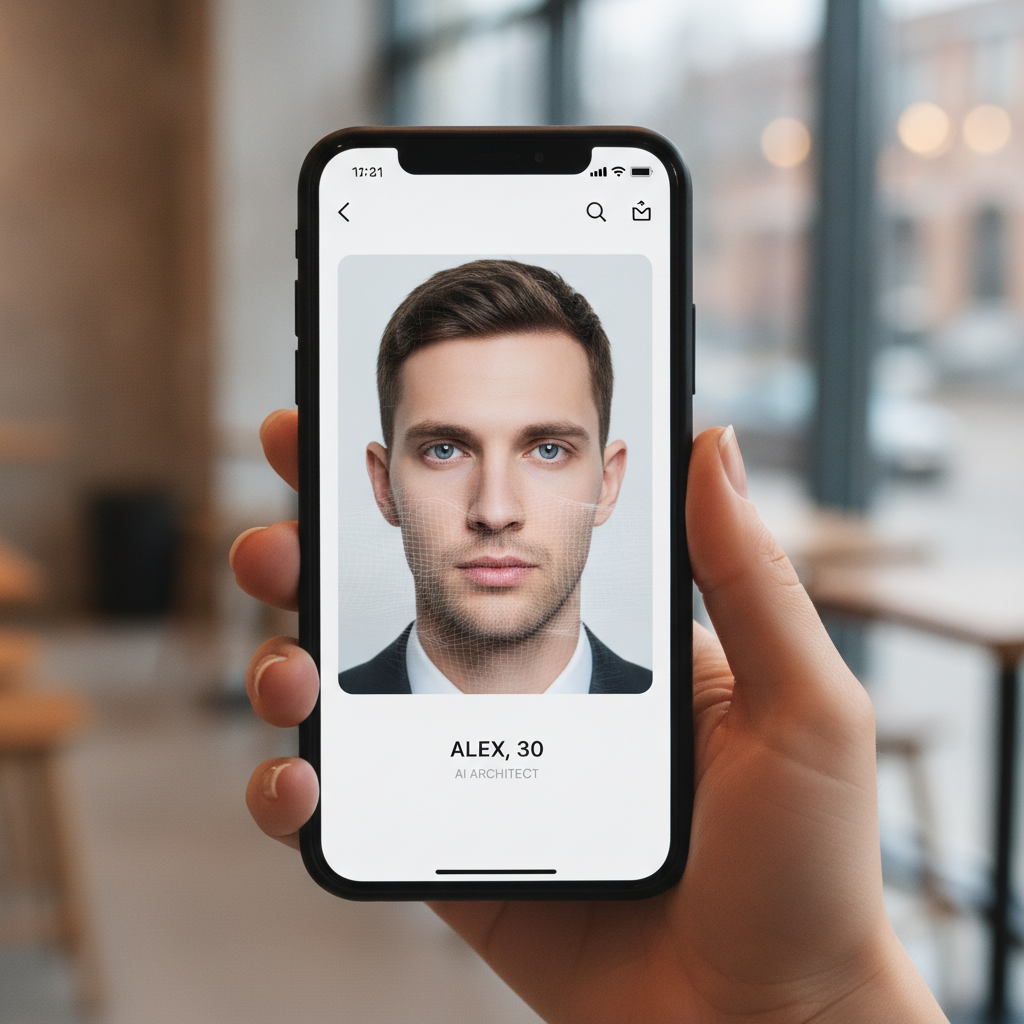
Imagine scrolling through Instagram, a friendly face beaming from a “Close Friends” story, inviting you to an exclusive new community. For many gay men recently, this scenario played out with an invite to Goose, a new dating and friendship app. The catch? That perfectly affable face might not belong to a real person at all.
The app, positioning itself as a fresh alternative to traditional platforms like Grindr, launched to significant buzz, quickly climbing app store charts. However, a closer look at its promotional tactics reveals a sophisticated network of seemingly AI-generated influencers, raising questions about authenticity and ethical marketing.
The Digital Mirage: Unmasking AI Influencers
Accounts like @miles.sumrall and @danielmmulugeta, featuring handsome, curly-haired men, shared identical “Close Friends” stories. Their captions enthusiastically invited users to a “members-only community” with an invite code for Goose. Yet, both profiles, created in May 2026, displayed typical markers of inauthentic accounts, including few posts and unusual follower ratios.
Software analysis from AI Image Detector revealed a greater than 90 percent confidence that their Instagram avatars were AI-generated. Further checks using Google Gemini’s SynthID technology confirmed that “most or all” of these profile photos were indeed created using Google AI. This pattern extends beyond just two accounts, pointing to a much larger, coordinated network.
Users like Ryan Cheam were approached by accounts such as @alistaircrombbie, whose seemingly legitimate bio belied an AI-generated profile photo. Alistair’s direct message, inviting Cheam to a “curated network of guys” on Goose, mirrored messages received by others. In total, more than two dozen similar accounts, all created around May or June 2026 with minimal posts, have been identified as part of this campaign.
These influencers employ varied tactics, from adding potential members to “Close Friends” stories to sending direct messages with identical, persuasive language. Dalton Bauer, another marketing professional, received three such DMs in a single week, all from brand-new accounts like @lucalepkowski. Bauer found the repetition “shady and deceiving,” highlighting a growing concern among the app’s target audience.
Behind the Scenes: Goose’s Strategy and Legal Questions
Goose was co-founded by model-influencer Derek Chadwick and former BeReal growth manager David Aliagas. Despite initial skepticism from some quarters about its stated goal of fostering lasting relationships, the app soared to #4 in the App Store’s free lifestyle downloads category upon its launch, currently holding the 33rd spot globally. This rapid ascent was undoubtedly fueled, in part, by the extensive promotional efforts of these digital personalities.
While Goose representatives have not commented on these findings, co-founder David Aliagas’s Instagram Stories offer a glimpse into the app’s ambitious marketing strategy. Aliagas previously posted calls for “ambassadors” to manage various unspecified social media accounts, offering $1,800 to $2,100 per month for a commitment of three months. He even mentioned “buying finstas [fake Instagram accounts] for $100,” indicating a clear intent to build out a robust, if opaque, social media presence.
Such practices, while perhaps effective in driving initial interest, tread into legally precarious territory. Rob Freund, an advertising and ecommerce attorney, points out that using AI to create fake accounts that promote a product is “very obviously unlawful under FTC guidelines.” These guidelines strictly prohibit deceptive advertising, especially when brands impersonate real individuals or create fake user accounts to generate sales.
Ethical Dilemmas and Regulatory Challenges
The issue extends beyond just Goose; the use of AI-generated influencers by brands is increasingly common, with some estimates suggesting 40 percent to 60 percent of major brand content might be artificially generated. However, the lack of disclosure remains a significant problem. New York has even enacted a law requiring advertisers to disclose AI-generated content, with an initial $1,000 fine for non-compliance.
Meta, Instagram’s parent company, technically requires users to label AI-generated content and pledges to remove misidentified posts. However, the private nature of these specific campaigns—conducted through direct messages and “Close Friends” stories—makes them inherently difficult for platforms to regulate effectively. This often allows incorrectly labeled or unlabeled AI content to slip through, misleading users into believing they are interacting with real people.
For users like Ryan Cheam, the experience is a mixed bag. “On one hand I’m flattered that I’m their target audience,” he admits, “But the need to essentially bait gay guys into signing up feels really sketchy.” This sentiment highlights the tension between innovative marketing and the growing demand for transparency in our increasingly digital lives.
Source: Wired – AI
