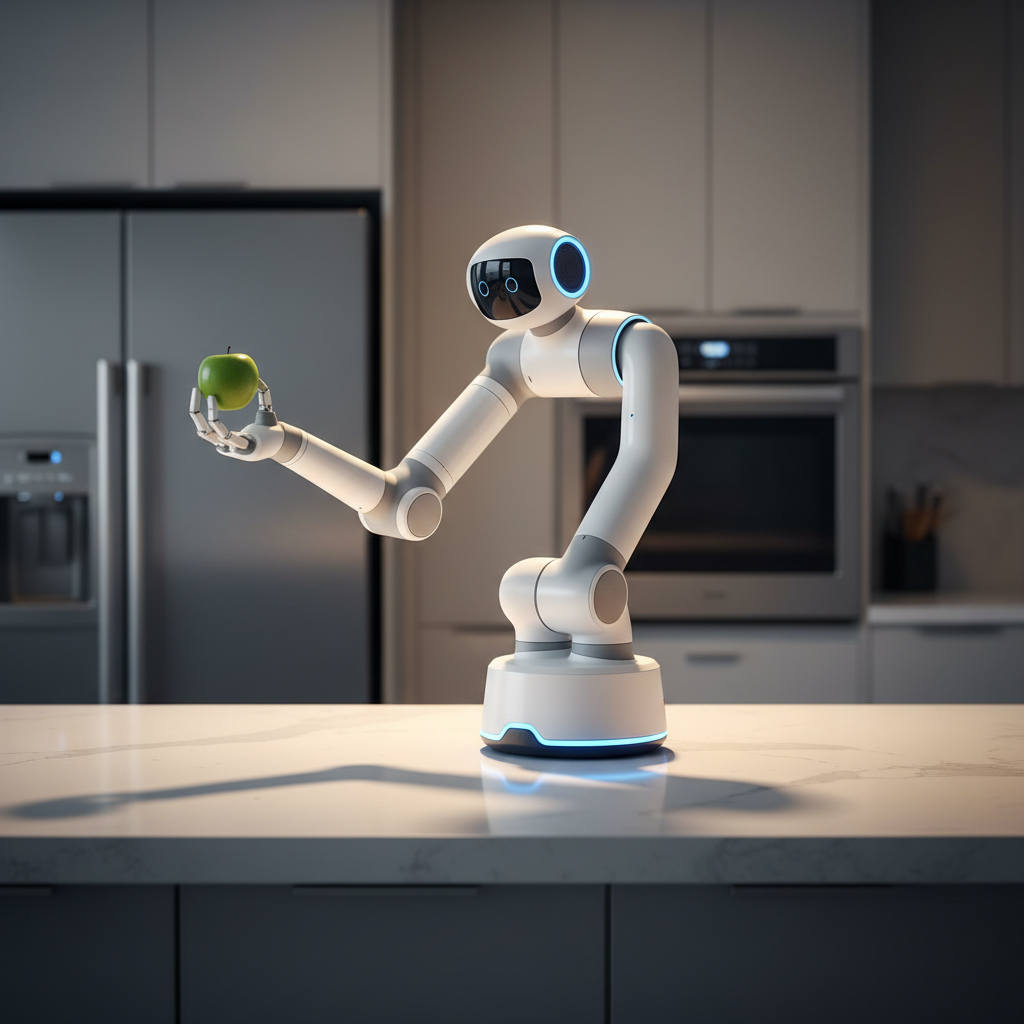
While much of Silicon Valley chases grand, often futuristic, promises for robotics, one startup is taking a refreshingly practical approach. Hello Robot, nestled in Martinez, California—a quaint city far removed from the tech hub’s frenetic pace—is quietly revolutionizing how robots enter our homes. They’re not promising to replace every human job, but rather to make a tangible difference in everyday life.
Last month, Hello Robot unveiled the fourth iteration of its home assistance robot, affectionately named **Stretch**. This isn’t your typical humanoid robot with a sleek, human-like form; instead, Stretch sports a distinctly functional design. It features a vaguely human torso, a sensor-studded head, a versatile telescoping arm with pinchers, and rides on a robust, omnidirectional wheeled base.
Meet Stretch: A Robot Built for Real Homes
Founded in 2017 by CEO Aaron Edsinger, a former robotics director at Google, and CTO Charlie Kemp, a Georgia Institute of Technology professor, Hello Robot’s mission stands apart. Unlike many rivals developing advanced AI models in labs, Hello Robot is focused on getting robots into **real homes with real people**. This hands-on approach is crucial for gathering invaluable training data that simulated environments simply can’t replicate.
The importance of real-world deployment cannot be overstated, especially in the rapidly evolving field of AI and robotics. As Bullhound Capital recently noted, “In robotics, the moat isn’t just IP, but accumulated operating hours under real-world liability.” Companies that deploy early gain site-specific insights and workflow tolerances that are impossible to buy or synthesize, giving them a significant competitive edge.
Empowering Independence: Stretch in Action
One of Stretch’s most compelling success stories comes from Keith Platt, a Georgia investor and Hello Robot board member, who became quadriplegic in 2021. Platt, who controls only parts of his shoulders, neck, and head, began exploring adaptive technology and found a partner in Stretch. With the support of an occupational therapist on the Hello Robot team, he has integrated Stretch into his daily life.
Platt operates his Stretch using a voice-controlled iPhone app, directing it to autonomously navigate his home or taking direct control for precise tasks. A seemingly simple goal, like preparing his morning protein shake, once required human assistance but is now a triumph of independence. What initially took almost two hours of independent effort has been refined to just a few minutes, allowing him to enjoy his shake and tidy up on his own.
Regaining independence for tasks like putting on glasses or brushing his teeth is “huge,” not only for Platt but also for his loved ones. He envisions a future where robotic assistants like Stretch enable individuals with mobility challenges to safely spend a day at home alone. This newfound freedom could allow family members to pursue work or personal errands without the constant need for professional caregivers, offering life-changing benefits to countless families.
Overcoming Robotic Challenges with Practicality
While significant investment pours into developing advanced AI brains for robots, the physical hardware itself often lags. Current robotic bodies can be heavy and demand substantial energy for active balancing, making them prone to causing damage if they malfunction. This vulnerability was highlighted in a lawsuit against another startup, The Bot Company, whose robot allegedly damaged an Airbnb rental during development.
Mahi Shafiullah, a postdoc researcher at UC Berkeley who previously used Stretch 3 for his PhD research at NYU, echoes these concerns. He recalls industrial robots in his lab accidentally damaging simple objects they were meant to handle delicately. Shafiullah’s work with Stretch, in contrast, earned a best demonstration prize at last year’s Computer Vision And Pattern Recognition (CVPR) conference, showcasing its practical reliability.
Hello Robot’s cautious and caring design philosophy sets it apart, prioritizing safety and real-world interaction. They focus on designing Stretch to function effectively around people first, then incrementally integrate more sophisticated capabilities within those carefully considered limitations. This approach contrasts sharply with companies aiming for fully autonomous humanoids that may still struggle with basic real-world interactions.
Accessibility, Affordability, and the Future of Home Robotics
Stretch 4 is priced at a relatively affordable **$30,000**, especially when considering it includes sensors and software that are often extra costs from other manufacturers. Hello Robot plans to manufacture 200 to 300 units at its Martinez headquarters, with the initial run already completely sold out. This demand underscores the market’s readiness for practical, deployable robotic solutions.
Crucially, Hello Robot is committed to keeping Stretch accessible to researchers and developers, even on tighter budgets. A key design criterion is that Stretch must be shippable in a standard cardboard box via carriers like UPS or DHL. Avoiding specialized wooden crates and dedicated installation teams significantly reduces costs and broadens accessibility, fostering a wider community of innovation.
Hello Robot’s diverse customer base includes researchers pushing the boundaries of AI, enterprise clients testing Stretch in environments like data centers, and those developing critical in-home aides for people with disabilities. With its robust sensor suite, practical physical capabilities, and safe operations, Stretch is well-positioned to collect the invaluable data needed for the next generation of physical AI. Hello Robot’s iterative development, constantly learning from real-world deployment, promises to drive down prices and enhance capabilities, bringing us closer to a future of seamless robot-human collaboration at home.
Source: TechCrunch – AI
