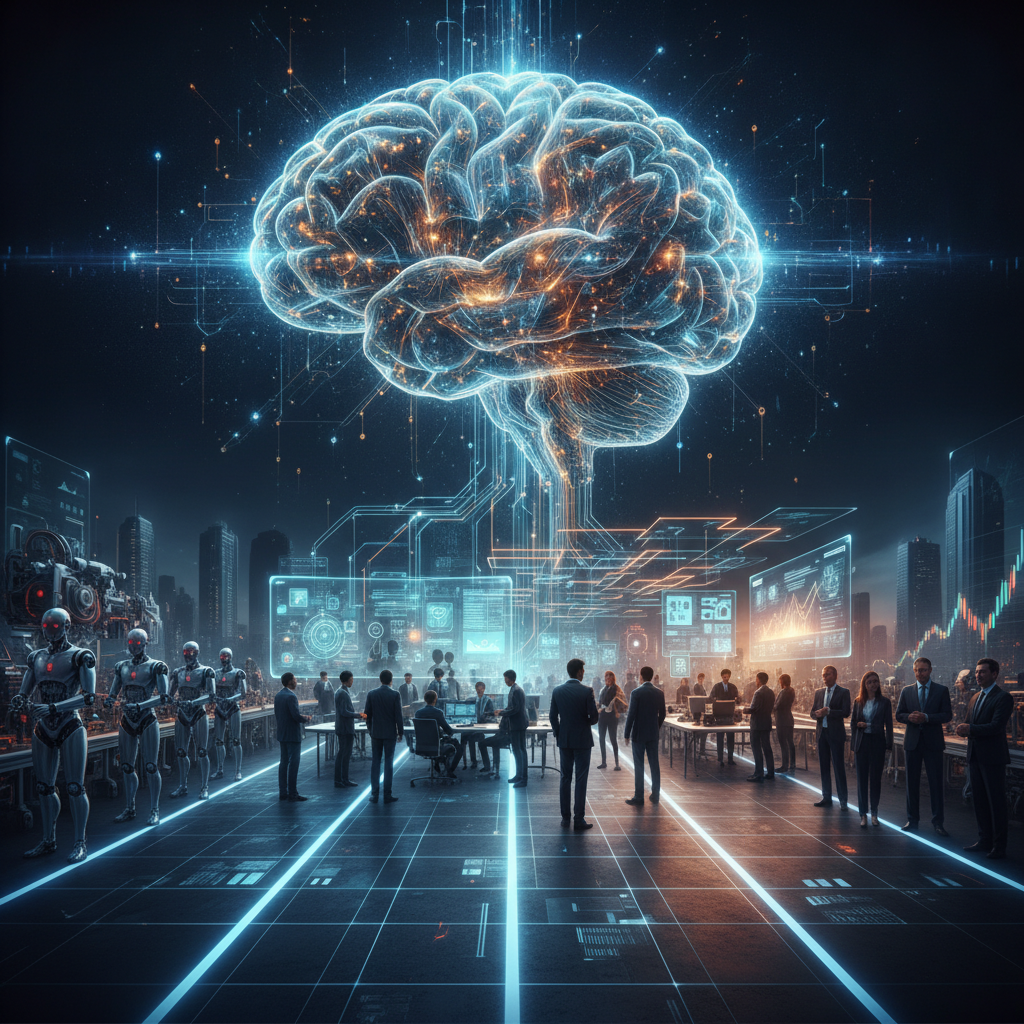
The rise of artificial intelligence isn’t just a technological marvel; it’s a seismic shift poised to fundamentally reshape the global job market. For years, experts have speculated about which jobs AI will impact and how, often leading to a mix of excitement and anxiety. Now, a groundbreaking new framework offers a much clearer, data-driven perspective on this complex transition.
This extensive analysis goes beyond broad generalizations, meticulously examining 921 distinct occupations and a staggering 148 million U.S. jobs. It provides crucial insights into the specific pathways AI will forge: whether roles face automation risk, require significant reorganization, are poised for growth, or will experience minimal disruption. Understanding these dynamics is vital for workers, educators, and policymakers alike.
Deconstructing AI’s Impact: The Framework’s Approach
Instead of merely labeling entire job titles, this innovative framework employs a granular, task-based approach to assess AI’s influence. Researchers dissected each occupation into its constituent tasks, then evaluated the potential for AI to automate, augment, or render those tasks obsolete. This detailed methodology allows for a far more nuanced understanding of AI’s precise impact on the daily work of millions.
The framework considers several critical factors for each task, including cognitive complexity, manual dexterity requirements, the need for human interaction, and the potential for data-driven optimization. By aggregating these task-level assessments, it categorizes occupations into one of four distinct transition pathways. This scientific approach helps us move beyond speculation to anticipate and prepare for the future of work.
Four Pathways for AI’s Job Transition
The study identifies four primary categories into which occupations are likely to fall as AI integration accelerates. These pathways highlight the diverse ways AI will interact with human labor, from outright task automation to creating entirely new roles.
-
Automation Risk
Occupations in this category are characterized by tasks that are highly repetitive, data-intensive, and follow predictable rules. Think of roles heavily reliant on routine data entry, standardized administrative processing, or predictable manufacturing assembly lines. These jobs face a high automation risk, as AI algorithms and robotics can often perform these tasks faster, more accurately, and at a lower cost.
While this doesn’t always mean complete job elimination, it often implies a significant reduction in human involvement. Workers in these areas will likely need to pivot towards more supervisory, maintenance, or entirely new roles, emphasizing the need for robust reskilling initiatives.
-
Reorganization & Augmentation
Many jobs won’t be entirely automated but will undergo significant transformation, shifting into the ‘reorganization’ category. Here, AI acts as a powerful assistant, augmenting human capabilities rather than replacing them entirely. Examples include customer service representatives leveraging AI chatbots for initial queries, or medical professionals using AI for preliminary diagnostic analysis.
These roles will demand new skills focused on interacting with AI tools, interpreting AI-generated insights, and focusing on higher-order tasks that require human judgment, empathy, and creativity. The nature of work changes, requiring continuous learning and adaptability.
-
Growth & Transformation
Perhaps the most exciting pathway involves occupations that are poised for significant growth or even entirely new creation due to AI. This category includes roles directly involved in developing, deploying, and managing AI systems, such as AI engineers, data scientists, and machine learning specialists. But it also extends to professions that are fundamentally enhanced by AI, leading to increased demand.
Think of prompt engineers, ethical AI specialists, or creative professionals who leverage AI tools to innovate and scale their artistic output. These are the frontiers where human ingenuity, combined with AI’s power, will unlock unprecedented opportunities and drive demand for new expertise.
-
Minimal Disruption
Finally, some occupations are identified as having relatively minimal AI disruption, at least in the near to medium term. These roles often require exceptionally high levels of human empathy, complex problem-solving in unstructured environments, nuanced physical dexterity, or unique creative intuition that AI struggles to replicate. Examples include therapists, skilled tradespeople like electricians or plumbers, top-tier strategic consultants, and many artistic professions.
While AI might offer tools to assist even these roles, the core human element remains indispensable. These professions highlight the enduring value of uniquely human capabilities in a rapidly evolving technological landscape.
Preparing for the AI-Driven Workforce
The insights from this comprehensive framework underscore the urgent need for proactive strategies across all sectors. For individuals, this means embracing lifelong learning, focusing on skills that complement AI, and developing adaptability. Skills in critical thinking, creativity, complex problem-solving, and emotional intelligence will become even more valuable.
For educational institutions and policymakers, the challenge is to design curricula and workforce development programs that align with these projected shifts. Investing in reskilling and upskilling initiatives is paramount to ensure a smooth transition and minimize social disruption. By understanding these pathways, we can better navigate the future of work, turning potential challenges into opportunities for growth and innovation.
Source: OpenAI Newsroom
