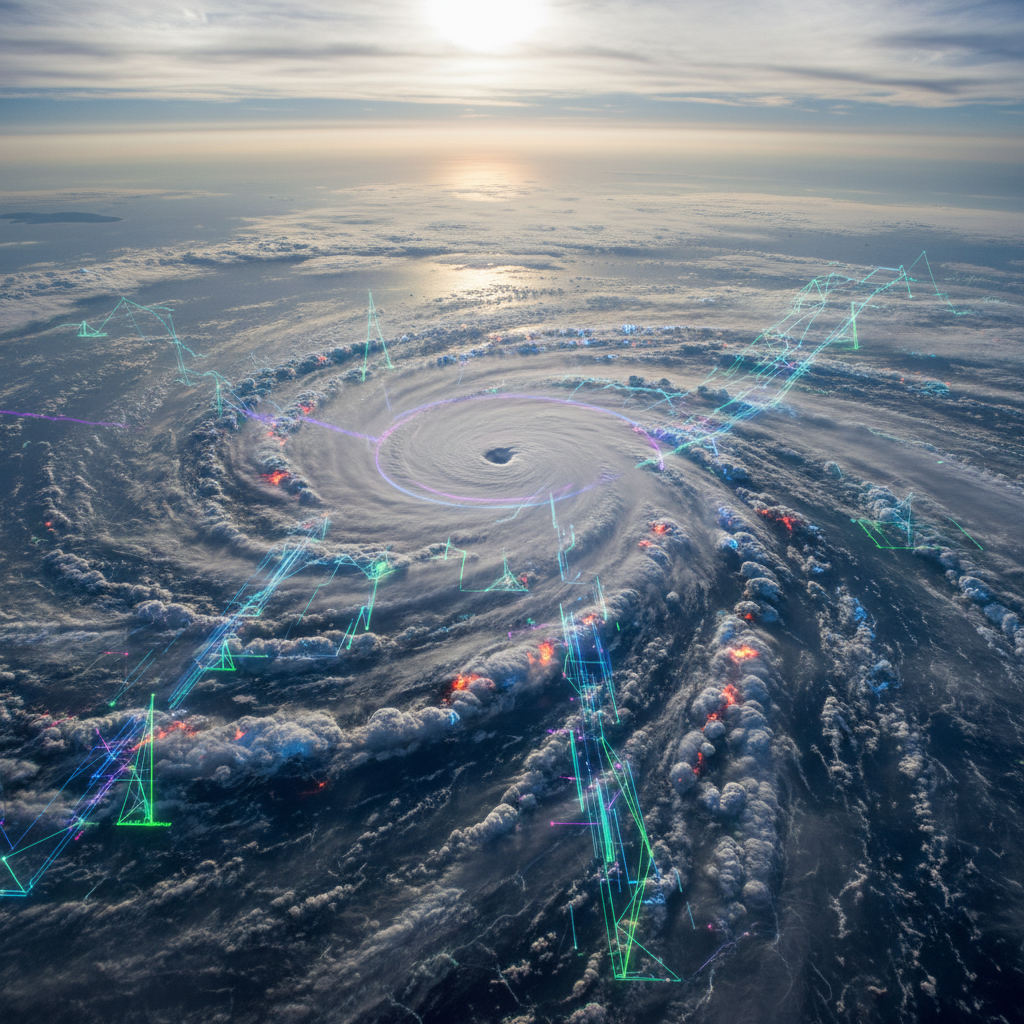
A significant leap forward in meteorological science has been announced, as Google DeepMind’s cutting-edge AI model, WeatherNext, successfully predicted the trajectory and intensity of Hurricane Melissa with unprecedented accuracy. This achievement marks a pivotal moment, showcasing the transformative power of artificial intelligence in tackling some of the planet’s most complex challenges. The breakthrough promises to revolutionize how we prepare for and mitigate the impact of severe weather events, offering communities vital extra time.
For years, meteorologists have relied on sophisticated numerical weather prediction models, which simulate atmospheric physics using supercomputers. While incredibly powerful, these traditional models can be computationally intensive and may struggle with the rapid, chaotic evolution of extreme weather phenomena. WeatherNext introduces a new paradigm, leveraging advanced machine learning to discern patterns and make predictions with remarkable speed and precision.
Introducing WeatherNext: The Future of Forecasting
WeatherNext is not just another weather model; it represents a fusion of deep learning principles with vast historical and real-time meteorological data. Developed by the pioneering minds at Google DeepMind, this AI system has been trained on decades of satellite imagery, radar data, atmospheric pressure readings, and ocean temperatures. This extensive training allows WeatherNext to identify subtle correlations and dynamic patterns that might be difficult for traditional models to capture or process quickly.
At its core, WeatherNext operates by rapidly processing immense datasets, learning from past weather events to predict future ones. Its neural network architecture enables it to understand the intricate interplay of atmospheric variables, leading to more granular and reliable forecasts. The model’s ability to extrapolate trends and anticipate changes in storm systems with higher fidelity is what truly sets it apart from conventional approaches.
Hurricane Melissa: A Landmark Prediction
The prediction of Hurricane Melissa stands as a testament to WeatherNext’s capabilities. Traditional forecasting models often face challenges in predicting the rapid intensification or sudden shifts in hurricane paths, critical factors for public safety. WeatherNext, however, provided a remarkably accurate forecast of Melissa’s formation, track, and peak intensity days in advance, offering a significantly longer lead time compared to previous methods.
This extended warning period for Hurricane Melissa proved invaluable, allowing coastal communities to enact evacuation plans, secure infrastructure, and position emergency resources effectively. The precision of WeatherNext’s prediction minimized uncertainty, enabling more targeted and efficient preparedness efforts. It underscored the potential for AI to move beyond mere prediction to genuinely impactful early warning systems.
Key advantages demonstrated by WeatherNext during the Hurricane Melissa event include:
- Increased Lead Time: Provided crucial extra days of warning for affected regions.
- Enhanced Accuracy: More precisely predicted the storm’s path and intensity changes.
- Rapid Processing: Delivered forecasts much faster than traditional supercomputer models.
- Resource Optimization: Enabled more efficient deployment of emergency services and resources.
The Broader Impact and Future Horizons
The successful prediction of Hurricane Melissa by WeatherNext is more than just an isolated triumph; it signals a profound shift in how we approach severe weather forecasting. This breakthrough has immense implications for global disaster preparedness, especially as the frequency and intensity of extreme weather events continue to escalate due to climate change. Better predictions mean better preparation, saving lives and reducing economic losses.
Beyond hurricanes, the underlying technology of WeatherNext could be adapted to predict a wide range of meteorological phenomena, including blizzards, heatwaves, and severe thunderstorms. Imagine agricultural sectors receiving hyper-local forecasts to protect crops, or renewable energy grids optimizing their operations based on highly accurate wind and solar predictions. The potential applications are vast and far-reaching.
Google DeepMind’s continued investment in “AI for good” is evident in projects like WeatherNext. By harnessing sophisticated AI, they are not only pushing the boundaries of machine intelligence but also developing practical tools that can address real-world challenges. This commitment promises a future where AI plays an increasingly vital role in protecting communities and building a more resilient society.
The successful forecast of Hurricane Melissa serves as a powerful demonstration of AI’s burgeoning role in environmental science and public safety. WeatherNext represents a significant stride towards a future where advanced artificial intelligence systems work hand-in-hand with human expertise to create a safer, more predictable world. This is truly a new dawn for weather forecasting.
Source: Google News – AI Search
