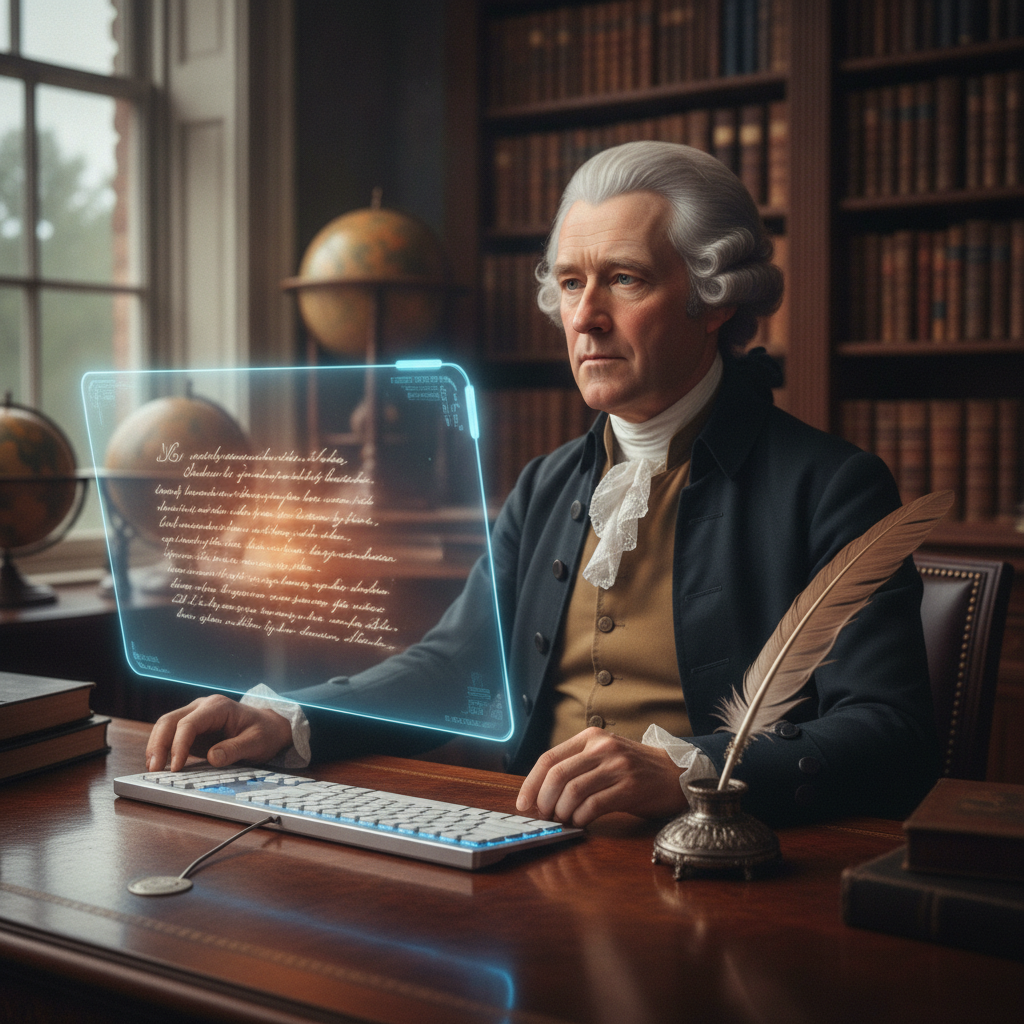
Imagine the year 1776, a pivotal moment in American history, but with a surprising technological twist. Google’s latest commercial offers a whimsical glimpse into what might have happened if the Founding Fathers had access to Google Workspace and AI tools while drafting the Declaration of Independence. Released just as the nation approaches its 250th anniversary, this ad poses a fascinating “what if” scenario.
With the tagline, “Group project, but make it 1776,” the commercial humorously depicts Thomas Jefferson receiving a text from Ben Franklin while mid-draft. What follows is an undeniably Google-centric collaborative process, far removed from quill and parchment. This imaginative portrayal highlights the power of modern digital tools, even when applied to historical moments.
Reimagining Revolution: Google Workspace in 1776
The ad showcases a suite of Google Workspace tools, demonstrating how they could have streamlined the creation of America’s foundational document. Edits and suggestions on the Declaration flow seamlessly through Google Docs, much like any modern team project. The bustling schedule of the Founding Fathers is managed with quick entries in Google Calendar, ensuring everyone is on the same page.
Meetings, rather than huddles in a dimly lit room, are conducted remotely via Google Meet—though humorously, every single attendee appears to have their camera off. Finally, the monumental document is finalized with swift e-signatures, culminating in a burst of celebratory fireworks. This playful reinterpretation underscores the versatility and efficiency of Google’s collaborative ecosystem.
AI’s Role in a Historic Document
As expected from a 2026 tech ad, artificial intelligence plays a clever, if subtle, role in this historical reimagining. The fictionalized founders utilize Google’s “help me visualize” AI tool to experiment with various animals for the national seal. This creative application demonstrates AI’s potential for brainstorming and visual design.
Gemini, Google’s advanced chatbot, steps in as an invaluable assistant, not only taking meticulous notes during meetings but also offering astute advice. When King George III’s request for document access pops up, the founders consult Gemini before confidently declining. The integration of AI feels less like a hard sell and more like an organic enhancement to their collaborative efforts.
The commercial maintains a lighthearted, tongue-in-cheek tone throughout, with moments like Sam Adams asking, “Can we settle this over beers?” This playful approach makes the AI evangelism relatively discreet, especially when compared to more overt AI-focused ads, such as a previous Google commercial where Gemini was used to write a fan letter for a daughter. Intriguingly, even the commercial’s footage itself seems to possess the unique, almost ethereal glow of AI-generated video.
Public Reaction: A Divided Opinion
While Google’s innovative ad has garnered a largely positive reception on platforms like YouTube and Instagram, the response on Bluesky paints a significantly different picture. Here, the commercial faced a barrage of criticism, with users labeling it “cringey” and “stunningly tone deaf.” The AI angle, in particular, became the primary target of these critiques.
Many users, including prominent historian Angus Johnston, pointed out what they perceived as a significant disconnect. Johnston noted that it’s “amazing how little of this is actually AI,” despite the ad’s focus on modern tech. He further argued that “even in a corny fantasy joke, it’s impossible to make the case that AI is a useful tool for political organizing, writing, or human collaboration.”
This stark contrast in public opinion highlights the ongoing debate surrounding AI’s practical application and its portrayal in marketing. While some embrace the imaginative possibilities, others remain skeptical about AI’s utility in inherently human endeavors like writing and political collaboration. Google’s commercial, regardless of its reception, certainly sparks a timely conversation about technology, history, and the future of creative work.
Source: TechCrunch – AI
