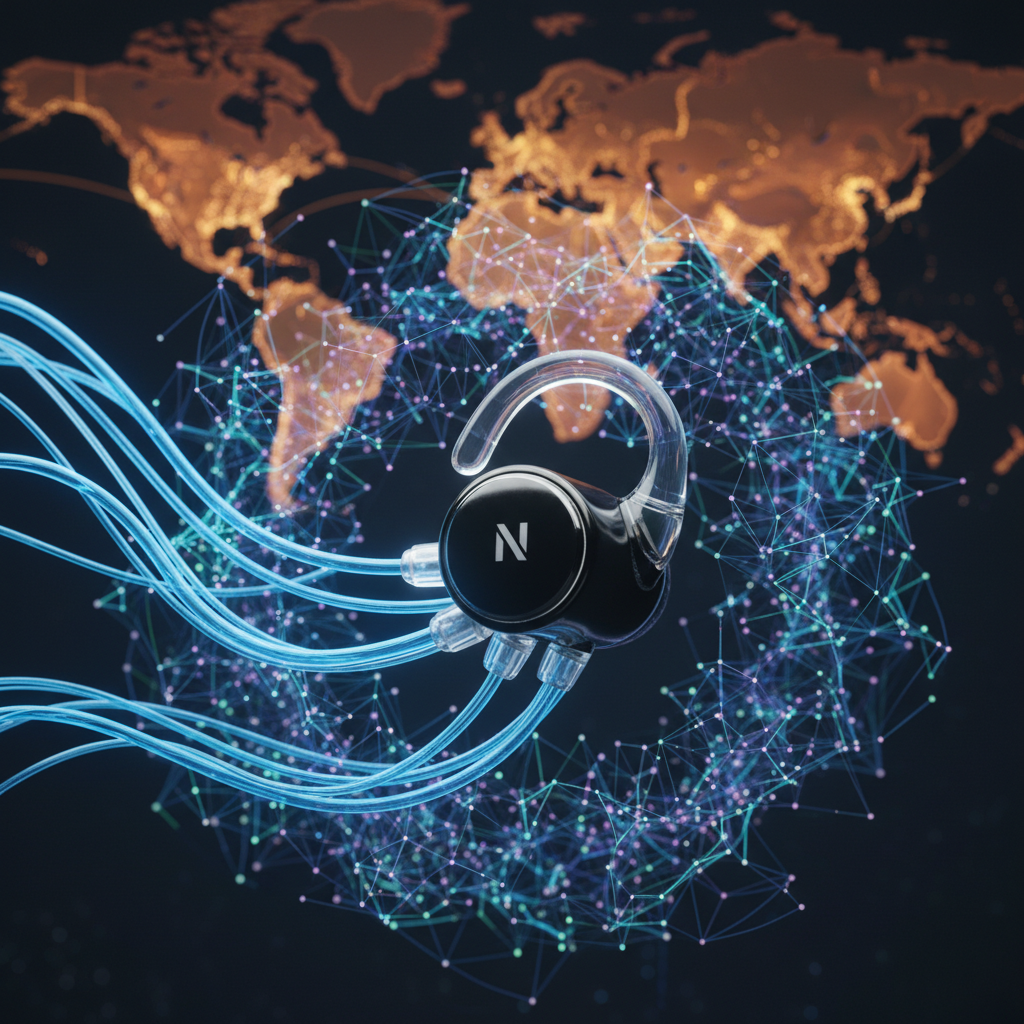
Imagine conversing with an AI that understands your every nuance, responds without a beat, and feels as natural as talking to another person. This isn’t science fiction; it’s the reality OpenAI is crafting with its advanced voice AI. Achieving this seamless interaction, especially at a global scale, presents a monumental technical challenge, primarily centered on conquering latency.
OpenAI’s latest strides in voice technology aren’t just about sophisticated language models; they’re also about a profound engineering effort. They’ve meticulously rebuilt their underlying communication infrastructure to ensure real-time performance. This allows their voice AI to participate in truly natural conversations, eliminating the awkward pauses and delays that often plague human-computer interactions.
The Quest for Real-Time Conversations
In the world of AI, speed is paramount, especially when it comes to voice. Users expect instant feedback and fluid dialogue, making the traditional “speak, wait, listen” model feel clunky and unnatural. High latency — the delay between speaking and hearing a response — breaks immersion and significantly degrades the user experience, turning a potential conversation into a frustrating interrogation.
The core challenge lies in transmitting audio, processing it with complex AI models, generating a response, and sending that audio back to the user, all within milliseconds. This intricate dance must happen across vast geographical distances, through diverse network conditions, and for millions of users simultaneously. Overcoming these hurdles requires a robust, scalable, and incredibly efficient communication pipeline.
Rebuilding the Foundation: OpenAI’s WebRTC Breakthrough
To deliver on their vision, OpenAI undertook a significant overhaul of their WebRTC (Web Real-Time Communication) stack. While WebRTC is a powerful framework for real-time communication over the web, optimizing it for AI-driven voice at OpenAI’s scale demanded bespoke engineering. They transformed it into a super-efficient conduit specifically tailored for AI model inference and audio streaming.
Their approach focused on several key areas. First, they developed custom audio codecs and processing techniques that prioritize ultra-low latency without sacrificing audio quality. This ensures that every whisper and inflection is captured and transmitted efficiently, reaching the AI for processing with minimal delay.
Second, OpenAI engineered a globally distributed infrastructure, deploying servers strategically closer to users worldwide. This geographical proximity drastically reduces network travel time, a critical component of end-to-end latency. Their adaptive network protocols dynamically adjust to varying connection qualities, guaranteeing a stable and fast connection even in challenging environments.
Perhaps most impressively, they tackled conversational turn-taking with ingenious predictive algorithms. The system anticipates when a user might pause or finish speaking, allowing the AI to prepare its response and even begin generating audio preemptively. This proactive approach enables **sub-200ms end-to-end latency**, making interruptions and seamless conversational flow feel utterly natural, just like talking to another person.
The Impact: Natural, Human-Like Interactions at Scale
The results of this engineering marvel are profoundly transformative for how we interact with AI. By virtually eliminating lag, OpenAI’s voice AI systems can engage in dynamic, responsive dialogues that were previously unattainable. This isn’t merely a technical upgrade; it’s a fundamental shift in user experience, making AI feel more intuitive and integrated into our daily lives.
Users can now speak freely, interrupt, and course-correct without the system missing a beat, fostering a deeper sense of connection and engagement. This advancement opens doors for a myriad of applications, from more helpful personal assistants and language learning tools to immersive virtual environments and accessibility solutions. The human-like responsiveness reduces user frustration and enhances the utility of voice AI across the board.
The Future of Voice AI is Here
OpenAI’s commitment to low-latency voice AI, powered by its custom-built WebRTC infrastructure, marks a significant milestone in human-computer interaction. They’ve not only solved complex technical challenges but have also set a new standard for natural, real-time conversational AI. This foundational work ensures that as AI models become even more sophisticated, the communication layer will be ready to deliver their intelligence seamlessly.
As this technology continues to evolve, we can anticipate even more intuitive and powerful voice experiences. The ability to engage with AI in a truly conversational manner will unlock new possibilities, making technology more accessible, personal, and ultimately, more human. OpenAI is truly paving the way for the next generation of intelligent voice interfaces.
Source: OpenAI Newsroom
