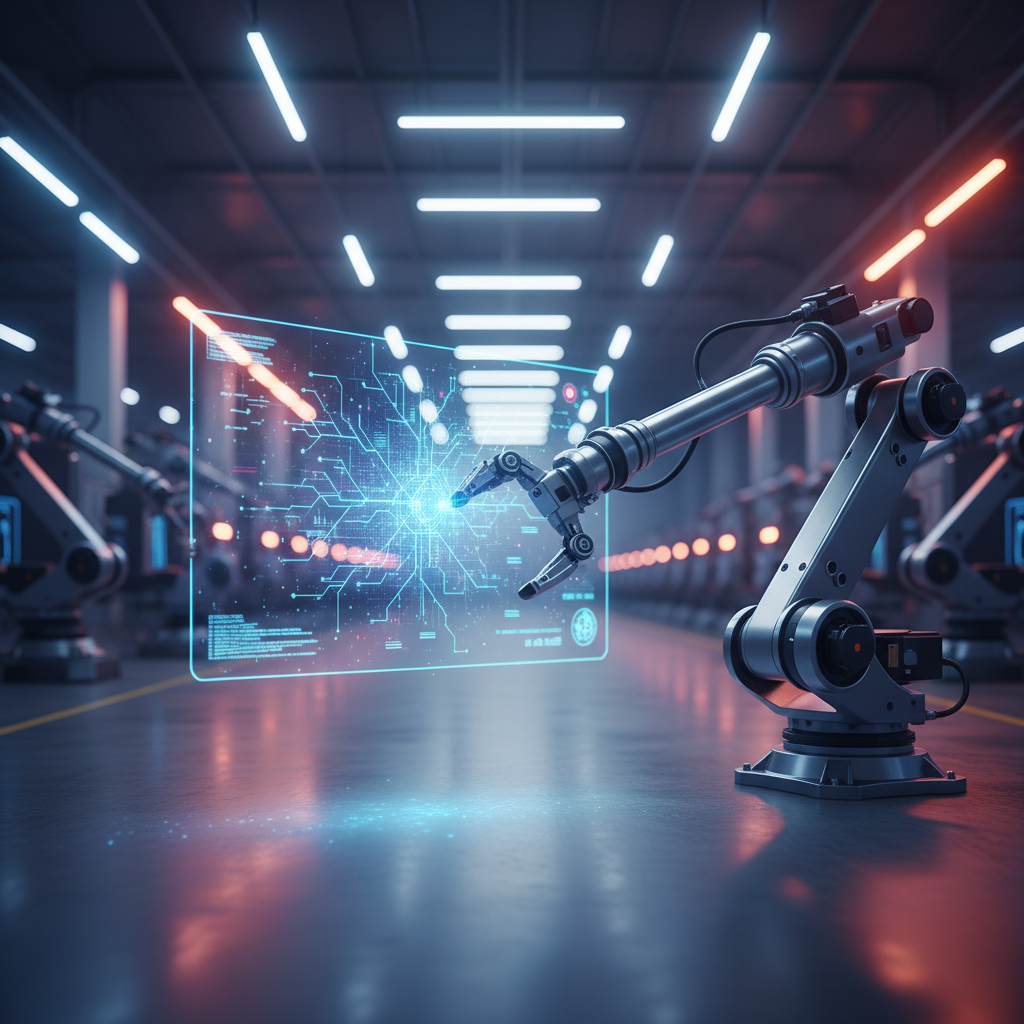
The world of industrial robotics is experiencing a profound transformation, driven by an exciting collaboration between two industry giants: FANUC, a global leader in factory automation, and Google, a pioneer in artificial intelligence. This powerful partnership is significantly expanding the application of Physical AI, bringing unprecedented intelligence and adaptability to manufacturing floors worldwide.
This initiative marks a pivotal moment, moving beyond traditional, rigidly programmed robots towards systems that can learn, adapt, and make more intelligent decisions in complex environments. Manufacturers are now poised to unlock new levels of efficiency, flexibility, and innovation, fundamentally reshaping how goods are produced.
The Evolution of Physical AI in Manufacturing
At its core, Physical AI refers to the integration of advanced artificial intelligence capabilities directly into robotic systems, enabling them to interact more intelligently with the physical world. Unlike conventional industrial robots that execute pre-programmed tasks, robots empowered with Physical AI can perceive their surroundings, understand complex instructions, and even learn from experience.
This means a robot can not only perform a task but also recognize variations in parts, handle unexpected obstacles, and optimize its movements in real-time. This level of autonomy is critical for modern manufacturing, which increasingly demands flexibility and the ability to adapt to diverse product lines and rapid market changes. The collaboration between FANUC and Google is set to accelerate this evolution.
The partnership leverages Google’s cutting-edge AI and machine learning expertise, particularly in areas like computer vision and reinforcement learning, with FANUC’s robust, high-performance robotic hardware and extensive industrial experience. This synergy allows for the development of sophisticated AI models that can be directly deployed on FANUC robots, making them smarter and more versatile than ever before.
FANUC and Google: A Synergistic Partnership
FANUC brings decades of experience in creating reliable, high-precision industrial robots and CNC systems that are the backbone of factories globally. Their deep understanding of manufacturing processes and their proven hardware provide the perfect foundation for advanced AI integration. This ensures that AI innovations are not just theoretical but are robust and ready for demanding industrial environments.
Google’s contribution lies in its unparalleled prowess in artificial intelligence and machine learning, particularly through its cloud-based AI platform and research initiatives. By providing sophisticated algorithms and scalable computing power, Google enables FANUC robots to process vast amounts of data, learn intricate patterns, and continuously improve their performance over time. This combination creates an ecosystem where robots can truly think and adapt.
One of the key focuses of this expansion is simplifying the programming and deployment of complex robotic tasks. Traditionally, programming robots for intricate assembly, inspection, or material handling jobs could be time-consuming and require specialized expertise. With Physical AI, robots can learn tasks through demonstration or simulation, significantly reducing setup times and making automation more accessible.
Transforming Industrial Automation
The expansion of Physical AI through the FANUC-Google partnership promises a multitude of benefits for manufacturers, large and small. These advantages directly address many of the challenges faced by industries today, from labor shortages to the need for greater operational agility.
- Increased Efficiency and Throughput: AI-powered robots can optimize processes, reduce cycle times, and minimize errors, leading to higher production rates.
- Enhanced Flexibility and Adaptability: Robots can easily be retrained or reconfigured for new tasks or product variations, making production lines more agile.
- Reduced Programming Complexity: Intuitive AI tools drastically simplify the process of teaching robots new tasks, lowering the barrier to automation.
- Improved Quality Control: Advanced vision systems and machine learning enable robots to perform highly accurate inspections, catching defects that human eyes might miss.
- Lower Operational Costs: By optimizing resource usage, reducing waste, and minimizing downtime, Physical AI contributes to significant cost savings and faster return on investment.
This collaboration isn’t just about making robots smarter; it’s about making them more valuable, easier to integrate, and more capable of handling the dynamic demands of modern manufacturing. From intricate electronics assembly to robust automotive production, the impact is far-reaching.
The vision for the future is clear: factories will become increasingly intelligent, autonomous, and responsive, driven by a new generation of Physical AI-powered robotics. FANUC and Google’s expanded partnership is not just a technological advancement; it’s a strategic move to define the next era of industrial automation, empowering businesses to innovate and thrive in an ever-evolving global economy.
Source: Google News – AI Search
