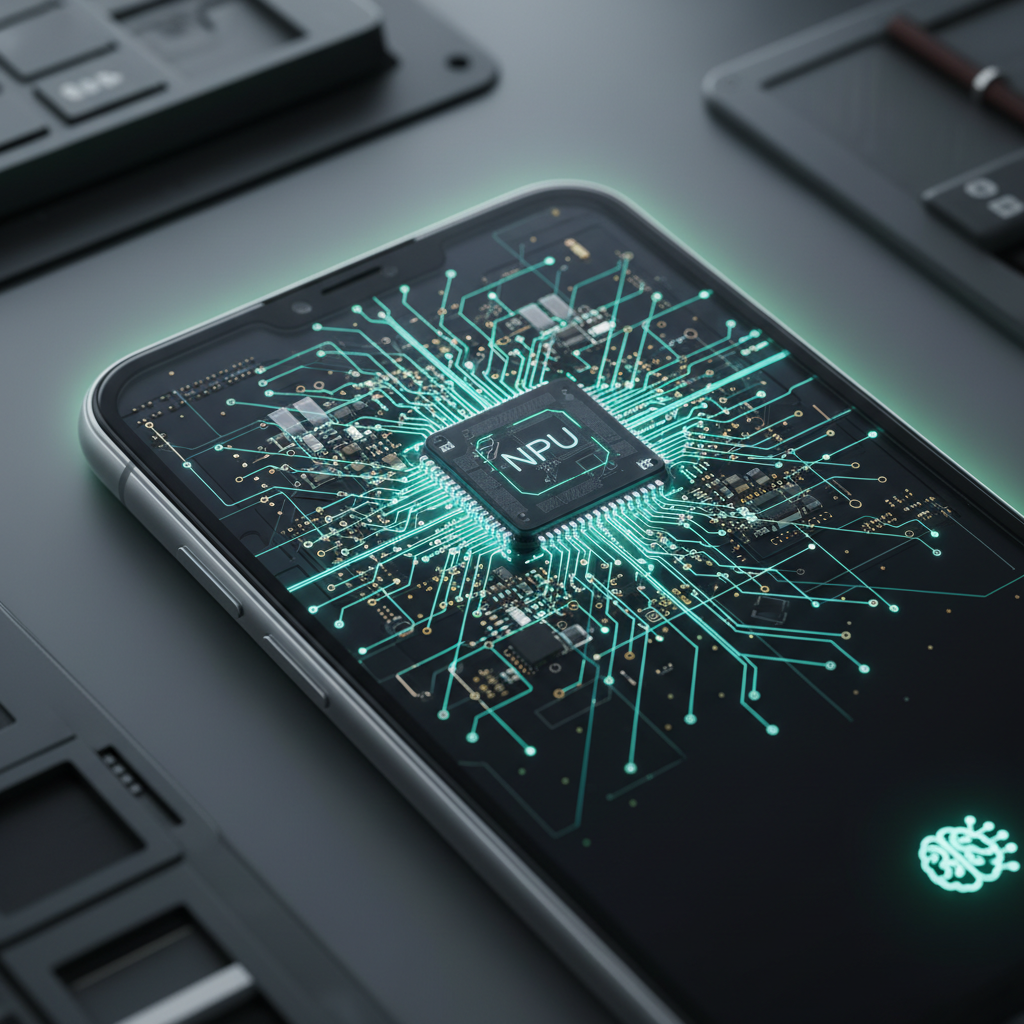
Artificial intelligence is no longer a futuristic concept; it’s intricately woven into our daily lives, often operating behind the scenes. While much of this powerful AI resides in vast cloud data centers, a significant revolution is happening right on our personal devices. Thanks to groundbreaking technologies like LiteRT and specialized Neural Processing Units (NPUs), sophisticated AI capabilities are moving closer to you, enabling smarter, faster, and more private experiences.
This shift to on-device AI, also known as edge AI, means machine learning models execute directly on your smartphone, tablet, or smart home device, rather than relying on a remote server. This approach brings several compelling advantages, most notably enhanced privacy, as your data processing remains local and doesn’t need to leave your device. It also delivers superior performance with lower latency and ensures seamless functionality even when you’re offline or have an unreliable internet connection.
Beyond privacy and speed, on-device AI significantly reduces cloud computing costs for developers and conserves valuable network bandwidth. For end-users, this translates into more responsive applications and features that work effortlessly, regardless of their connectivity status. Imagine instant photo enhancements, more intuitive voice assistants, or robust biometric authentication, all processed right on your device, without a pause.
The Core of On-Device Intelligence: LiteRT
At the heart of efficiently deploying complex AI models on diverse device hardware lies specialized runtimes such as LiteRT. LiteRT is engineered to be a lightweight, high-performance execution engine specifically tailored for machine learning inference on resource-constrained devices. It serves as a crucial bridge, taking pre-trained AI models and optimizing their execution across the various hardware accelerators available on your device.
LiteRT’s primary role is to ensure that these AI models run as quickly and efficiently as possible, minimizing power consumption while maximizing computational throughput. This involves clever engineering optimizations like model quantization, operator fusion, and dynamic memory management, which make the most of limited device resources. Furthermore, LiteRT is often designed for high adaptability, supporting a wide range of AI models and device architectures to ensure broad compatibility.
Unleashing Performance with Neural Processing Units (NPUs)
While runtimes like LiteRT provide the intelligent software backbone, the true computational muscle for modern on-device AI comes from specialized hardware: Neural Processing Units (NPUs). Unlike general-purpose CPUs or graphics-focused GPUs, NPUs are purpose-built accelerators specifically engineered to handle the parallel computations inherent in neural networks. They excel at tasks like matrix multiplications and convolutions, which are the fundamental operations of deep learning, performing them with incredible efficiency and minimal power usage.
Integrating an NPU into a device dramatically boosts its capability to run complex AI models in real-time without draining the battery. When LiteRT detects the presence of an NPU, it intelligently offloads compatible AI operations to this dedicated hardware, unlocking unparalleled performance. This synergy results in significantly faster inference times and a much smoother, more responsive user experience for AI-powered applications.
Imagine LiteRT as the skilled conductor and the NPU as the orchestra’s most powerful section, perfectly synchronized. LiteRT efficiently parses the AI model and then directs the most computationally demanding parts of the process to the NPU. This seamless collaboration ensures that your device can execute sophisticated AI tasks, from real-time object detection to advanced natural language processing, with remarkable speed and energy efficiency.
Real-World Applications and the Future of On-Device AI
The powerful combination of LiteRT and NPUs is already powering many innovative features that enhance our daily digital interactions. These advancements translate directly into a superior user experience, making our devices more intuitive, powerful, and genuinely helpful.
- Advanced camera features like portrait mode, super-resolution photo processing, and intelligent scene detection.
- Voice assistants that respond faster, understand commands more accurately, and even operate reliably offline.
- Personalized recommendations and intelligent suggestions that respect user privacy by processing data locally.
- Enhanced security through lightning-fast facial recognition, fingerprint authentication, and advanced gesture control.
- Augmented Reality (AR) experiences with real-time environment understanding and object tracking.
This technological leap democratizes access to sophisticated AI, moving it from specialized cloud data centers to the palm of your hand, making advanced capabilities widely accessible. As these technologies continue to mature and become even more integrated, we can expect even more transformative applications to emerge. The future promises a world where AI is seamlessly integrated into every facet of our digital lives, making devices not just smart, but truly intelligent.
The era of powerful, private, and always-on artificial intelligence is here, driven by groundbreaking innovations like LiteRT and dedicated NPUs. By enabling complex AI models to run directly on your devices, these technologies are fundamentally redefining what’s possible for everything from smartphones to smart home gadgets. Get ready for a future where your devices don’t just host AI, but truly embody intelligence, making every interaction richer, faster, and more responsive.
Source: Google News – AI Search
