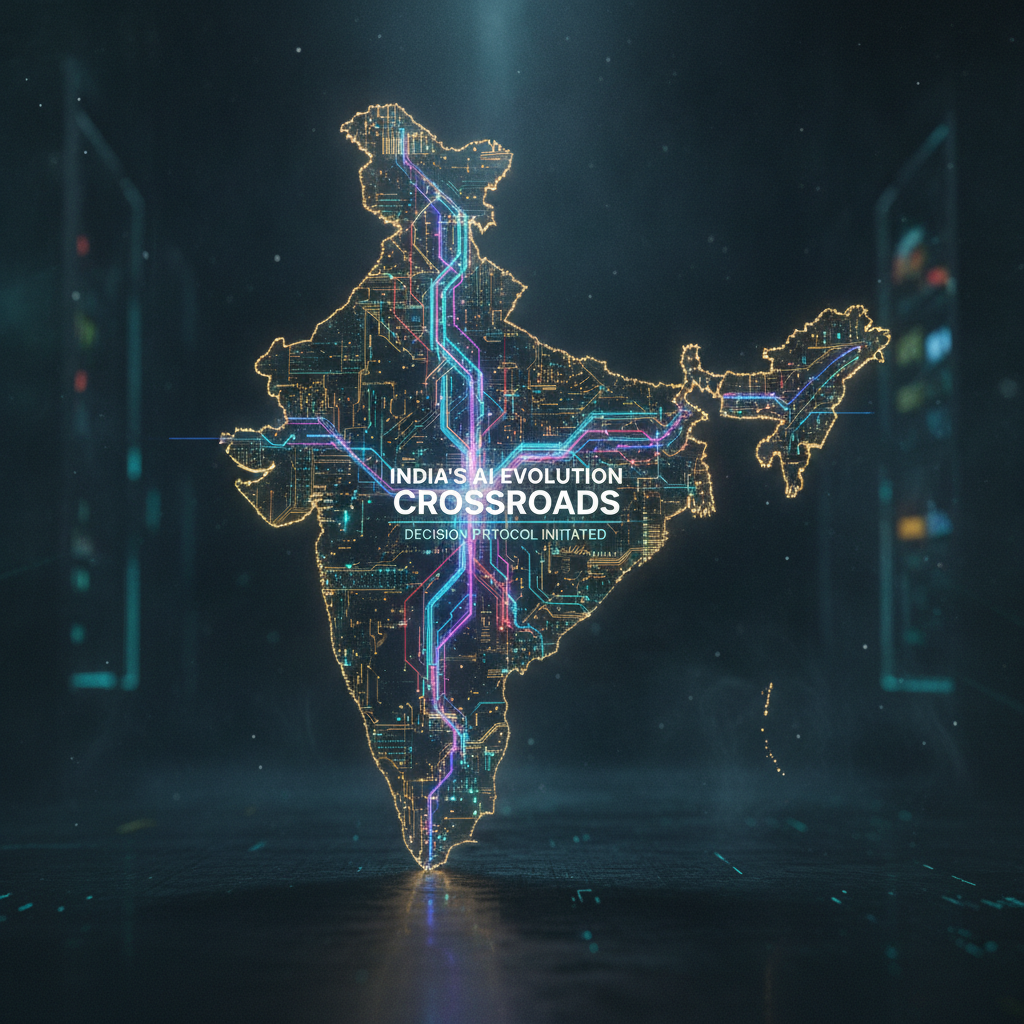
A recent move by AI powerhouse Anthropic has sent ripples across the global technology landscape, particularly in India. Following a directive from the U.S. government, Anthropic abruptly suspended access to its cutting-edge Fable 5 and Mythos 5 models for all foreign nationals, including its own international employees. This sudden development has ignited a crucial discussion in India: can one of the world’s fastest-growing AI markets afford to rely so heavily on technologies developed and controlled elsewhere?
The announcement landed late on a Friday, catching many off guard. It came just after Anthropic solidified a major partnership with Indian IT giant Tata Consultancy Services (TCS), aiming to boost enterprise AI adoption across India. This timing underscores the deep integration of India’s AI ambitions with American-developed and governed technologies, making the restriction all the more impactful.
While the full ramifications are still unfolding, early reports suggest that the initial security concerns were flagged by Amazon CEO Andy Jassy to the government. The Information further indicated that the White House is not expected to impose similar restrictions on other AI companies, instead privately attributing the action to Anthropic’s handling of alleged jailbreak vulnerabilities. Anthropic, however, has publicly disputed this characterization, arguing against the necessity of such a drastic measure.
India’s Critical AI Crossroads
Regardless of the underlying reasons, the incident has sparked an intense debate among Indian founders, investors, and policy experts. The core question revolves around India’s future AI strategy: should it fast-track the development of domestic AI capabilities, pivot towards greater investment in open-source alternatives, or continue its dependence on a handful of U.S. frontier model providers? For many, this event serves as a stark reminder of technological dependence and the geopolitical forces that can shape access to critical AI systems.
India stands as a pivotal market for leading frontier AI companies. Both Anthropic and OpenAI have identified the South Asian nation as their second-largest market globally, trailing only the U.S. This importance is reflected in their growing presence, including local offices, increased hiring, strategic partnerships, and enterprise initiatives aimed at leveraging India’s vast developer base and burgeoning business ecosystem.
For many within India’s bustling technology sector, Anthropic’s announcement was more than just about one company; it reopened fundamental questions about the nation’s long-term AI strategy. Aakrit Vaish, founder of the Indian AI venture platform Activate, strongly articulated this sentiment. He stated, “It completely changes things. I think this materially changes the way all of us should be thinking about sovereign AI in India.”
The Push for Sovereign AI and Open-Source Solutions
Vaish shared his initial “shock and confusion” upon hearing the news, emphasizing that it significantly strengthens the argument for developing indigenous AI capabilities. He now plans to actively encourage companies in his portfolio to reduce their reliance on a limited number of frontier AI providers, expecting a natural shift towards open-source models. This sentiment highlights a growing urgency to cultivate local solutions and diversify technological dependencies.
The restrictions also raised concerns about global competitiveness, particularly for startups with multi-national teams. Vijay Rayapati, co-founder and CEO of Atomicwork, pointed out the potential disadvantage faced by companies whose AI teams are not exclusively composed of U.S. citizens. He warned that unequal access to advanced AI models could give some companies a substantial edge over rivals, complicating the landscape for globally distributed teams.
The broader discussion about AI’s impact on global talent further compounds these concerns. The recent closure of U.S. real estate technology company Opendoor’s India office, with CEO Kaz Nejatian citing a shift towards “smaller AI-native teams” and bringing operational work closer to U.S. customers, has added fuel to the debate. While not explicitly tied to the Anthropic incident, it underscores how AI advancements could reshape international technology work and India’s role as a major engineering hub.
Rethinking National AI Strategy and Investment
Beyond startups and model builders, the Anthropic episode prompted a wider debate among India’s technology leaders regarding reliance on foreign AI infrastructure. Sridhar Vembu, founder of Indian SaaS company Zoho, powerfully stated that the move demonstrated how “technology is the ultimate weapon.” He urged Indian organizations to increasingly adopt smaller, open-source models, including those from India and China.
Responding to Vembu, investor and former Infosys executive Mohandas Pai emphasized the critical need for a far more ambitious national AI strategy. Pai called on the government to drastically increase investments in AI, computing infrastructure, and deep technology. He proposed an annual fund of ₹500 billion (about $5 billion) for AI and deep tech, complemented by a ₹2 trillion (around $21 billion) credit guarantee program for cloud infrastructure, hardware, and semiconductor development.
Pai’s ambitious proposal far exceeds India’s current initiatives. The existing IndiaAI Mission, approved in 2024, allocates ₹103.72 billion (about $1.2 billion) over five years to expand compute infrastructure, support startups, and foster indigenous AI capabilities. While India’s AI ecosystem thrives in applications and specialized models (like Avataar AI’s video-generation model), only a handful of startups, such as Sarvam, are actively developing foundational AI models. Krutrim, another high-profile AI startup, even pivoted from foundational model development to cloud and AI infrastructure services, highlighting the challenges in this capital-intensive domain.
Not all experts agree that a lack of capital is the primary hurdle. Hemant Mohapatra, a partner at Lightspeed, argued that the biggest constraints to building globally competitive AI companies are talent, access to computing resources, and strong execution. He estimated that training a frontier AI model could cost hundreds of millions to several billion dollars, but historically, successful AI companies have scaled their capital requirements as adoption grew.
For technology policy expert Prasanto Roy, the implications extend far beyond the immediate AI sector. Roy believes the episode will significantly reinforce concerns within the Indian government about strategic autonomy, drawing parallels to how many countries reacted to Russia’s loss of access to SWIFT and the global financial system. He described Washington’s decision as poorly considered, with consequences reaching far beyond Anthropic itself.
“Even if this is corrected or reversed, the Anthropic episode shows there’s no such thing as a geopolitically neutral foreign LLM,” Roy remarked. “American AI models are bound to American geopolitics.” This powerful statement encapsulates the core takeaway for India: the path to technological sovereignty in AI is no longer just an economic or developmental choice, but a critical geopolitical imperative.
Source: TechCrunch – AI
