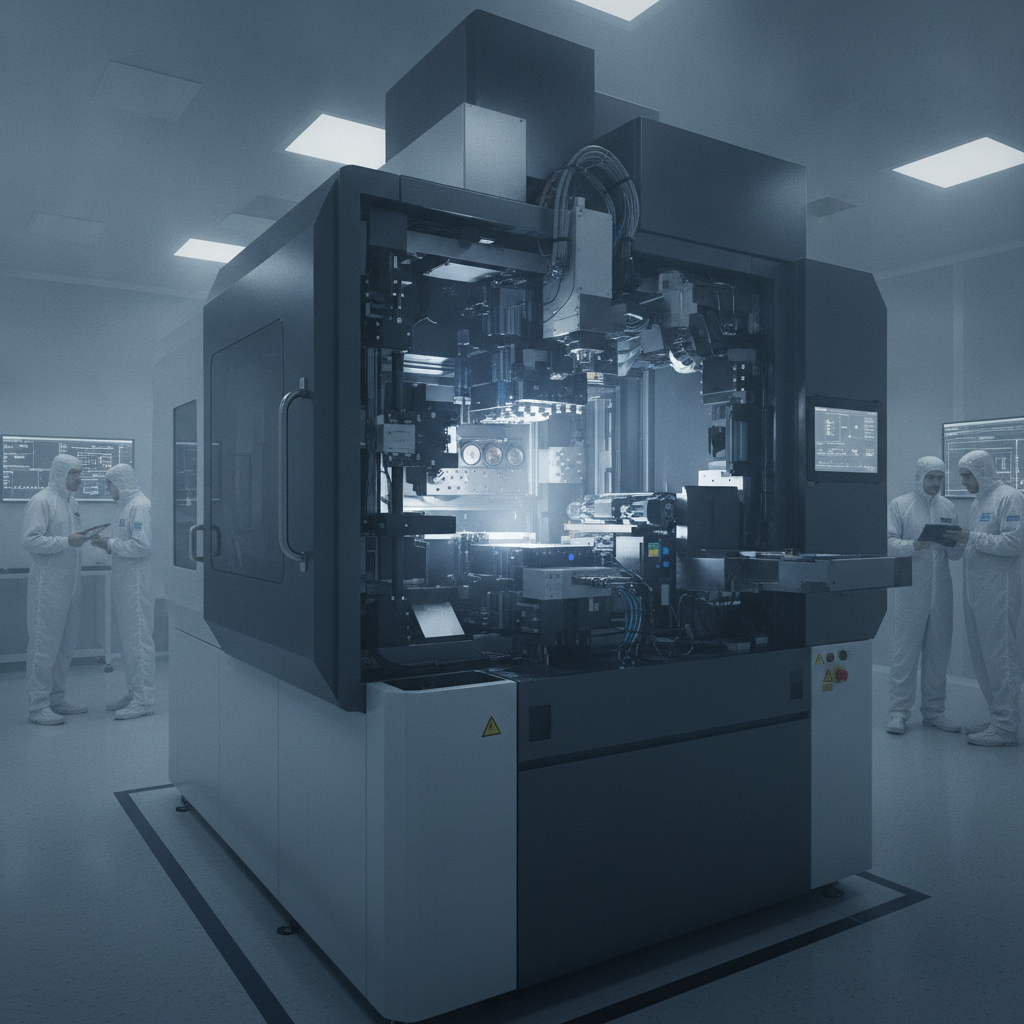
A significant diplomatic visit unfolded recently in Washington D.C., as Dutch Trade Minister Sjoerd Sjoerdsma traveled to the U.S. capital to address critical concerns over proposed legislation. Meeting with Commerce Secretary Howard Lutnick and members of Congress, Minister Sjoerdsma specifically voiced strong opposition to the nascent MATCH Act. This bill, if passed, stands to profoundly impact the global semiconductor industry and, particularly, the Netherlands’ economic cornerstone, ASML.
The core of the Dutch delegation’s apprehension centers on the potential for the MATCH Act to restrict Chinese chipmakers from accessing crucial Western semiconductor manufacturing equipment. Such a move would directly target ASML, a Dutch company that is not only Europe’s most valuable enterprise but also the world’s sole manufacturer of the highly sophisticated lithography machines essential for producing cutting-edge AI chips. The stakes, as Minister Sjoerdsma conveyed to Bloomberg, are exceptionally high for the Netherlands.
Understanding the MATCH Act and ASML’s Critical Role
The proposed MATCH Act represents a significant escalation in the ongoing tech rivalry between the U.S. and China. Its primary objective is to broaden existing export controls, limiting China’s ability to develop its advanced semiconductor capabilities. For ASML, this bill is particularly problematic because it would extend restrictions beyond the already prohibited extreme ultraviolet (EUV) lithography tools to include its deep ultraviolet (DUV) immersion machines.
ASML’s DUV technology, while not as advanced as EUV, is still vital for a wide range of chip production, including many used in critical applications. These machines represent a substantial portion of ASML’s global sales, and China currently accounts for a considerable 19% of ASML’s net system sales. Such a ban would undoubtedly create a significant economic ripple effect for the Dutch giant.
Escalating Tech Tensions and Economic Fallout
The prospect of new restrictions on DUV machines would mark a substantial tightening of controls, moving beyond the long-standing ban on ASML’s most advanced EUV tools reaching China. ASML CEO Christophe Fouquet noted in May that China’s current purchases are primarily older-generation DUV tools, technology that was first shipped about a decade ago. Nevertheless, even these older machines would become off-limits under the MATCH Act, further isolating Chinese chipmakers.
Minister Sjoerdsma underscored the gravity of the situation, stating, “It’s exceptional that I’m coming here to broadly outline our concerns to Congress. The stakes for the Netherlands may be very high.” This strong diplomatic intervention highlights the delicate balance countries like the Netherlands must maintain between economic interests and geopolitical pressures. The potential loss of a significant market segment for its most valuable company is a serious concern, prompting this rare direct appeal.
The Path Ahead for the Bill and Broader Implications
Introduced in April, the MATCH Act has yet to face a full vote in either the House or Senate. Industry analysts suggest that for the bill to pass, it would likely need to be incorporated into a larger legislative package. This legislative uncertainty adds another layer of complexity to the already tense global semiconductor landscape, as nations navigate the intricate dynamics of technological supremacy and economic interconnectedness.
The ongoing discussions around the MATCH Act underscore the immense geopolitical significance of semiconductor technology. The outcome will not only determine ASML’s future market access but also influence the trajectory of China’s technological advancement and the broader stability of global supply chains. As policymakers deliberate, the world watches closely to see how this crucial chapter in the tech rivalry unfolds.
In other industry news, planning is well underway for upcoming tech events. The inaugural StrictlyVC event for 2026 is slated for April 30 in San Francisco, with early interest suggesting swift ticket uptake. Meanwhile, the TechCrunch Founder Summit continues to offer substantial savings of up to $190 on tickets, with the discount period closing on June 26 at 11:59 p.m. PT. This all-day bootcamp is set to gather over 1,000 founders and VCs for crucial insights and networking opportunities, essential for real-world scaling and making impactful connections.
Source: TechCrunch – AI
