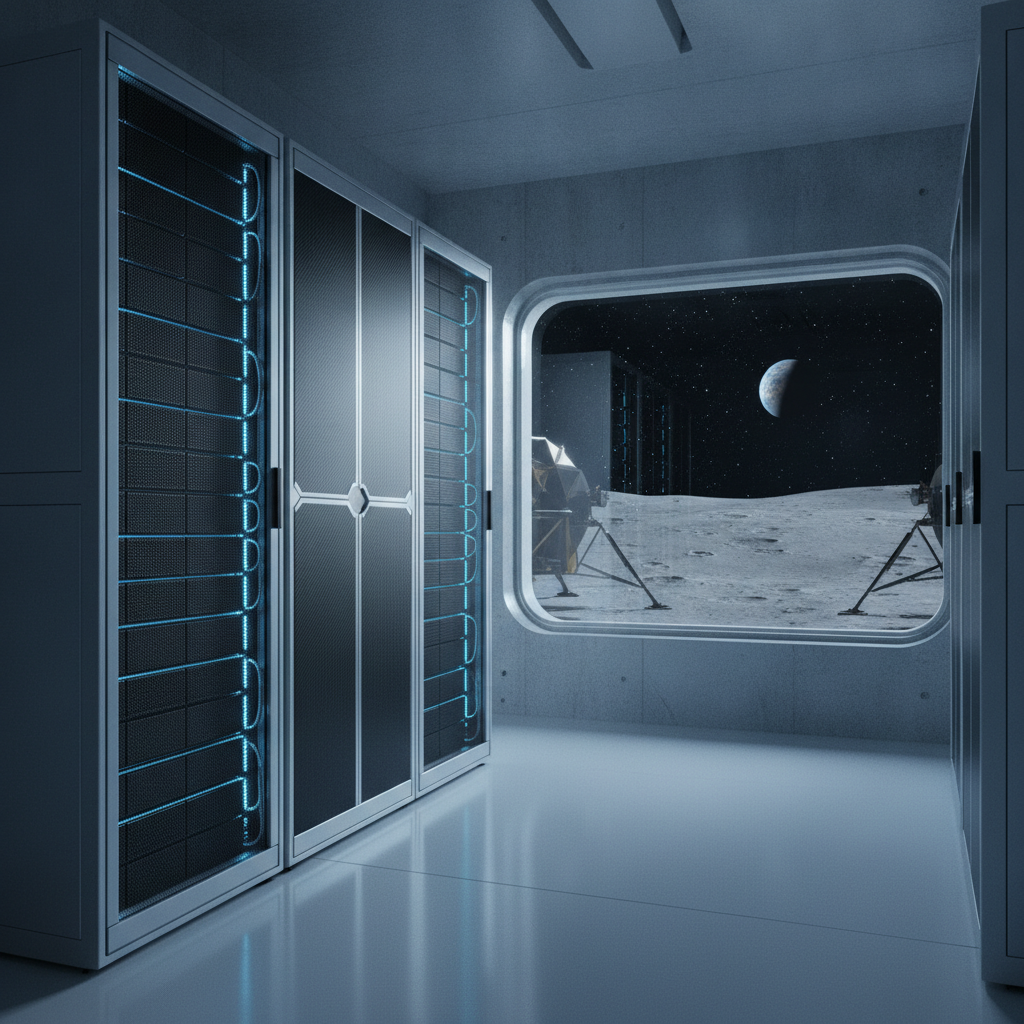
The recent social media skirmish between tech titans Sam Altman and Elon Musk has once again cast a spotlight on the ambitious, yet often debated, future of space data centers. What began as a pointed exchange over the weekend quickly drew attention to a significant chasm between audacious vision and current technological reality in the burgeoning space compute sector.
Altman, CEO of OpenAI, retorted to Musk’s accusations by stating, “homeboy you’re the one sellling [sic] public market investors on short-term space datacenters.” While the informal address might grab headlines, the core message behind Altman’s jab resonates deeply with a consensus already held by many industry experts: large-scale orbital data centers are simply not a serious business prospect in the immediate future, despite what some investors seem to believe.
The Trillion-Dollar Dream: Orbital AI
At the heart of this high-stakes discussion lies SpaceX’s monumental ambition to deploy a vast fleet of orbital data centers. These satellites are designed to perform intensive AI inference tasks, promising to revolutionize everything from powering SpaceXAI’s internal models to establishing an unprecedented ‘neocloud’ in orbit.
Indeed, this grand vision is a primary driver behind SpaceX’s colossal multi-trillion-dollar valuation, with bullish analysts touting its potential as an unmatched accelerator in the ongoing AI boom. The idea of processing vast amounts of data in space, potentially bypassing terrestrial infrastructure limitations, is undeniably captivating.
However, when you engage with subject-matter experts—be they pioneering entrepreneurs in nascent space data center startups, the dedicated teams at tech giants like Google developing their own orbital compute projects, or engineers who’ve crunched the numbers purely for academic curiosity—a remarkably consistent answer emerges. They all agree that this vision won’t make a significant impact until two critical prerequisites are met: we need vastly cheaper rockets and the capability to produce high-powered satellites at a low cost and on a massive scale.
Starship: The Unlocking Key, Or a Distant Promise?
Elon Musk’s anticipated answer to these infrastructural challenges is, predictably, Starship. SpaceX’s colossal next-generation rocket is poised for its thirteenth test flight as early as July 16, representing a crucial step in its development. If Musk’s team can achieve consistent, rapid reusability with this vehicle, the economics for space data centers could fundamentally shift, making the business case potentially viable.
Yet, even if Starship successfully recovers both its booster and upper stage on this upcoming test flight, achieving truly operational, routine reusability is still likely years away. Furthermore, any initial operational Starship flights would likely be prioritized for SpaceX’s existing commitments, such as NASA missions and the continuous expansion of its own Starlink broadband constellation, rather than immediately launching a fleet of new data centers.
Adding another layer of complexity, SpaceX itself conceded during its IPO roadshow that Starship might not achieve full reusability in the near term. This means the second stage might still need to be expended during each launch for a period, a scenario that would drastically undermine the economic feasibility of economical space data centers. Such a concession throws a significant wrench into the short-term viability calculations for orbital compute.
Scaling Beyond the Hype
This critical nuance is why Musk’s recent rejoinder—”we start flying them next year”—doesn’t quite land with the impact he might intend. There’s little doubt that SpaceX possesses the capability to launch a single satellite equipped for high-speed data processing in the coming year.
However, the real crux of the matter isn’t about launching a singular demonstrator; it’s about when SpaceX can genuinely launch and manufacture these sophisticated orbital data centers at scale. Achieving this level of mass production and frequent, affordable launches, according to most experts, remains a challenge firmly rooted in the 2030s, not the immediate future. The technical and logistical hurdles are immense, requiring advancements that go beyond just a single successful rocket test.
Source: TechCrunch – AI
