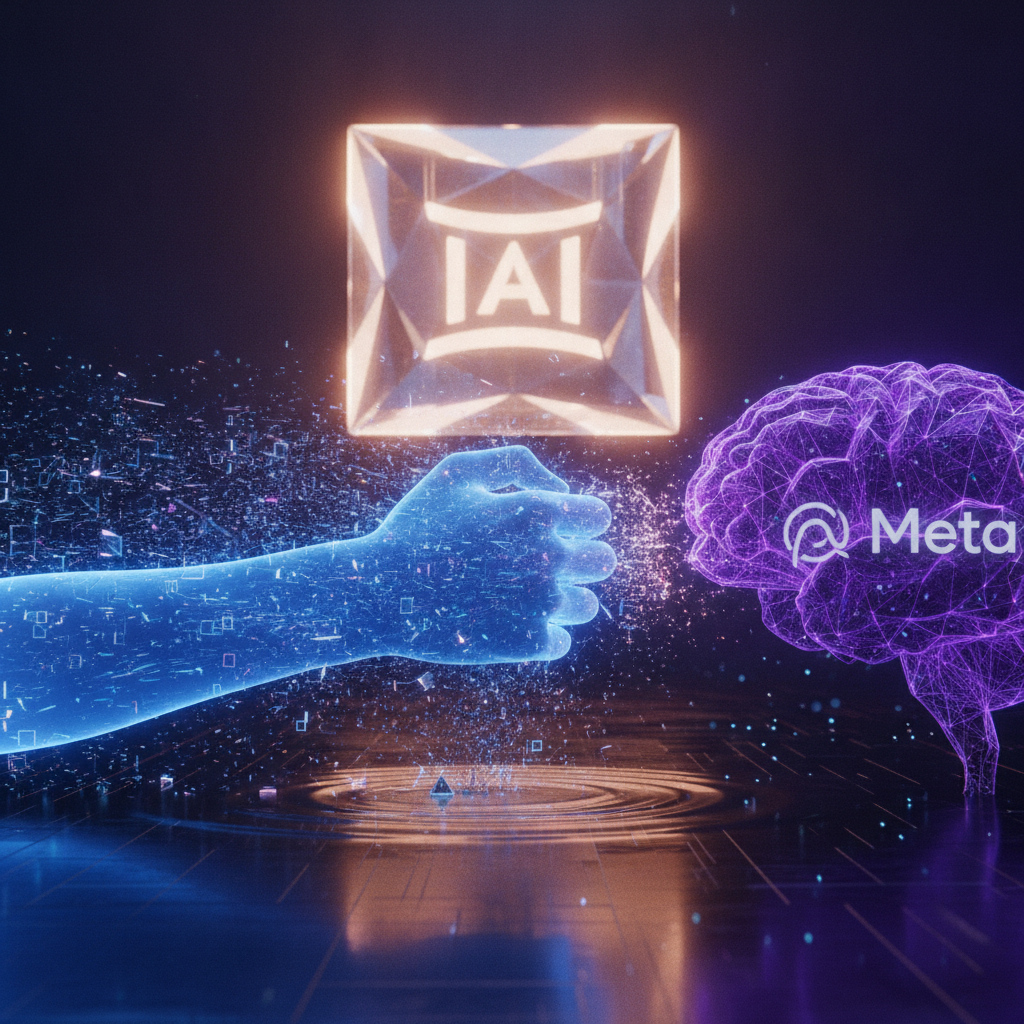
The intensifying battle for supremacy in artificial intelligence has taken another significant turn, with reports indicating that Google is now limiting Meta’s access to its powerful Gemini AI models. This strategic move, initially reported by the Financial Times and highlighted by TradingView, underscores the fierce competition and proprietary nature of foundational AI technologies among tech giants. It signals a critical moment in how leading companies protect their intellectual property and maintain competitive advantages in the rapidly evolving AI landscape.
While the specifics of the limitations remain under wraps, the core message is clear: Google is carefully controlling who can leverage its most advanced AI capabilities. This decision likely stems from a combination of competitive factors and a desire to steer the development of AI in line with Google’s own strategic vision. Such restrictions highlight the value and sensitivity of cutting-edge AI models, transforming them into closely guarded corporate assets.
The Strategic Value of Gemini AI
Google’s Gemini represents a significant leap forward in multimodal AI, capable of understanding and processing various types of information, from text and images to audio and video. Its advanced capabilities make it a highly sought-after resource for developers and companies looking to build next-generation AI applications. Naturally, Google aims to leverage Gemini to reinforce its own product ecosystem and partnerships.
The decision to restrict Meta’s access is a powerful testament to the strategic importance Google places on its AI leadership. It suggests that Google views Meta, a direct competitor in several key areas, as a strategic rival that might utilize Gemini to enhance its own competing products or services. This protective stance is not uncommon in highly competitive industries, especially when a core technology like Gemini holds such transformative potential.
Implications for Meta’s AI Ambitions
For Meta, this development could push the company to further accelerate its independent AI research and development, particularly around its open-source Llama models. Meta has been a strong proponent of open AI, making its Llama series widely available to foster innovation and build a robust ecosystem around its technology. This limitation from Google might strengthen Meta’s resolve to rely on its homegrown capabilities.
While access to Gemini could have provided Meta with additional tools for experimentation or specific product integrations, Meta has a robust AI research division and substantial resources of its own. The company is actively developing its next-generation Llama models and integrating AI across its family of apps, including Facebook, Instagram, and WhatsApp. This turn of events could simply reinforce Meta’s commitment to self-sufficiency and diversification in its AI strategy, potentially spurring even greater investment in Llama’s evolution.
Google’s Stance in the AI Arms Race
Google’s move clearly demonstrates its commitment to securing its position at the forefront of the global AI race. By controlling access to Gemini, Google can dictate how its powerful AI is used, ensuring alignment with its commercial objectives and ethical guidelines. This focused approach is critical as AI models become increasingly sophisticated and integrated into everyday products and services.
This strategic limitation also underscores a broader trend in the tech industry: the battle for foundational AI models. Companies are investing billions into developing proprietary AI, understanding that these models will power the next generation of computing. Google’s decision is a clear signal that the company intends to maintain a firm grip on its most valuable AI assets, shaping the competitive landscape for years to come.
The Evolving Landscape of AI Partnerships
The reported restrictions highlight the complex dynamics of collaboration and competition among tech giants. While partnerships are crucial for accelerating AI development, strategic rivalries often dictate the boundaries of such collaborations. Companies must carefully weigh the benefits of sharing technology against the risks of empowering competitors.
This situation serves as a reminder that in the high-stakes world of AI, access to foundational models is a key differentiator and a powerful bargaining chip. As artificial intelligence continues to mature and integrate into every facet of technology, expect to see more such strategic maneuvers defining who leads and who follows in this transformative era. The ongoing evolution of these relationships will undoubtedly shape the future of AI innovation and accessibility for developers and users alike.
Source: Google News – AI Search
