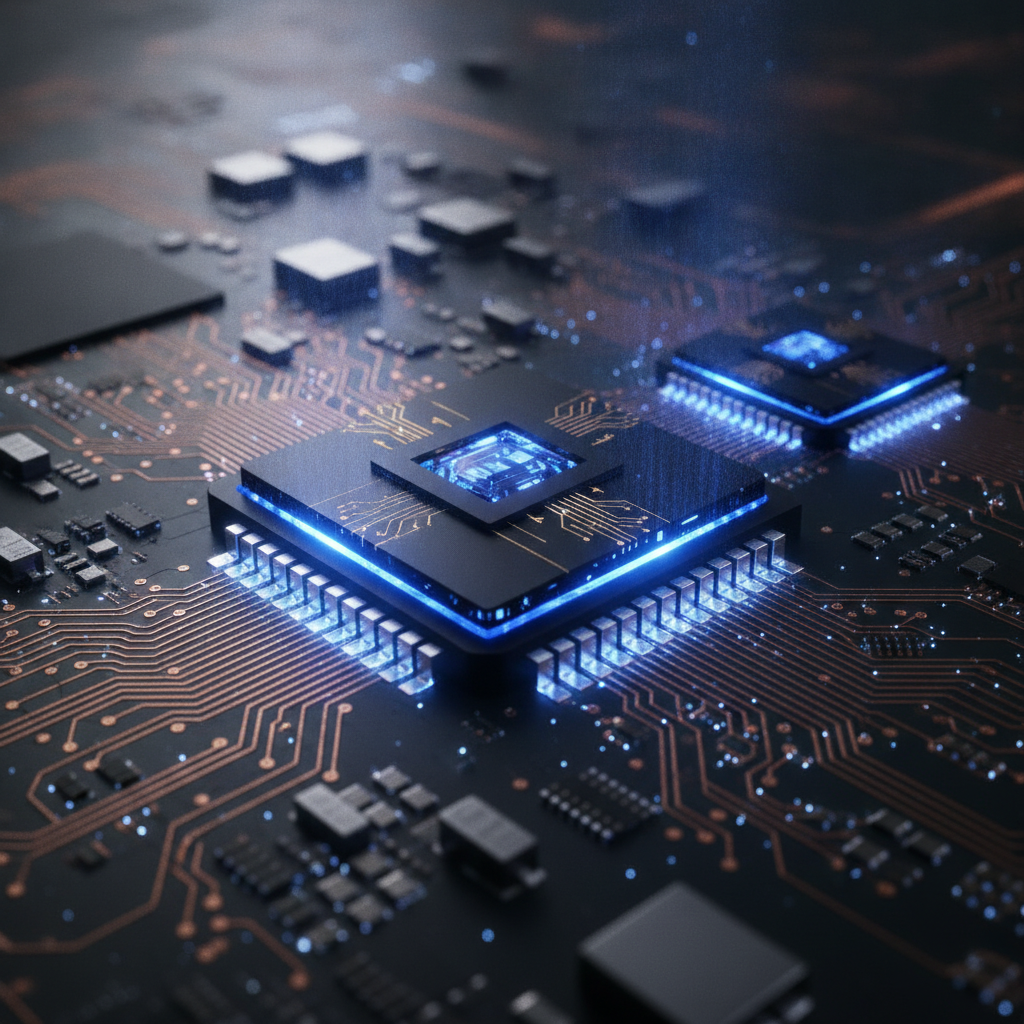
The artificial intelligence revolution sparks a fierce battle for hardware supremacy. While attention often focuses on AI model training, a critical new front is rapidly gaining prominence: AI inference. This shift ignites intense competition between Google and Nvidia, fundamentally reshaping the AI market.
For years, Nvidia has been the undisputed leader in AI hardware, thanks to its powerful GPUs and robust CUDA software ecosystem. These accelerators formed the backbone for training the largest and most complex AI models, making Nvidia an indispensable partner for AI innovation.
However, AI inference – using a trained model to make predictions – has distinct demands. It often requires lightning-fast, real-time results at massive scale, with strict operational cost considerations for applications like chatbots or recommendations.
As AI models move from labs into applications, inference requests will explode. This burgeoning demand means total compute power for inference could soon dwarf that for training, prompting companies to seek specialized, cost-effective solutions.
Google’s Bold Play with TPU V8
Enter Google, a company with deep AI roots and a history of custom silicon development. Its Tensor Processing Units (TPUs) powered vast internal AI workloads, and with its next-generation TPU V8, Google targets the broader AI hardware market, specifically for inference.
While exact TPU V8 specifications are awaited, its design philosophy centers on highly efficient matrix multiplication and specialized AI operations. This optimization translates into superior performance per watt and per dollar for inference, offering a compelling, cost-effective alternative for scalable cloud-edge inference.
Google’s TPUs are Application-Specific Integrated Circuits (ASICs), meticulously crafted for neural network computations. This bespoke design offers incredible efficiency in specific AI workloads, benefiting power consumption and latency for repetitive inference, deeply integrated within the Google Cloud ecosystem.
Conversely, Nvidia’s GPUs are general-purpose parallel processors, renowned for flexibility and the robust CUDA programming model. While exceptional for training, their versatility can mean less raw efficiency for narrow inference tasks compared to an ASIC; however, Nvidia’s strength lies in its widespread adoption and comprehensive software stack.
Rewriting the AI Market Landscape
The fierce competition between Google’s TPUs and Nvidia’s GPUs for inference promises significant benefits. This rivalry drives innovation, pushing both companies to deliver better price/performance ratios for AI deployment, leading to more choices and lower operational costs.
Beyond raw performance, the battle extends to ecosystem lock-in and developer support. Nvidia boasts a mature, dominant software stack with CUDA, while Google offers a tightly integrated AI stack within Google Cloud, appealing to cloud-native users.
This increased focus on inference hardware reflects a broader strategic shift within the AI industry. As companies transition from experimental models to deploying at scale, investment shifts towards production environment optimization, making efficient inference a critical competitive differentiator.
The Future of AI Hardware
The emergence of Google’s TPU V8, alongside other custom AI accelerators like Amazon Inferentia and Intel Gaudi, signifies a burgeoning market. This diversification prevents a single vendor from monopolizing AI hardware, fostering robust competition, faster development cycles, and tailored solutions for diverse applications.
For businesses leveraging AI, this competitive landscape translates into greater flexibility and diverse infrastructure choices. Whether the priority is raw training power, hyper-efficient inference, or a balanced approach, purpose-built hardware options ensure AI can be deployed more sustainably and cost-effectively.
The AI hardware market is anything but static; it’s a rapidly evolving arena where innovation is paramount. While Nvidia’s legacy in AI training remains strong, Google’s aggressive push with the TPU V8 for inference highlights a critical and fast-growing segment. This dynamic competition ultimately benefits the entire industry, ensuring companies and users can harness AI most efficiently and economically.
Source: Google News – AI Search
