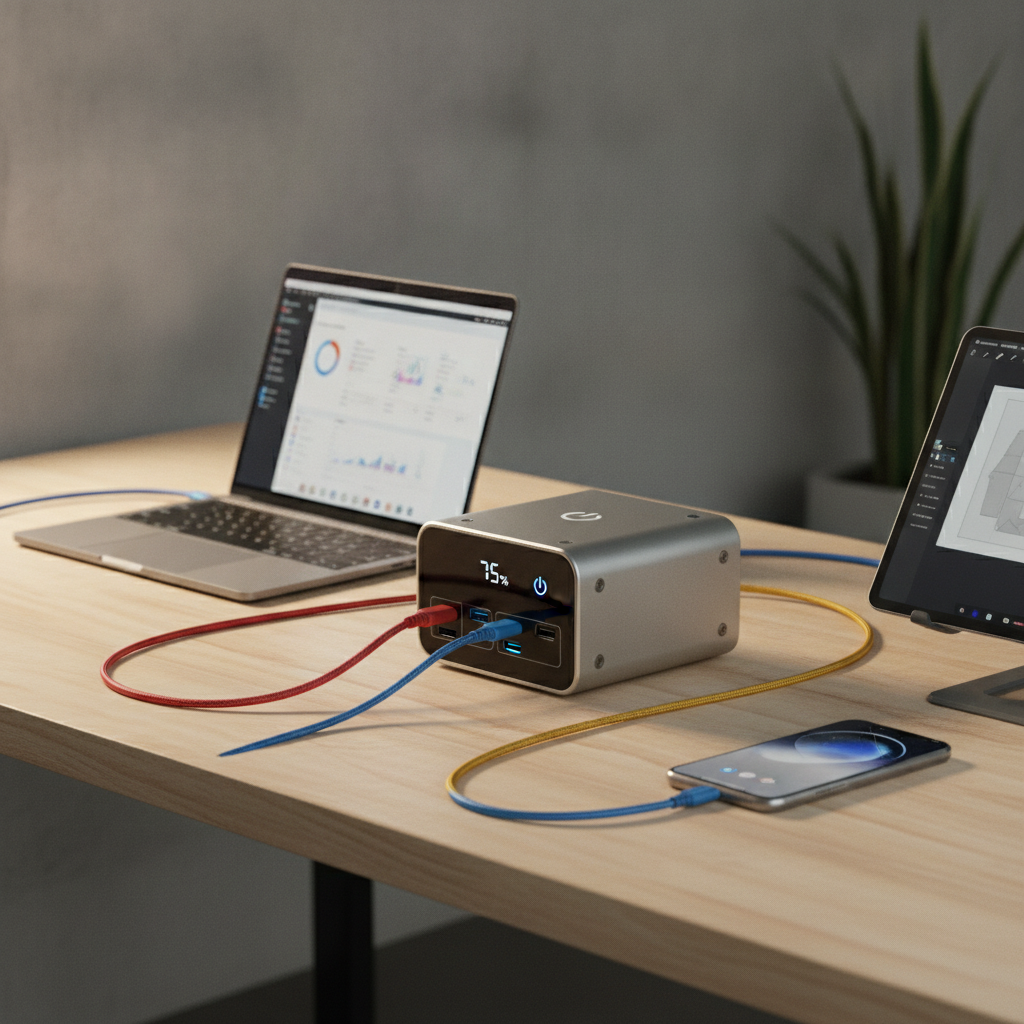
Most of us view power stations as those trusty devices we roll out only when disaster strikes—a power outage, a camping trip, or an unexpected off-grid need. This reactive approach, however, often leads to frustrating surprises: discovering your power station isn’t fully charged, fumbling for missing cables, or losing critical Wi-Fi when you need it most. It’s time to rethink how we integrate these powerful tools into our daily lives.
Here at ZDNET, our recommendations are built on countless hours of rigorous testing, in-depth research, and careful comparison shopping. We meticulously gather data from top sources, including vendor specifications, retailer listings, and independent review sites, alongside poring over customer reviews to truly understand what matters to real users. Our goal is always to deliver the most accurate information and knowledgeable advice to help you make smarter buying decisions, ensuring our editorial content remains unbiased and uninfluenced by advertisers.
Why Your Power Station Deserves More Than Just Emergency Duty
As a smart home tech reviewer, I’ve had the unique opportunity to test countless power stations, leading me to develop more creative and proactive uses for them. While larger units seamlessly integrate into my whole-home backup system, smaller ones have become invaluable Uninterruptible Power Supplies (UPSs) for devices crucial to my home’s daily rhythm. This strategy ensures my essential tech remains operational, come what may.
Instead of waiting for an emergency to prompt their use, I keep certain devices perpetually connected to a power station. This simple shift transforms them from emergency gear into reliable, always-on backup solutions. Let’s explore the three types of devices I always keep plugged into a power station.
Stay Connected: Keeping Your Wi-Fi Online
If there’s one device I’ve learned to keep constantly connected to a UPS, it’s my internet modem and router. Growing up, we had a UPS for every desktop computer, a necessity to prevent hard shutdowns during the inevitable power cuts in my home country. Today, with laptops, tablets, and phones offering mobility, the biggest disruption to my workday is an unexpected loss of home Wi-Fi.
My husband and I both work remotely, making a constant, reliable internet connection non-negotiable. Power outages are relatively common in our area, so connecting our modem to a portable battery as a UPS has been a game-changer. When suburban or urban power grids fail, mobile networks quickly become congested as everyone floods them, slowing speeds to a crawl.
Maintaining a steady Wi-Fi connection keeps us productive for work and ensures our kids can continue using their devices without interruption. The good news is that modems and routers have a surprisingly low power draw. A modest 1kWh battery can keep your Wi-Fi running for several days during a blackout.
For example, my EcoFlow River 3 Plus, with its 286Wh capacity, can power my modem and router for a full workday. For extended outages, an Anker Solix C1000, offering a robust 1,056Wh capacity, would easily keep your internet active for three times as long. This proactive setup also proves critical for smart home systems; even if your whole-home backup doesn’t rely on Wi-Fi to kick in, remote monitoring and control certainly do. I learned this the hard way during a recent trip when I accidentally (and remotely) shut off my modem’s circuit, losing all ability to check on my dog via camera. A UPS on the modem would have prevented this frustrating predicament, allowing me to restore connectivity remotely.
Protect Your Perishables: Powering Your Refrigerator
During a power outage, your refrigerator is likely the first appliance that comes to mind, as nobody wants to face the nightmare of spoiled food. The good news is that modern refrigerators are quite energy-efficient, typically using between 1-2kWh per day, which is much lower than many people expect from a major appliance. This makes them ideal candidates for a power station backup.
Beyond emergency preparedness, plugging your refrigerator into a portable battery charged by solar power can even save you money, potentially $8-$20 a month, by reducing reliance on grid power. When considering a power station for your fridge, it’s important to check your appliance’s specifications. While most modern fridges draw between 100W and 300W when their compressor is running (which cycles on and off), they can experience startup surges of 600W to 1,500W.
For reliable refrigerator backup, especially for longer outages, I recommend a minimum of 2,000Wh capacity, if your budget allows. This provides a crucial buffer and peace of mind. Excellent options include the EcoFlow Delta 3 Max Series, boasting a 2,048Wh capacity and 3,000W output, or the Anker Solix C2000, with the same capacity and a 2,400W output.
Either of these powerful batteries can keep a full-size refrigerator running for up to three days. Even a 1,024Wh battery can provide essential power for up to 16 hours, preventing immediate food loss and giving you time to react. Investing in this kind of backup ensures your food stays safe and your household experiences less disruption during unexpected grid failures.
Maintain Vigilance: Securing Your Home with Powered Cameras
A power outage is precisely when you want your security cameras to be fully operational. Whether it’s to check for storm damage, monitor for suspicious activity, or simply ensure family members arrive home safely, people often want increased surveillance during uncertain times. A security system that goes dark when the power does is, frankly, counterproductive.
While some security systems offer limited built-in battery backups, they typically only last a short period before shutting down. Battery-powered cameras are a good start, but they still rely on a consistent network connection to function effectively. By keeping your router and modem powered with a power station, you address the network challenge, but your camera hub or individual cameras also need dedicated power.
Connecting your security cameras and/or their central hub to a UPS ensures you never lose crucial surveillance coverage. It’s vital to identify the specific components that need backup to keep your security system fully functional. If you primarily use battery-powered cameras, focus on backing up the hub or base station, a PoE switch for wired cameras, or your Network Video Recorder (NVR).
As a fan of Eufy’s home security lineup, I strongly recommend backing up their HomeBase 3, which serves as your local storage hub. Losing power to this central unit means your cameras won’t record new footage, motion detection will be compromised, and remote access will disappear entirely. The good news is you don’t need a massive battery for this critical component.
Even a compact battery like the EcoFlow River 3, with its 245Wh capacity and robust 3,000W output, can prevent these crucial security components from going offline. This small investment ensures your peace of mind and continuous vigilance, regardless of external power conditions.
Source: ZDNet – AI
