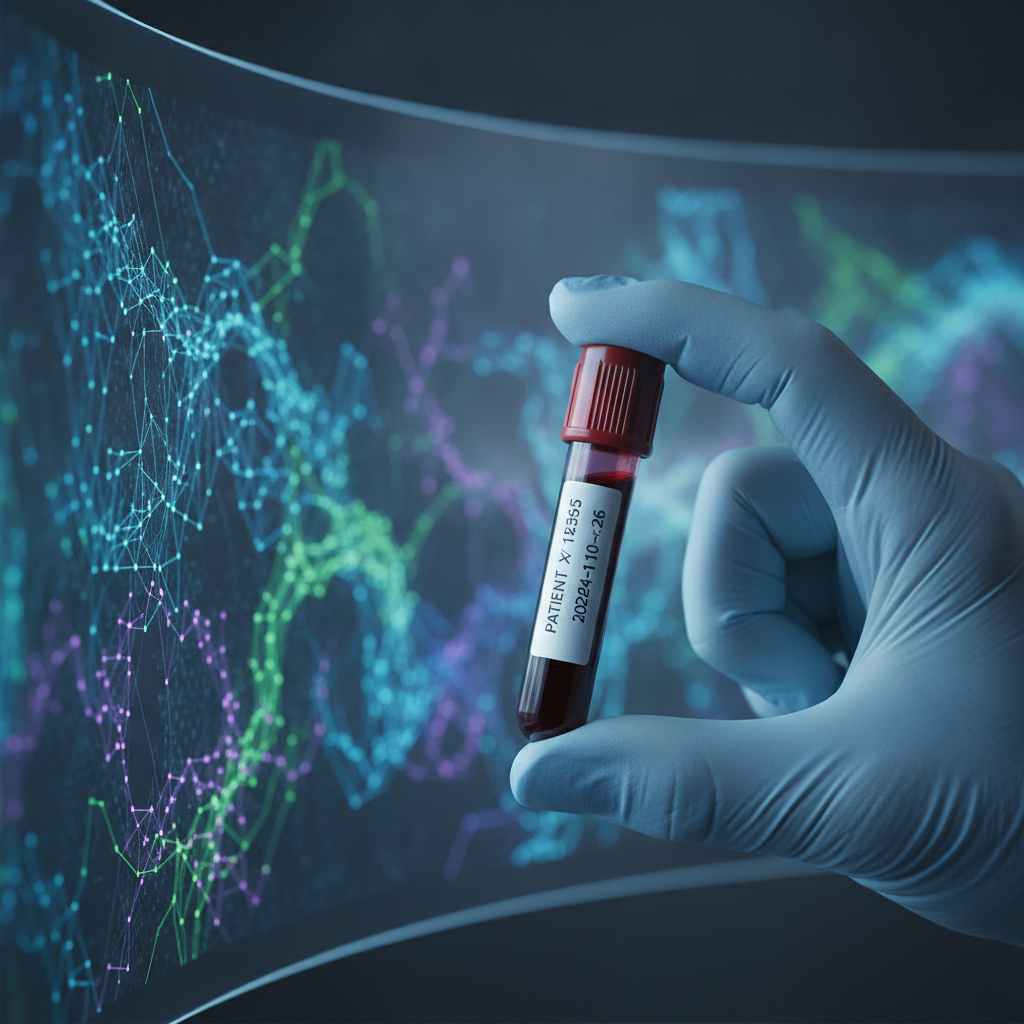
The NHS is on the cusp of a significant advancement in women’s healthcare, with several hospitals gearing up to deploy an innovative AI-powered blood test. This groundbreaking technology aims to transform how women are assessed for potential womb cancer, offering a less invasive alternative before traditional diagnostic procedures.
Every year, approximately 90,000 postmenopausal women in England are referred by their GPs for checks due to heavy bleeding, a common symptom that can indicate womb cancer. While around 10,000 women are unfortunately diagnosed annually, and 2,700 succumb to the disease, many referrals ultimately prove benign. The new AI test seeks to streamline this process, reducing anxiety and discomfort for thousands.
Revolutionizing Womb Cancer Assessment with AI
Developed by Leeds-based PinPoint Data Science, this sophisticated test leverages machine learning to evaluate cancer risk from a small blood sample. It analyzes around 30 different blood markers, categorizing patients into low, elevated, or high-risk groups. This detailed risk score can then guide clinicians in deciding whether a patient needs monitoring, further investigation, or immediate prioritization for faster assessment.
The PinPoint test, costing around £30 per patient, isn’t limited to womb cancer; it’s a versatile multi-cancer tool. The company reports its successful application across various cancer pathways, including gynaecological, lung, upper gastrointestinal, head and neck, and lower gastrointestinal cancers. This broad utility underscores its potential to revolutionize multiple areas of cancer diagnostics within the NHS.
The introduction of this test follows a comprehensive trial involving 16,481 patients referred through urgent suspected cancer pathways across Yorkshire. This extensive study included women experiencing symptoms indicative of possible womb or other gynaecological cancers. The results were highly encouraging, demonstrating the test’s remarkable accuracy.
Crucially, the trial revealed that about one in ten women referred for heavy bleeding were found to have cancer. The PinPoint test correctly identified an impressive 99.1% of these cancers as either elevated or high risk. For women in the lowest-risk group, the test delivered a negative predictive value of 99.8%, meaning it was incredibly effective at ruling out cancer when the risk was low.
Improving Patient Experience and NHS Efficiency
Under the current pathway for suspected reproductive system cancers, women typically undergo a pelvic examination, often including a transvaginal ultrasound scan. This procedure, which involves inserting an ultrasound probe into the vagina to measure womb lining thickness, can be uncomfortable or even painful for many patients. If suspicion of cancer persists, further invasive checks like a biopsy and hysteroscopy (an examination of the womb’s interior) may follow.
The PinPoint test offers a crucial advantage by aiming to identify women at very low risk *before* these invasive procedures become necessary. PinPoint estimates that their blood test could spare approximately one in five referred women from needing a transvaginal ultrasound scan. This translates to an estimated 18,000 women across England each year avoiding an uncomfortable and often anxiety-inducing procedure.
Leading the charge in adopting this technology, Mid Yorkshire NHS Teaching Trust plans to utilize the test for six types of gynaecological or upper gastrointestinal cancer. Meanwhile, Leeds Teaching Hospitals NHS Trust will focus on its application for gynaecological cancer. These early deployments signal a promising shift towards more patient-friendly and efficient diagnostic pathways.
Experts are already highlighting the test’s transformative potential. Professor Sean Duffy, Chief Medical Officer at PinPoint Data Science and former NHS England national clinical director for cancer, emphasizes that the test’s primary value lies in its ability to effectively rule out very low-risk women. Dr. Jacinta Walsh, a GP in West Yorkshire, notes that patients often require up to six GP visits before cancer is ruled out, suggesting the test could significantly shorten this process and free up valuable NHS capacity.
Tracy Jackson, a consultant gynaecologist and cancer unit lead at Leeds Teaching Hospitals NHS Trust, underscores that most women referred via the current pathway do not have cancer, yet endure uncomfortable investigations. She believes the AI test will empower clinicians to better triage patients before hospital-based investigations, allowing low-risk patients to be ruled out in primary care and higher-risk individuals to be prioritized for swift follow-up.
The Broader Impact of AI in NHS Diagnostics
The deployment of this AI-powered blood test is part of a growing trend of artificial intelligence integration within the NHS. Recent advancements include MEMORI, an AI system at Kent and Canterbury Hospital that assesses infection risk from routine patient data, and an AI triage tool being rolled out in the NHS App, expected to reach over 200,000 patients within 12 months.
Furthermore, the government has committed £20 million to roll out AI-powered chest X-ray tools to all NHS trusts in England by 2029. These tools, already active in about half of NHS trusts, have supported assessments for over four million patients investigated for lung cancer. This widespread adoption illustrates the NHS’s commitment to harnessing AI for improved diagnostic speed and accuracy.
While the PinPoint test shows immense promise, organizations like Cancer Research UK emphasize the ongoing need for further research to fully understand its benefits for both patients and the NHS. Samantha Harrison, a spokesperson for the charity, highlights that early detection saves lives, but current diagnostic processes are often too slow. The test offers a compelling solution by potentially ruling out endometrial cancer with a simple blood test, reducing the need for more invasive investigations.
The continuous evaluation of such technologies will be crucial to assess their long-term impact on patient outcomes, referral decisions, and overall NHS diagnostic capacity. As AI continues to evolve, its role in modern healthcare is set to become even more vital, promising a future of earlier, more accurate, and less invasive diagnostics for patients nationwide.
Source: AI News
