At ZDNET, our commitment is to provide you with the most reliable and insightful recommendations possible. We understand that making smart tech decisions, especially for your vehicle, is crucial. That’s why our advice is always rooted in rigorous, independent testing, extensive research, and comprehensive comparison shopping.
Our dedicated team invests countless hours gathering data from the most trusted sources. This includes detailed vendor and retailer specifications, alongside other credible, independent review sites. We also meticulously analyze customer reviews to understand what truly matters to real users who interact with these products and services daily.
Transparency is key to our process. When you click through our site to a retailer and make a purchase, we may earn an affiliate commission. This vital support helps fund our operations, but we want to be absolutely clear: it never influences our editorial content, our coverage decisions, or the price you pay. Our authors and ZDNET itself are never compensated for these independent reviews, adhering to strict guidelines that completely separate advertising interests from our unbiased editorial integrity.
Our editorial team writes directly for you, our valued reader, with the singular goal of delivering the most accurate information and expert advice available. Every article undergoes thorough review and fact-checking to ensure it meets our exceedingly high standards. Should any error or misleading information somehow slip through, we are committed to promptly correcting or clarifying the content, and we encourage you to report any inaccuracies you might find.
With fuel prices continuing their climb, many drivers are feeling the pinch at the pump. Unfortunately, this economic pressure creates a fertile ground for scammers looking to profit from people’s legitimate desire to save money. We’ve recently noticed a significant increase in questions about “fuel saving” or “economy chip tuning box” OBD2 dongles making the rounds.
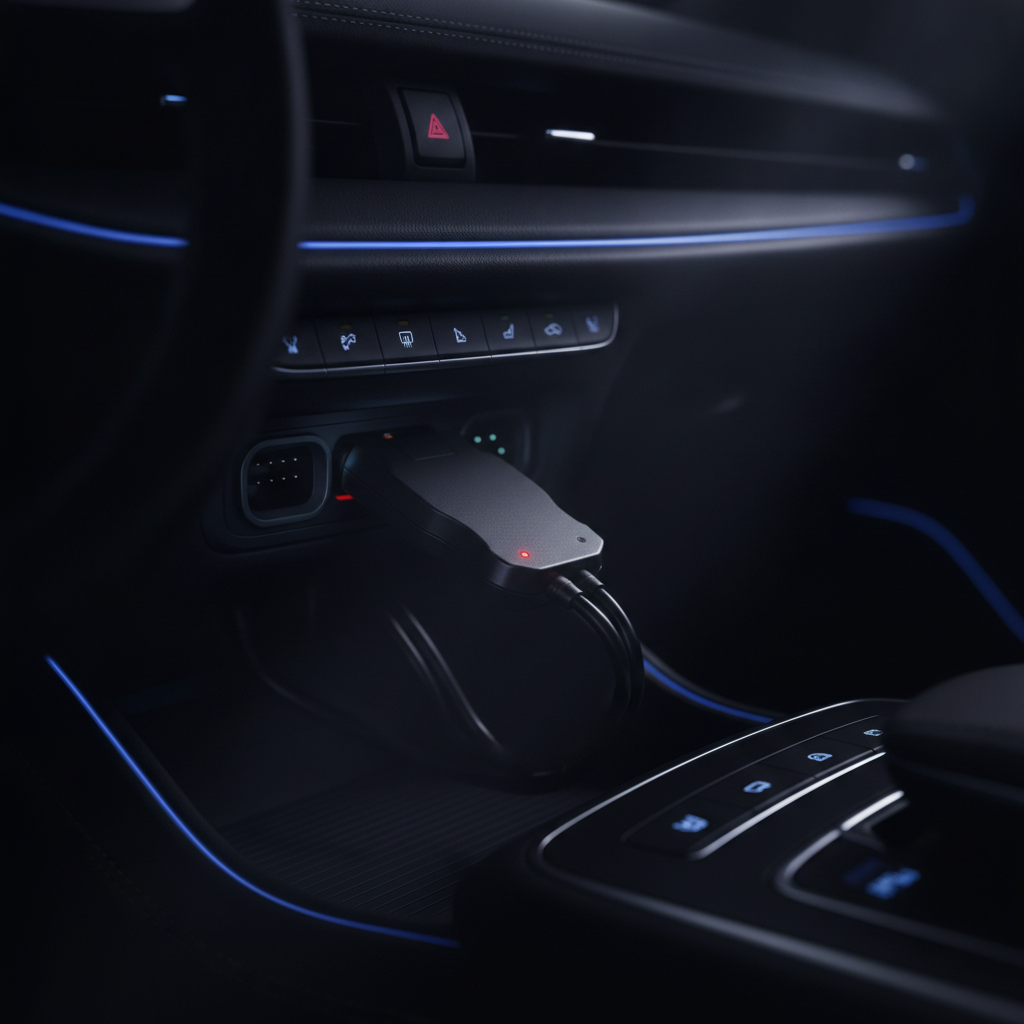
These devices promise remarkable fuel efficiency improvements with minimal effort, often sounding too good to be true. Today, we’re going to take a closer look inside one of the most common examples of these so-called fuel savers. Our goal is to expose why, at best, it’s nothing more than a box with blinking lights, and at worst, it poses a serious risk of damaging your car.
Beware the “Plug-and-Drive” Fuel Saver Scam
These fake fuel savers are surprisingly easy to spot once you know what to look for, as many share similar characteristics. They typically boast “techie” sounding names like “OBD2” and “tuning box” in their descriptions. You’ll often see them advertised with phrases like “plug and drive,” emphasizing ease of use, and making totally over-the-top promises regarding fuel savings and emission reductions.
The core premise is that you simply plug this dongle into your vehicle’s OBD2 port, and it will magically remap your car’s computer as you drive. For context, OBD2 stands for On-Board Diagnostics II, a legitimate built-in system that monitors your engine’s health, emissions, and provides access to live data. While there are many legitimate (and often affordable) tools designed to interface with this port for diagnostics, these scam dongles are emphatically not among them.
What’s Really Inside These “Economy Chips”?
The marketing materials and packaging for these devices often look quite professional, making bold claims and sometimes even offering a multi-year warranty. They suggest a sophisticated internal mechanism that adapts to your driving style, optimizing performance and fuel economy. However, as with many things that seem too good to be true, the reality is far simpler and far less impressive.
Upon disassembling one of these widely advertised “tuning boxes,” we found absolutely nothing beyond the most basic circuitry required to make a few LEDs blink. Literally. Inside, there was a simple timer chip, a handful of LEDs, a few resistors, and a single button. It will blink when connected to your car’s 12V power supply, but it’s just a modern-day smoke-and-mirrors trick, designed to look impressive while doing nothing functional.
The Hidden Dangers You Can’t Afford to Ignore
Beyond the simple fact that people are paying good money for a useless box that merely flashes lights, these devices present tangible risks to your vehicle. We’ve encountered poorly assembled examples where bits of solder and loose wires rattle around inside the casing. Such shoddy construction creates a significant risk of internal short circuits, which could potentially lead to electrical damage or even a car fire – an extremely dangerous scenario no driver wants to face.
Another common and severe issue involves the physical integrity of the dongle’s pins. We’ve seen instances where these cheap pins can break off and become lodged within your car’s crucial OBD2 port. Should this happen, you’re looking at a potentially seriously expensive repair bill to fix or replace a damaged OBD2 port, effectively turning a quest for savings into a major financial headache.
Real Ways to Boost Your Fuel Economy
Instead of risking your vehicle and your wallet on scam devices, focus on proven, effective strategies to save fuel. These legitimate methods require a little effort but deliver genuine, lasting results without any risk:
- Maintain your tires properly: Ensure your tires are inflated to the manufacturer’s recommended pressure. Underinflated tires increase rolling resistance, wasting fuel.
- Drive smoothly: Avoid aggressive acceleration and hard braking. Smooth, gradual driving is significantly more fuel-efficient.
- Reduce excess weight: Remove any unnecessary items from your trunk or cargo area. Every extra pound your car carries uses more fuel.
- Limit idling: If you’re going to be stopped for more than a minute, turn off your engine. Idling consumes fuel without getting you anywhere.
- Plan your trips: Combine multiple errands into one trip to minimize cold starts and short drives, which are less efficient.
- Regular vehicle maintenance: Keep your engine tuned, air filters clean, and ensure all fluids are at proper levels. A well-maintained engine runs more efficiently.
By adopting these simple, practical habits, you can genuinely save money on fuel every time you drive, without ever having to plug a questionable device into your car.
Source: ZDNet – AI
