The global economy is currently navigating a period of significant shifts, with commodity prices seeing dramatic fluctuations. Amidst geopolitical tensions, particularly from the conflict in the Gulf region, aluminum prices have soared by an astounding 20%. This surge has pushed the metal to levels not witnessed in decades, creating both challenges and lucrative opportunities within the industry.
With roughly 10% of the world’s aluminum supply originating from the Gulf, the ripple effects of regional instability are undeniable. Even before these recent events, the U.S. government had already designated aluminum as a critical mineral, highlighting its strategic importance. The nation heavily relies on imports to meet its aluminum demand, and a significant portion of the aluminum it does produce comes from recycling efforts.
The Growing Value of Aluminum Recycling
For innovative recycling startups, this heightened market value presents a golden opportunity to make a substantial impact. Aluminum, though comprising just about 1% of the overall garbage stream, commands an impressive market price. As Matanya Horowitz, CTO at waste sorting startup Amp, pointed out to TechCrunch, it often trades for over $1,000 per ton, making it one of the most significant individual commodities in the waste stream.
Despite being one of the most recycled materials in the U.S., current recovery rates are surprisingly low. The Environmental Protection Agency (EPA) estimates that only about 20% of aluminum is successfully recovered, leaving a vast amount of valuable material to go to waste. This inefficiency underscores a critical area for improvement, and it’s precisely where advancements in artificial intelligence are stepping in.
AI Revolutionizes Waste Sorting
Waste sorting startups are increasingly leveraging the power of AI to dramatically enhance these recovery figures. By employing advanced algorithms and sophisticated sensor technology, these companies are transforming how aluminum—and other valuable materials—are identified and reclaimed from complex waste streams. This technological leap promises not only environmental benefits but also significant economic returns.
One such pioneer is Sortera, a metals recycling startup that recently announced the opening of its second facility in Tennessee. This strategic expansion, exclusively revealed to TechCrunch, effectively doubles the company’s processing capacity to a remarkable 240 million pounds annually. An impressive 90% to 100% of this capacity is dedicated specifically to aluminum, addressing a considerable fraction of the 4.3 million metric tons the U.S. utilized last year.
Based in Indiana, Sortera specializes in meticulously sorting aluminum scrap, employing a suite of cutting-edge sensors. These include high-resolution lasers, advanced cameras, and X-ray fluorescence technology, all feeding data to sophisticated AI algorithms. These algorithms precisely classify each potato chip-sized piece of scrap, identifying its specific grade of aluminum.
This unparalleled accuracy in separating aluminum grades allows Sortera to command higher profits per pound. By transforming mixed scrap into high-purity, furnace-ready material, Sortera is not just recycling; it’s creating a more valuable, sustainable resource. This meticulous approach ensures that more of this critical metal re-enters the manufacturing cycle efficiently.
Amp, another leader in the space, adopts a slightly different yet equally impactful strategy. Their AI-powered sorting system is designed to sift through both traditional recycling streams and general waste. This broader approach aims to capture aluminum that might otherwise bypass conventional recycling channels entirely, significantly increasing overall recovery rates.
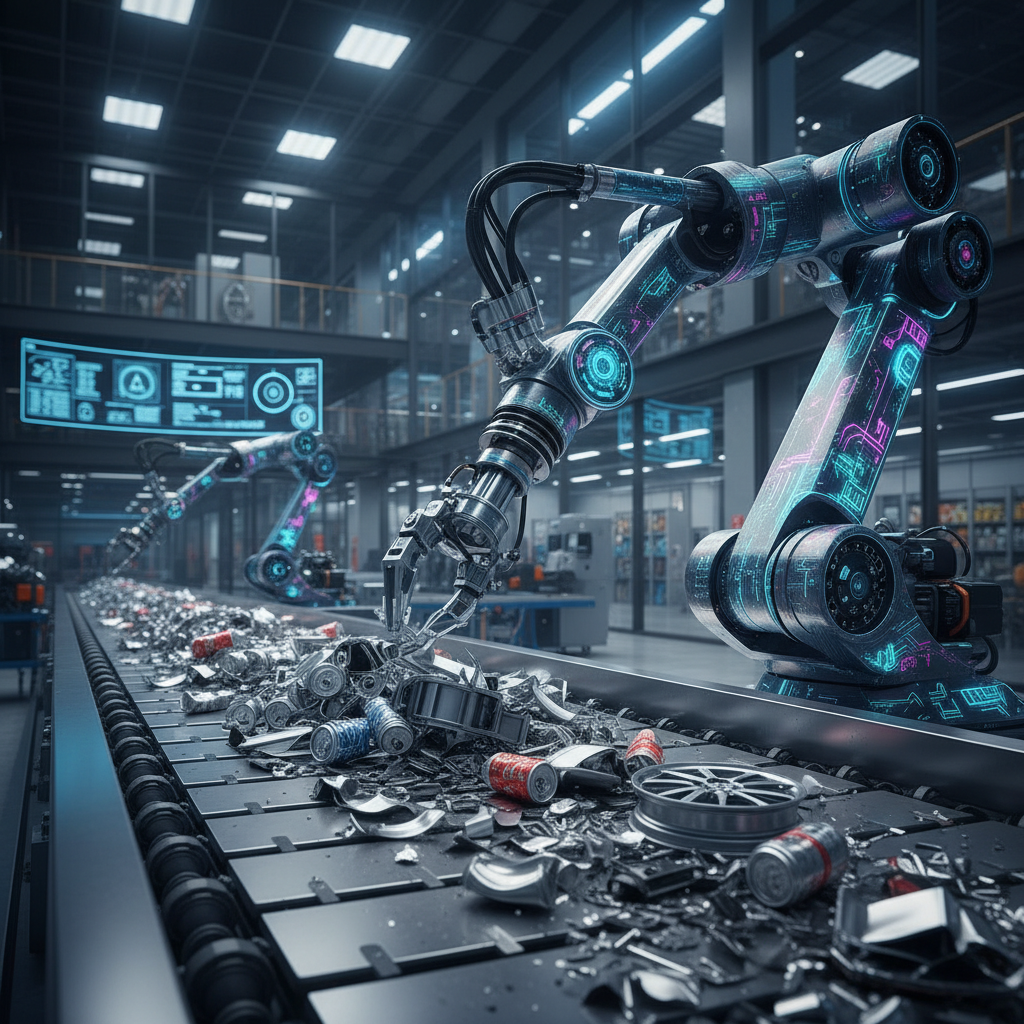
Amp’s system utilizes a combination of visible light and infrared cameras to identify a wide array of materials, from wrappers and foil to differentiating various plastics from aluminum. As waste travels along conveyor belts, robotic arms and targeted air puffers precisely pluck or blow the identified materials into their respective collection bins. Amp proudly states that its system boasts over 90% accuracy in recovering specific materials, including aluminum.
As Matanya Horowitz of Amp highlights, “Half of the aluminum in a metro area — in places with successful recycling programs — are just in the garbage, not even touching the recycling system.” This stark reality underscores the immense potential of AI-driven sorting to unlock vast quantities of valuable aluminum currently lost to landfills. By intercepting these materials, companies like Amp are turning waste into a vital resource.
Bolstering Domestic Supply and Sustainability
For the broader metals industry, these advanced recycling facilities, exemplified by Sortera and Amp, are poised to become crucial pillars for bolstering domestic supplies of a critical mineral. They offer a sustainable, domestically sourced alternative to relying heavily on imports, enhancing economic resilience and reducing environmental impact. These projects represent significant strides towards a circular economy.
The innovation showcased by these startups is not just about improved efficiency; it’s about fundamentally rethinking waste management. As Horowitz emphasizes, “These types of projects are some of the biggest sources of domestically produced aluminum that are coming online in a given year.” This demonstrates the pivotal role that AI-powered recycling is playing in securing a more sustainable and resource-independent future for critical materials like aluminum.
Source: TechCrunch – AI
