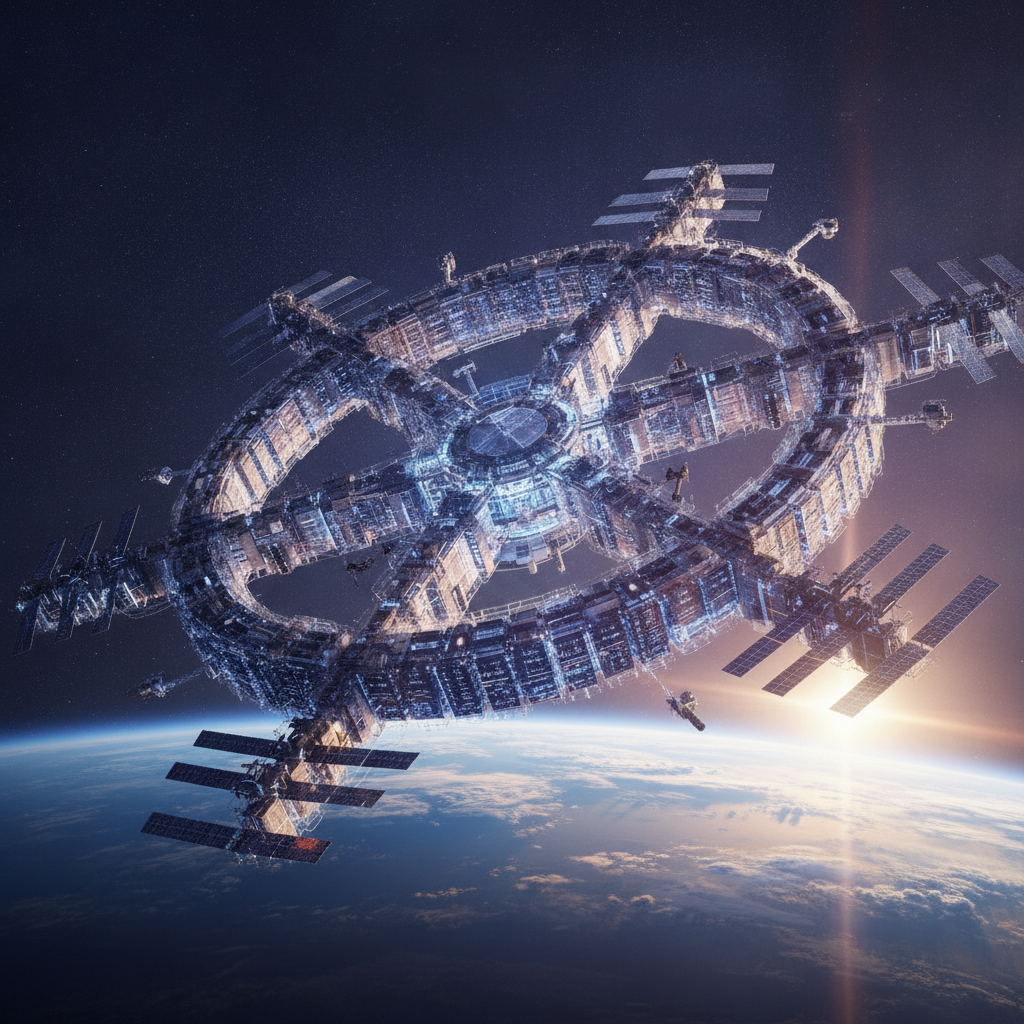
The race to build out the foundational infrastructure for artificial intelligence is undeniably intense, yet not everyone is on the same page regarding the optimal path forward. A recent and notable debate emerged when Masayoshi Son, the founder and CEO of SoftBank, publicly questioned the feasibility and wisdom of Elon Musk’s ambitious vision for orbital data centers.
Son, whose company is well-known for its often audacious and high-risk investments, argued at a recent shareholder meeting that placing data centers in space would be both prohibitively expensive and too time-consuming. He emphasized that in the fierce “battle for AI,” the immediate future – “the next few years” – holds far more significance than distant prospects that might materialize a decade from now.
This provocative stance from SoftBank’s chief was a key topic on a recent episode of TechCrunch’s Equity podcast, where Kirsten Korosec, Sean O’Kane, and I (Anthony Ha) delved into Son’s remarks. We also discussed related developments, including OpenAI’s plans for custom chips and chipmaker Groq’s significant new $650 million funding round, among other insights.
Why the Skepticism Over Orbital Compute?
Kirsten Korosec highlighted the striking irony in Son’s skepticism, given SoftBank’s extensive history of making “wild bets” in the tech world. It certainly gives pause when a figure synonymous with bold, futuristic investments voices such strong reservations about a concept like space-based data centers.
The core of Son’s argument against orbital data centers centers on their practicality and timeliness. While the concept might sound futuristic and appealing, the reality of astronomical costs and years, if not decades, of development means they simply aren’t a solution for the immediate, pressing demand for AI compute capacity on Earth.
Many in the industry have been swept up by the allure of orbital data centers, viewing them as a potential answer to the land-use constraints and regulatory hurdles faced by terrestrial facilities. However, Son’s critical questioning serves as a crucial reality check, pushing back against the prevailing hype and forcing a re-evaluation of current priorities in the AI race.
The “Neo-Cloud” Rush and Strategic Plays
Indeed, as TechCrunch’s Sean O’Kane pointed out on the podcast, the immense and growing demand for AI compute has turned what he terms “neo-clouds” into the new “oil.” Companies across various sectors are now pivoting to lease out compute capacity, seeking to capitalize on this gold rush.
This trend is evident with players like Groq, a chipmaker that has secured substantial funding, and even with unexpected ventures such as Allbirds, which reportedly emerged from bankruptcy as a “neo-cloud provider” instead of solely focusing on shoes. This underscores a broader scramble to meet the insatiable compute needs of the AI revolution.
SpaceX, too, has significantly ventured into the AI compute leasing business, signing deals with giants like Google and Anthropic, and recently securing a new post-IPO agreement with a smaller player. This move positions SpaceX as a major contributor to the compute infrastructure, even while it continues to pursue its ambitious space endeavors.
However, O’Kane also raised a critical question: how durable are these compute leasing businesses in the long term? While profitable in the near term, the sustainability of these models amidst rapidly evolving technology and increasing competition remains to be seen, adding another layer of complexity to the AI infrastructure landscape.
Is Everyone “Talking Their Own Book”?
One overarching theme permeating these discussions is the idea that executives and influential figures often “talk their own book” – meaning their public predictions and visions for the future invariably align with what would be most advantageous for their own businesses. This phenomenon is particularly pronounced in the high-stakes world of AI.
For Elon Musk, the concept of orbital data centers, requiring a constellation of satellites that need periodic replacement, would inherently guarantee a massive and recurring revenue stream for SpaceX’s launch business. As Sean O’Kane astutely noted, SpaceX’s current dominance in the global launch market is heavily reliant on Starlink, and an orbital data center initiative would only amplify this advantage.
Conversely, SoftBank, under Masayoshi Son, has made substantial investments in traditional, Earth-based data center projects. Therefore, it’s understandable that Son would question initiatives that divert resources or attention from terrestrial solutions, where SoftBank already has significant skin in the game. This doesn’t make his points invalid, but it does add context to his skepticism.
Even other prominent figures in AI, such as OpenAI’s Sam Altman, have reportedly expressed skepticism about the orbital data center concept. This is noteworthy given Altman’s often complicated history with Musk, further illustrating that in the world of cutting-edge tech and billions at stake, truly objective and impartial observers are rare. Everyone has a vested interest, shaping their perspectives and predictions for the future of AI.
Source: TechCrunch – AI
