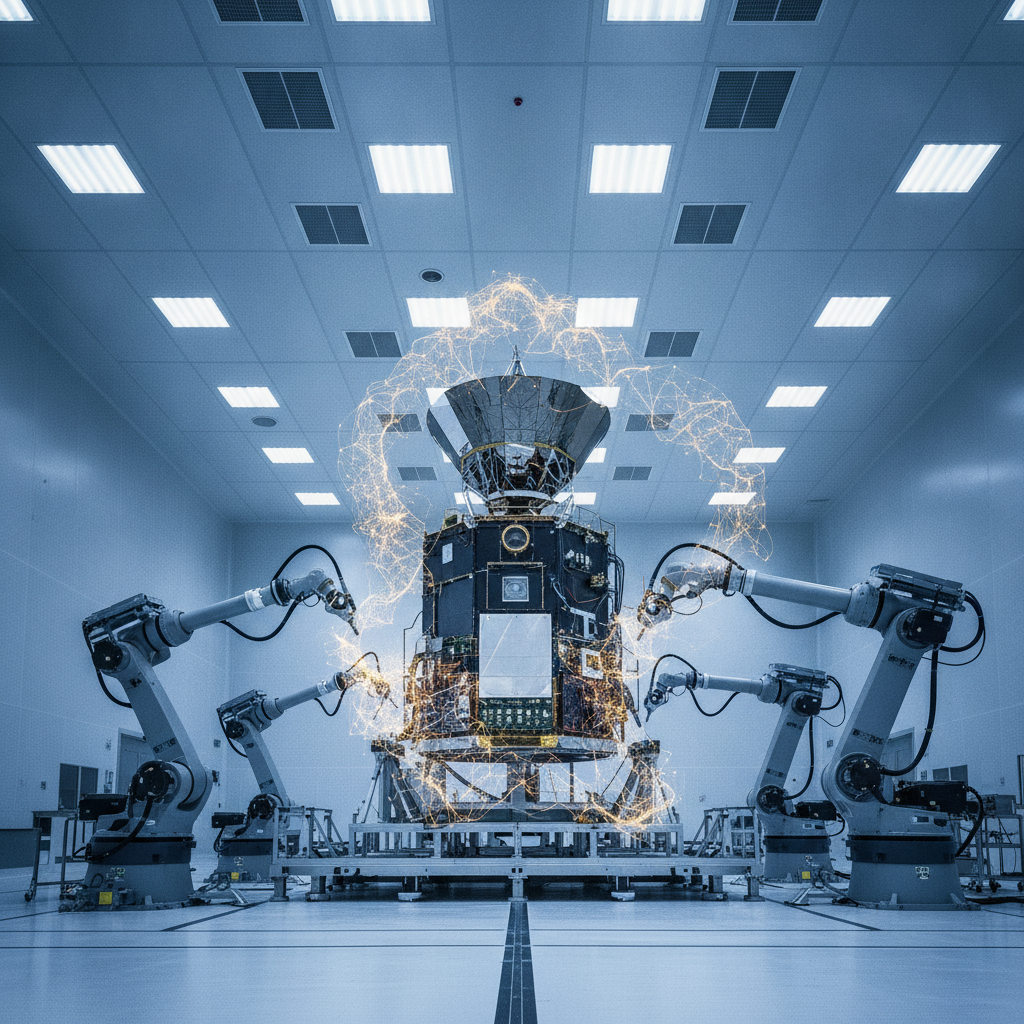
When you think of the future of Artificial Intelligence, companies like Google, OpenAI, or NVIDIA likely come to mind. Yet, an equally pivotal, albeit less obvious, player is rapidly establishing itself: SpaceX. While they aren’t directly building large language models or AI algorithms in the traditional sense, SpaceX is emerging as the essential infrastructure provider, the “McDonald’s of AI,” creating the global platform upon which the next generation of intelligent systems will thrive.
This intriguing comparison highlights SpaceX’s unique role in democratizing access to the fundamental ingredients AI needs: massive data generation, ubiquitous connectivity, and a standardized, scalable infrastructure. Just as McDonald’s standardized and scaled fast food, SpaceX is standardizing and scaling the orbital connectivity crucial for AI’s global expansion. They are building the neural network of space, providing the essential communication backbone that will power AI across the planet, even in the most remote locations.
Building the Global Data Superhighway
The Starlink constellation is arguably SpaceX’s most direct contribution to the AI landscape. With tens of thousands of satellites planned, Starlink isn’t just about providing internet; it’s about creating an unprecedented global data collection and distribution network. This vast web of interconnected satellites generates, transmits, and facilitates access to an immense volume of data, the very lifeblood of artificial intelligence.
Consider the sheer scale: each Starlink satellite is a sophisticated piece of hardware capable of transmitting vast amounts of information. Together, they form a low-latency, high-bandwidth grid that can reach virtually every corner of the Earth. This infrastructure makes it possible to collect, process, and distribute data from sensors, IoT devices, and various AI-powered systems operating anywhere, from remote agricultural fields to maritime shipping lanes.
The capabilities this network unlocks for AI are immense:
- Remote Sensing & Analytics: Real-time data from environmental sensors, smart agriculture, or disaster monitoring in areas previously lacking robust internet.
- Edge AI Deployment: Enabling AI models to run on devices in isolated locations, processing data locally before sending back critical insights via Starlink.
- Global Data Synchronization: Ensuring distributed AI systems can communicate and update models across continents with minimal delay.
- Training Data Expansion: Providing the means to gather diverse, real-world data from underrepresented regions, crucial for unbiased and robust AI development.
Standardizing Connectivity for AI at Scale
One of the hallmarks of McDonald’s success is its relentless focus on standardization and efficiency. Every burger, every fry, is produced with consistent quality and speed, regardless of location. SpaceX applies a similar philosophy to its space endeavors, specifically with Starlink, which has profound implications for AI development.
By mass-producing satellites and launching them at an incredible cadence, SpaceX is effectively standardizing global connectivity at an unprecedented scale. This reduces the cost and complexity of accessing high-speed internet, which in turn lowers the barrier to entry for AI innovation. When reliable, high-bandwidth internet becomes a commodity, more developers, researchers, and companies can access the resources needed to build and deploy AI solutions globally.
This standardization means that an AI application designed for one region can seamlessly leverage the Starlink network in another, ensuring consistent performance and access. It’s about building a predictable, scalable foundation that developers can rely on, allowing them to focus on AI innovation rather than wrestling with disparate or unreliable network infrastructures. This uniformity is crucial for the deployment of truly global AI services and applications.
Democratizing Access to AI’s Fuel
The “McDonald’s of AI” analogy resonates most strongly with the concept of democratization. McDonald’s made fast food accessible to the masses; SpaceX, through Starlink, is making the fuel for AI—ubiquitous, high-speed data connectivity—accessible to a much broader audience. This is not just about individuals getting internet; it’s about industries, governments, and researchers in previously underserved areas gaining access to the digital infrastructure that drives modern AI.
Think of how many innovative AI applications could emerge from parts of the world currently limited by poor internet access. From precision agriculture in developing nations to remote healthcare diagnostics in rural communities, Starlink opens up new frontiers for AI deployment. It transforms a luxury into a utility, making the essential groundwork for AI development available to anyone, anywhere.
Ultimately, while SpaceX may not be directly building the next generative AI model, its foundational work with Starlink is arguably just as critical. By providing the robust, scalable, and globally accessible data superhighway, SpaceX is acting as the indispensable enabler, the silent giant, powering the next wave of AI innovation across our planet. They are indeed serving up the essential ingredients for AI’s future, one standardized, high-bandwidth connection at a time.
Source: Google News – AI Search
