At ZDNET, our commitment to providing you with the most reliable tech recommendations is at the heart of everything we do. We understand that choosing the right products and services can be overwhelming, which is why we dedicate countless hours to independent testing and in-depth research. When you see our “ZDNET Recommends” badge, it signifies that our experts have thoroughly evaluated products to bring you genuinely helpful advice.
Our comprehensive review process involves gathering data from a multitude of sources, including detailed vendor specifications, retailer listings, and other reputable, independent review sites. Crucially, we also delve into customer reviews, seeking out insights from real people who own and use the products we’re assessing. This ensures our recommendations are grounded in both expert analysis and practical user experience.
Transparency is key to our relationship with you. While we may earn an affiliate commission when you purchase through our links, this never influences our editorial coverage or the price you pay. Our content remains strictly independent, adhering to rigorous guidelines that shield our reviews from any advertiser influence. You can trust that our advice is unbiased and solely focused on helping you make smarter buying decisions.
Our Commitment to Trust and Transparency
Our editorial team writes solely for our readers, striving to deliver the most accurate information and knowledgeable advice possible across a wide array of tech gear and services. Every article undergoes thorough review and fact-checking to ensure it meets our exceptionally high standards. We are dedicated to maintaining accuracy and will promptly correct or clarify any errors or misleading information should they occur.
If you ever spot an inaccuracy in our content, we encourage you to report the mistake via our dedicated form. Your feedback is invaluable in helping us uphold the integrity and trustworthiness of our publications. Our goal is always to empower you with the best possible information for your technology choices.
As a Senior Contributing Editor, I’ve been a long-time user of Android Auto, embracing wireless connectivity for its sheer convenience. However, my initial enthusiasm has recently been tempered by a few persistent caveats, particularly noticeable during the warmer summer months. This shift in perspective ultimately led me to rethink my setup and explore alternatives.
Why I Switched Back to Wired Android Auto
One of the most significant drawbacks of wireless Android Auto has been the consistent battery drain on my Samsung Galaxy Z Fold 7. A typical one-way commute often saw my phone losing around 10% of its charge, a rapid decline exacerbated by hot temperatures and always-on navigation. Furthermore, the occasional hiccups and stutters, like Gemini cutting out mid-sentence or Spotify experiencing spotty playback, became increasingly frustrating.
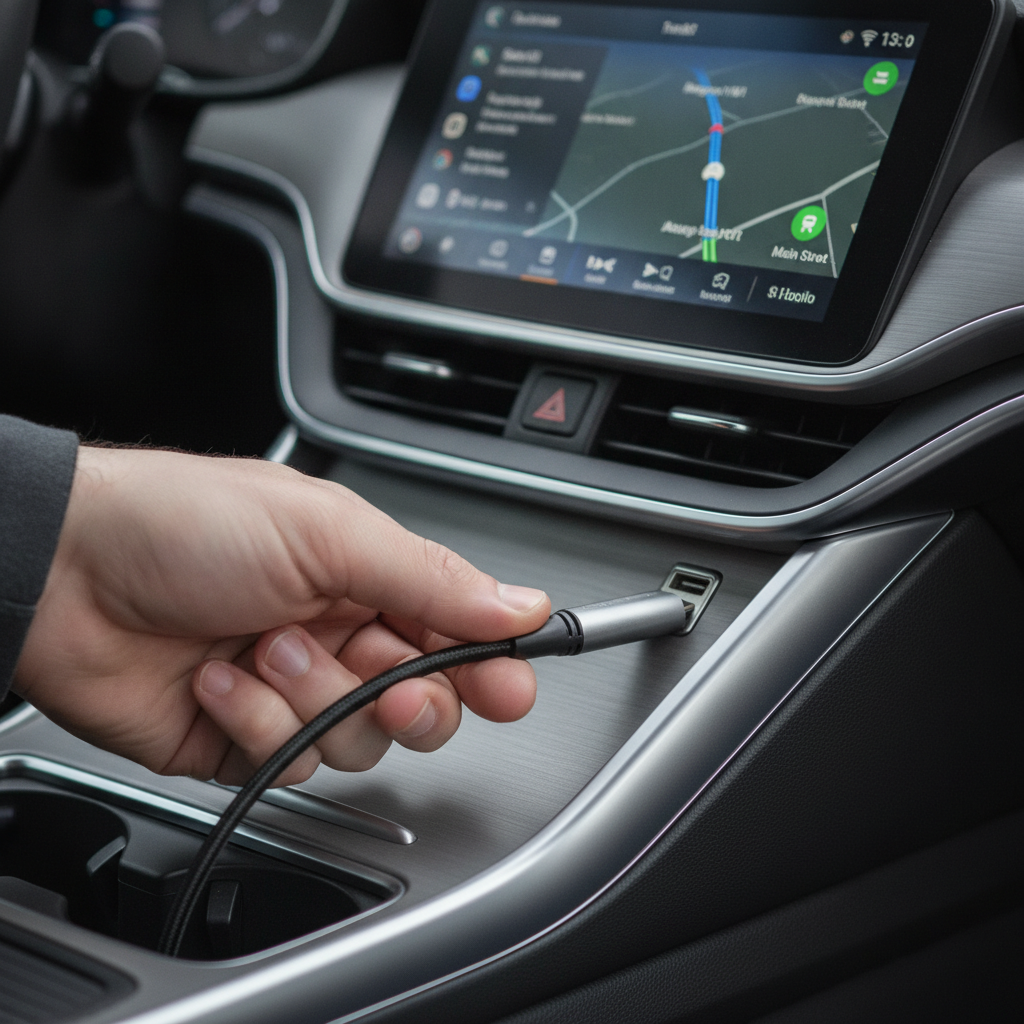
These issues prompted me to experiment with a wired setup, and the results have been overwhelmingly positive. After several weeks, I’ve noticed a dramatic improvement in performance and reliability, to the point where I’m considering keeping things wired for the foreseeable future. While it might feel like a step back in time, the benefits are undeniable.
Unpacking the Benefits: Reliability and Performance
When it comes to connectivity, a wired setup for Android Auto offers superior reliability compared to its wireless counterpart. This is especially true if you’re driving an older vehicle or using an older Android phone, where the wireless communication between devices might not always be optimal. Wireless connections typically rely on a combination of Wi-Fi, Wi-Fi Direct, and Bluetooth, which are inherently more prone to disruptions.
Even with my modern setup—a 2023 CX-5 and a cutting-edge smartphone—I still experienced occasional connection drops when driving over bumps or through underpasses. Switching to a tethered connection has virtually eliminated these annoyances, providing a consistently stable link. For music enthusiasts, streaming audio via a cable also offers the highest fidelity.
Many users, myself included, find that wired audio playback quality in the car is significantly better than wireless. I’ve noticed a more engulfing bass, clearer mids, and sharper highs, all without adjusting any equalizer settings on my phone or vehicle. This enhanced audio experience makes every drive more enjoyable, whether I’m listening to house music or podcasts.
The noticeable improvement in audio quality ultimately depends on your car’s speaker system and sound deadening, as well as your own ear for detail. However, my experience with both Spotify and Apple Music has been entirely free of wireless interference, making vocals more distinct and overall sound richer. This difference alone is a strong argument for a wired connection.
Beyond performance, a wired connection significantly benefits your phone’s battery health. My phone’s battery had been taking a beating from wireless Android Auto, compelling me to carry a portable charger everywhere. While wireless charging pads can provide a trickle charge, the passive charging from a wired connection is far superior for longevity.
Wireless charging coils generate more heat than wired charging, and elevated temperatures can accelerate battery degradation over time. Although this might seem insignificant for those who frequently upgrade phones, you’ll likely notice a shorter battery life if you keep your device for several years. To further protect my phone, I enable battery protection features that limit charging to 80%, a common option on most Samsung and Google Android models.
Essential Tips for Your Wired Setup
The USB cable you choose for your wired Android Auto setup is just as important as the phone itself. You’ll want to ensure you select a USB cable that explicitly supports both data transfer and syncing, which is usually clearly stated in product listings. I personally favor cables made of nylon for their durability, as they are less prone to breaking when tucked away in a center console or glove compartment.
If you’re concerned about potential wear and tear on your phone’s USB port from frequent plugging and unplugging, consider using a magnetic USB adapter. These adapters allow for a quick, snap-on connection, still providing passive charging while paired with your car, and significantly reduce the likelihood of damaging your device’s port. This small addition can offer peace of mind and extend the life of your phone’s hardware.
Source: ZDNet – AI
