At ZDNET, our mission is to empower you with the most accurate information and knowledgeable advice, helping you make smarter decisions about technology and a wide array of products. We stand by our recommendations, which are built on countless hours of independent testing, thorough research, and diligent comparison shopping. When you click through our site to a retailer and make a purchase, we may earn affiliate commissions. This financial support helps us continue our work, but it never influences what we cover, how we cover it, or the price you pay.
Our commitment to editorial integrity means our content is never swayed by advertisers, ensuring our reviews remain unbiased and truly independent. Every article is meticulously reviewed and fact-checked by our editorial team to meet the highest standards of accuracy. We are always striving to deliver the best possible guidance, and if you ever spot an inaccuracy, we encourage you to report it so we can correct or clarify the information promptly.
What is a Cyberdeck, Anyway?
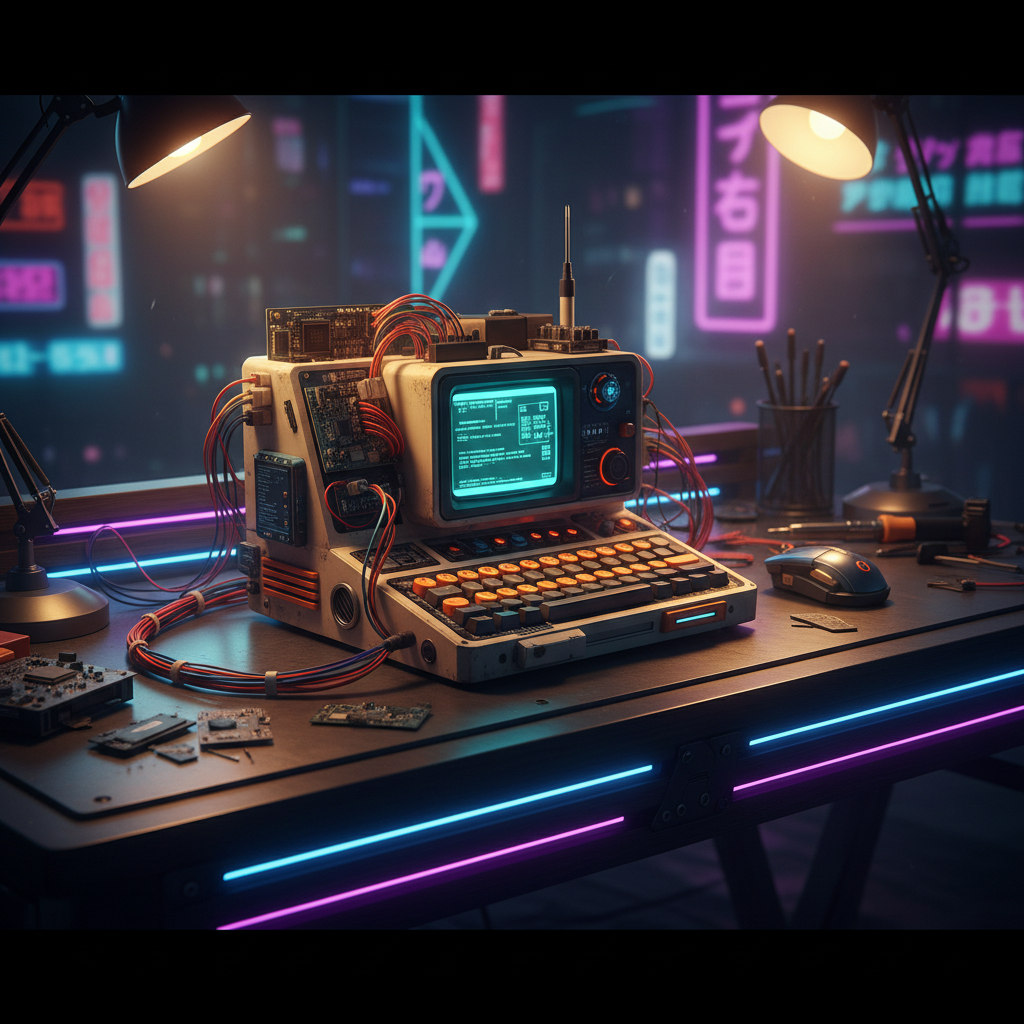
You might have heard the buzz around “cyberdecks” recently, a term that carries a wonderfully retro-futuristic ring. Far from being a galaxy far, far away concept, this intriguing name was actually coined by William Gibson in his seminal 1984 cyberpunk novel, Neuromancer. In Gibson’s dystopian vision, hackers — affectionately known as “console cowboys” — wielded these custom-built, deck-like computers to “jack into the matrix” of cyberspace, another term Gibson popularized.
These devices were imagined as rectangular, portable computers adorned with red and green LEDs, designed for immersive digital interaction. While their origins are rooted in sci-fi, appearing in classics like Blade Runner and Alien, the concept has leapt from fiction to reality. Today, makers and enthusiasts are bringing these fantastical machines to life, adapting the cyberdeck idea for the modern age.
At its heart, a cyberdeck is simply a portable computer, but with a twist of personality. While many embrace a distinct cyberpunk, retro, or dystopian aesthetic, the beauty of a cyberdeck lies in its flexibility. It can be as gritty or as sleek as you desire, truly reflecting the creativity and specific needs of its builder.
Building Your Own Cyberdeck: The Essentials
Ready to embark on your own cyberdeck journey? The good news is that creating one offers immense creative freedom, allowing you to tailor it precisely to your vision. Here’s a breakdown of the core components you’ll need to consider, whether you’re aiming for a full-on cyberpunk masterpiece or a more utilitarian portable workstation.
- The Computer: The brain of your cyberdeck is typically a single-board computer (SBC). Options like the popular Raspberry Pi 4 or 5 are fantastic starting points due to their power, versatility, and robust community support. For a smaller footprint, the Raspberry Pi Zero 2 is an excellent choice, though more obscure boards like BeagleBone or Banana Pi can also be used if you’re up for a challenge.
- The Display: You’ll need a way to see what your cyberdeck is doing. This could be a standard Raspberry Pi touchscreen display, or perhaps a more compact option like the PiSugar Whisplay HAT. The choice often depends on the overall size and intended use of your portable setup.
- The Keyboard: Interaction is key, and this is where tiny Bluetooth keyboards truly shine. You can find options that are folding, ultra-compact, or even uniquely styled to match your cyberdeck’s aesthetic. Many also include a built-in trackpad, offering a convenient all-in-one input solution.
- Power Source: Portability means self-sufficiency, so a reliable power solution is crucial. For Raspberry Pi-based systems, you can use 18650 lithium-ion batteries with a controller board, or opt for an SBC that includes an integrated battery. Alternatively, a small, off-the-shelf power bank connected to your board’s power port works effectively.
- The Case: This is where your cyberdeck truly comes to life visually. You might choose an off-the-shelf enclosure, especially for Raspberry Pi builds given the abundance of third-party options. Repurposing items like old tin boxes also adds a unique, DIY charm. For ultimate customization, a 3D printer can bring almost any design to fruition, from intricate cyberpunk shells to minimalist utilitarian frames.
Finding or Crafting Your Perfect Cyberdeck
For those who prefer a less hands-on approach, ready-made cyberdecks can be found on platforms like eBay or Etsy, though they often come with a premium price tag. You could also take a more accessible route, perhaps by augmenting a system like the Raspberry Pi 500 with an external display to create your own simplified portable setup. Emerging devices like the Cardputer or even the ambitious Flipper One, currently in development, hint at the future of integrated, portable computing tailored for specific tasks.
My own “cyberdeck” — though initially built purely as a tool — is a powerful example of customization. It began as an overclocked Raspberry Pi 4 running Kali Linux, a Debian-based distribution tailored for penetration testing and ethical hacking. Recently upgraded to a Raspberry Pi 5 with a compatible touchscreen and advanced Wi-Fi capabilities, it’s a testament to how flexible and powerful these custom systems can be, even if they evolve from a different purpose.
The decision to build or buy a cyberdeck ultimately hinges on your personal needs and desires. If you require a tool for a specific job, there might be more affordable and straightforward off-the-shelf alternatives available. However, if you’re seeking a project that combines fun, practical utility, and a distinctly cool aesthetic, a cyberdeck could be the perfect addition to your tech arsenal.
They also serve as an engaging gateway to technology for children, sparking interest in electronics, programming, and design through hands-on projects. And let’s be honest, there’s absolutely nothing wrong with wanting a cyberdeck simply because it’s cool and you aspire to embody that console cowboy spirit!
Source: ZDNet – AI
