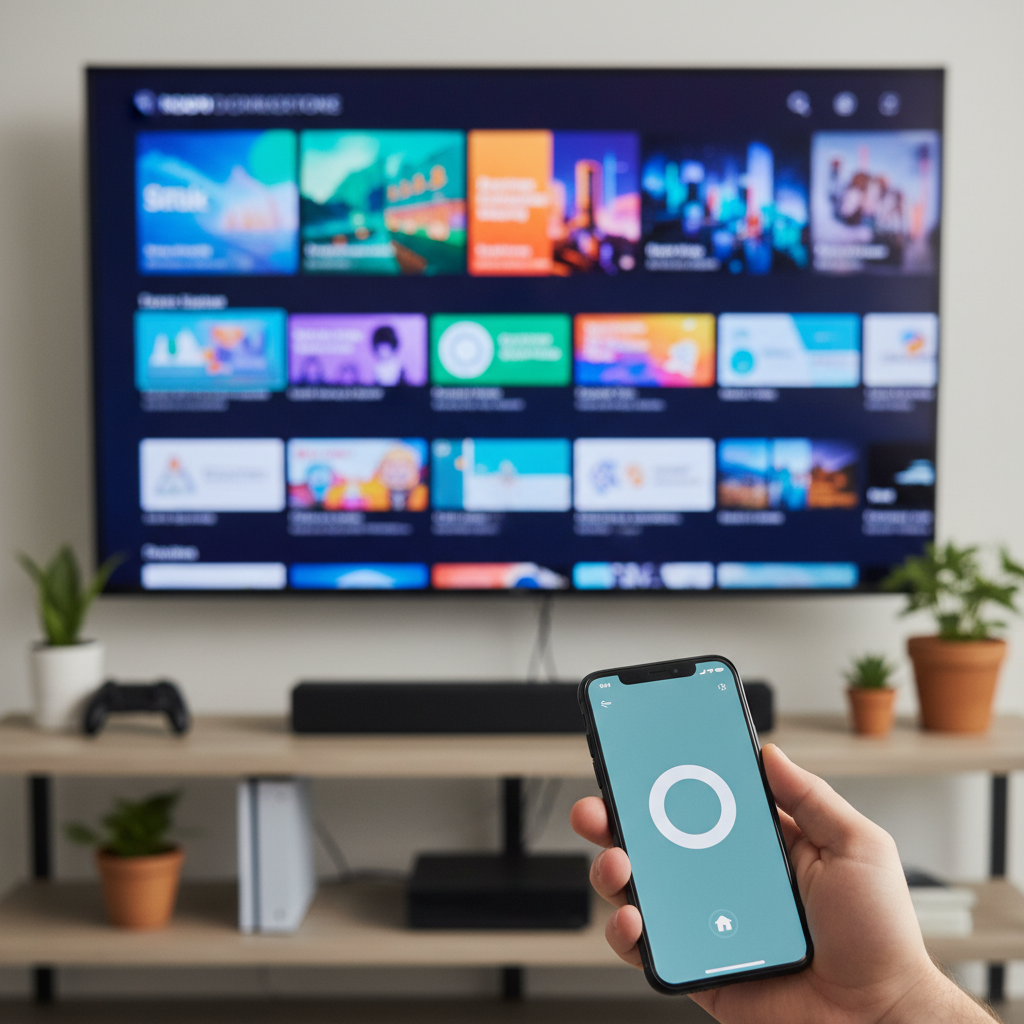
Roku has truly revolutionized the way we consume entertainment, making smart TVs accessible to millions. There’s a good chance you have one of those familiar rectangular remotes somewhere in your home, allowing you to effortlessly navigate your favorite streaming services. However, these handy little devices have an uncanny knack for disappearing – whether they’re swallowed by couch cushions, adopted by a curious pet, or simply vanish into the mysterious void of a child’s room.
But don’t despair if your Roku remote has gone missing! You absolutely don’t need the physical remote to maintain full control over your Roku TV. At ZDNET, our team extensively tests and researches products, providing you with trusted recommendations and practical advice for navigating your tech challenges. We’ve explored the best ways to keep your streaming experience smooth, even without that little plastic rectangle.
Our commitment to delivering accurate and helpful information guides everything we do. We gather data from various sources, including vendor listings, independent reviews, and crucial customer feedback, to ensure our advice is comprehensive and reliable. When you click through our links and make a purchase, we may earn an affiliate commission, which helps support our work without affecting our unbiased coverage or the price you pay.
The Ultimate Remote Replacement: Your Smartphone
The absolute easiest and most feature-rich way to control your Roku TV without its dedicated remote is by using the official Roku mobile app. Available for both iOS and Android devices, this app transforms your phone into a powerful virtual remote. If you don’t have it yet, you’re missing out on a significant upgrade to your Roku experience.
Once installed, simply tap “Remote” at the bottom of the app to bring up a digital interface that mirrors your physical remote. In many ways, the app even surpasses the traditional remote’s capabilities. It offers features like voice search, quick access to closed captions or a sleep timer, and a much faster keyboard for typing than laboriously selecting letters one by one.
One standout feature is Private Listening, which routes your TV’s audio directly through your phone or connected headphones – perfect for late-night viewing without disturbing others. You can also effortlessly switch between different inputs without having to return to the home screen. Just remember, your phone and Roku TV need to be connected to the same Wi-Fi network for seamless operation.
Streamlining Content with Casting and Mirroring
Beyond functioning as a direct remote, your smartphone offers other clever ways to get content onto your Roku TV. If you’re using supported apps like Netflix, YouTube, or Disney+, you can simply cast content directly from your phone to the big screen. Look for the cast icon within the app (it often appears once content is playing) to initiate the connection.
Casting is a fantastic option because it’s different from screen mirroring; your phone isn’t tied up. You can start a movie, then use your phone for other tasks, or even turn off its screen entirely, and the content will continue playing on your Roku TV. Just ensure the corresponding app is installed on your Roku device for this feature to work.
For Android users, screen mirroring provides another versatile solution. Most Android phones include built-in features like “Smart View,” “Cast,” “Quick Connect,” or “Wireless Display” that let you project your phone’s entire screen. You’ll typically find this option by swiping down from the top to access your Quick Settings menu.
Once connected, anything displayed on your phone’s screen will appear on your Roku TV, making it easy to share photos, videos, or even presentations. Do keep in mind, however, that unlike casting, your phone will be actively displaying the content, meaning you can’t use it for other tasks simultaneously.
Apple device owners aren’t left out either, thanks to AirPlay. If both your iPhone, iPad, or Mac and your Roku TV are on the same Wi-Fi network, you can easily mirror your screen. Simply open your device’s Control Center, tap “Screen Mirroring,” and select your Roku TV from the list of available devices.
Similar to Android’s screen mirroring, AirPlay projects your Apple device’s display onto your Roku, providing a quick fix for sharing content. While it means your phone’s screen will be occupied, it’s an incredibly convenient way to get through those moments when the physical remote is playing hide-and-seek.
When All Else Fails: Replacing Your Remote
While the digital options are incredibly powerful, sometimes there’s no substitute for a physical remote, especially if you prefer a tactile experience. If you find yourself consistently without a remote and the app isn’t quite cutting it, purchasing a new one is always an option. You can find a basic Roku remote for around $10, providing essential navigation.
For an upgrade, consider the Roku remote with voice control, typically under $20, adding convenience for searching content. The Roku Voice Remote Pro, which is rechargeable and offers premium features, usually sells for about $30. There are also many unbranded, knockoff Roku remotes available for as little as $5 each; these can be a cost-effective solution, especially for kids’ rooms, though their build quality might not match the originals.
With these diverse options, a lost or broken Roku remote is no longer a major inconvenience. Whether you prefer the advanced features of the Roku app or the straightforward simplicity of casting, you have multiple ways to stay in control of your entertainment. Happy streaming!
Source: ZDNet – AI
