ZDNET Recommends is more than a badge — it reflects hours of hands-on testing, cross-checking vendor specs, and studying independent reviews and real-user feedback. Our independent editorial team follows strict guidelines to keep advertising and affiliates separate from what we write, and we correct any factual errors when they appear. When you buy through links on our pages we may earn a commission, but that never affects our coverage or the price you pay.
This review was written by Adrian Kingsley-Hughes, Senior Contributing Editor, and published on April 20, 2026. Below you’ll find a concise, real-world look at the DJI Osmo Nano — what it does well, where it stumbles, and whether it makes sense for vloggers, adventurers, and everyday users.
What the DJI Osmo Nano offers
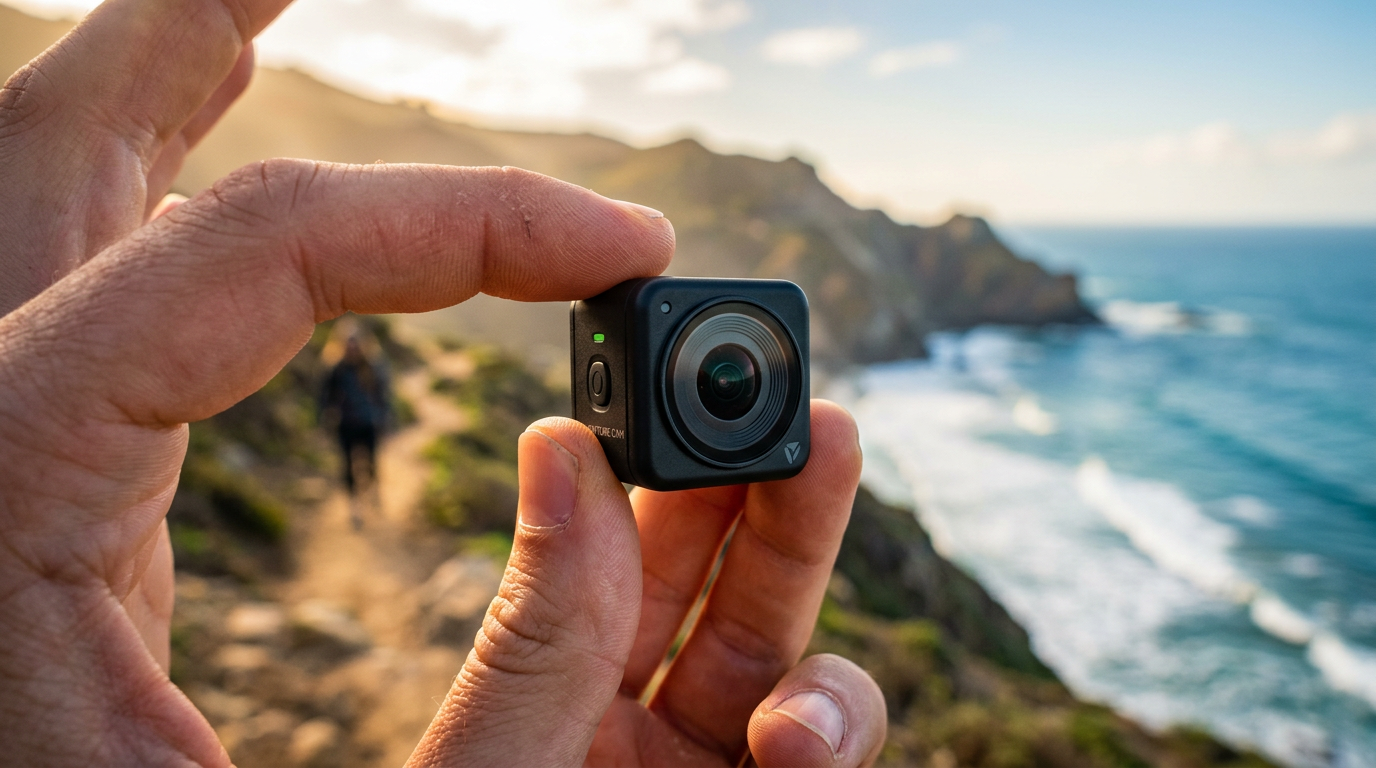
The DJI Osmo Nano is a tiny point-of-view camera aimed at creators who want a compact, easy-to-wear recorder without sacrificing image quality. The camera body measures about 2.25 × 1.16 × 1.1 inches and weighs roughly 1.8 ounces, making it pocketable and thumb-sized for most people. It’s marketed as a POV and vlogging camera that sits between smartphone setups and full-size action cams like the Osmo Action 6 or GoPro HERO13 Black.
Despite its size, the Osmo Nano packs a 1/1.3-inch sensor with an impressive 13.5 stops of dynamic range, enabling strong performance in bright highlights and deep shadows. Video options include cinematic 4K/60fps and ultra-slow 4K/120fps using the 143° ultra-wide lens, with 10-bit output and a D-Log M profile for advanced color grading. There’s also a SuperNight mode for cleaner low-light shots.
Battery, audio, and the multifunction dock
Battery life is split between the camera and the Vision Dock: the Osmo Nano has a built-in 530 mAh battery while the dock adds an extra 1,300 mAh. In my testing the camera alone runs for about 60 minutes, and the dock can extend total runtime to approximately 200 minutes, which is realistic for general shooting. The camera supports fast charging — a 20-minute top-up brought it to around 80% in my tests — and it can be used while connected to the dock.
Audio is a standout for a device this small: two built-in microphones handle ambient sound and voice reliably, and the Osmo Nano supports up to two DJI Mic 3 transmitters for pro-level wireless audio. That flexibility transforms the camera from a simple POV recorder into a viable vlogging or interview tool when crystal-clear vocals matter. If you prioritize sound, pairing the Nano with DJI Mic 3 units is a big plus.
The multifunction Vision Dock adds a touchscreen for framing and settings, plus a neat file-transfer feature that moves footage from internal storage onto microSD cards. This makes it easy to free up the camera while in the field, and the dock itself is splash-resistant, while the camera can be submerged to 30 feet.
Storage, accessories, and real-world verdict
Storage comes built-in — the Osmo Nano is available in 64GB and 128GB variants — and you can expand with microSD cards up to 1TB. Built-in memory eliminates the panic of forgetting small cards at home, and the dock’s transfer feature keeps you shooting when space runs low. I recommend the 128GB model because it strikes a good balance between cost and capacity.
The combo kit includes a magnetic pendant for wearable POV, a swivel clip for hats or straps, a protective case, and a suction cup mount with an underlying 1/4″-20 tripod thread. DJI also recommends a protective case for extended handheld use because the camera can warm up, and optional ND filter sets are useful for bright conditions. Overall, the accessory package is thoughtful and practical for on-the-go shooting.
There are trade-offs: the Nano isn’t as rugged as thicker action cameras, and its advanced recording profiles like D-Log M demand some editing knowledge or LUTs to look their best. If you’re a complete beginner who wants straightforward auto footage with minimal post, some features could feel overwhelming. However, for anyone willing to learn basic color grading, the payoff is far greater editing flexibility.
In short, the DJI Osmo Nano nails portability without compromising professional-grade image features. At around $409 for the 128GB kit, it isn’t cheap, but it replaces bulk and fiddly workflow with built-in storage, fast charging, strong audio options, and a dock that extends runtime and usability. For adventurers and vloggers who value convenience and quality, the Osmo Nano is a compelling pick.
- Pros: Compact and lightweight, 4K/120fps, D-Log M and 10-bit color, built-in storage and fast charging.
- Cons: Not as rugged as some action cams, D-Log M requires editing knowledge for best results.
Source: ZDNet – AI
