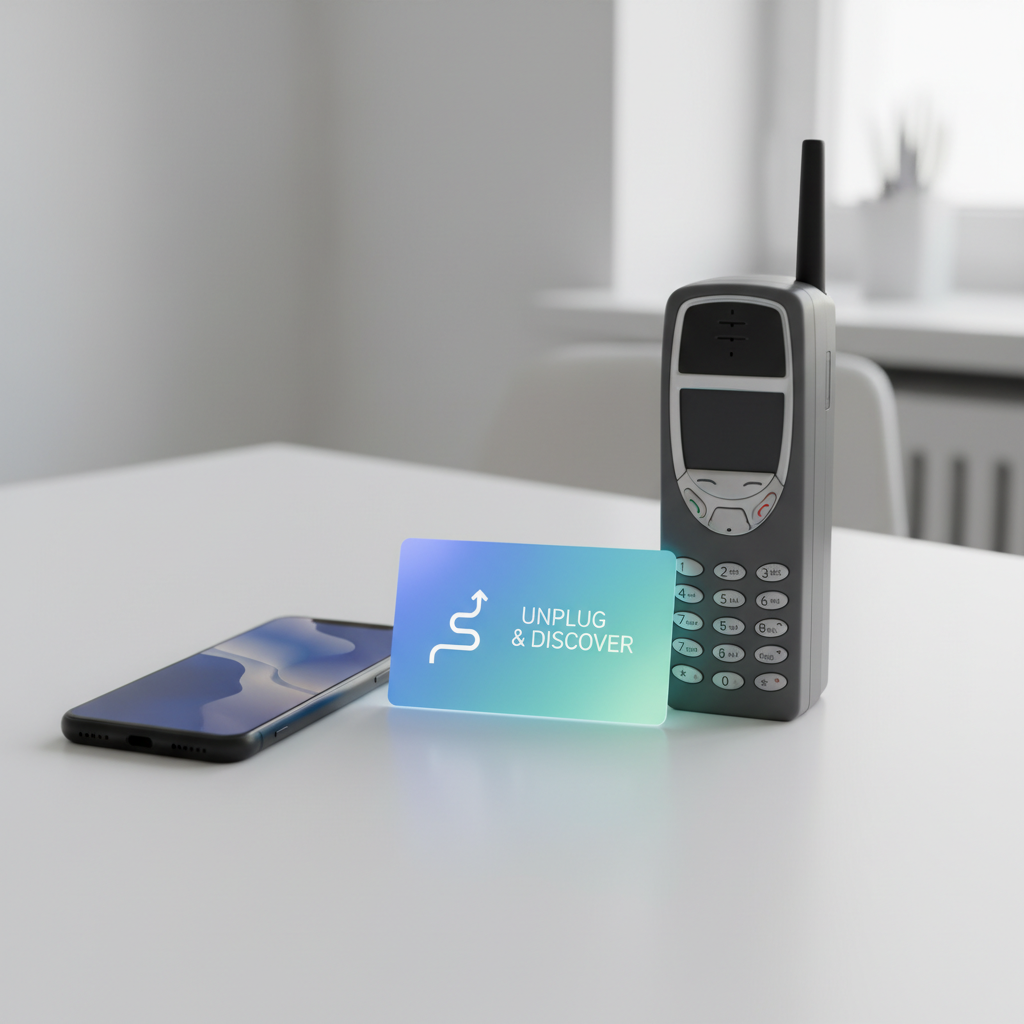
Imagine discovering you’ve spent 16 years of your life glued to a phone screen. That startling revelation came to me courtesy of Bloom, the latest solution designed to combat the pervasive challenge of phone addiction. Sixteen years—a staggering amount of time that could have been dedicated to running marathons, sharing coffee with friends, or simply enjoying more restful sleep.
Instead, like many of us, I found myself trapped in the endless scroll. As awareness of phone addiction grows and we understand the mechanisms social media uses to keep us hooked, a new wave of innovative solutions is emerging. Bloom is at the forefront of this movement, offering an NFC-enabled card designed to create a much-needed physical boundary between you and your most distracting apps.
Our Commitment to Trustworthy Tech Advice
At ZDNET, our priority is to provide you with the most accurate information and knowledgeable advice to empower your tech buying decisions. We meticulously test and research products, gathering data from vendor listings, independent review sites, and crucially, real customer reviews to understand what truly matters to users.
Our recommendations are the result of countless hours of hands-on evaluation and comprehensive comparison shopping. While we may earn an affiliate commission when you purchase through our links, this never influences our editorial content or the price you pay. Our strict guidelines ensure complete editorial independence, so you can trust that our reviews are always unbiased and written with your best interests at heart.
Taming Your Tech: Discovering the Bloom Card
My journey to curb phone use began last October with the Brick, another popular NFC-enabled device. While effective at removing distractions during work, leisure, and sleep, the Brick wasn’t without its quirks and had a somewhat minimalist app experience. A friend, also a Brick user, introduced me to the Bloom Card, suggesting it might address some of these shortcomings.
I put the Bloom Card to the test for several weeks, eager to see if it offered a superior solution. The first notable difference is the price: the Bloom Card costs $39, making it a more budget-friendly option compared to the Brick’s $54. Fundamentally, both devices serve the same purpose: you tap your phone to the card, and it blocks chosen distracting apps.
The true distinctions between these two tools become apparent in their software experiences. Bloom’s app immediately stood out with a more intuitive and engaging user interface. It felt more polished and feature-rich than its competitor.
Bloom vs. Brick: A Deeper Dive into Features
One of Bloom’s major advantages lies in its streamlined approach to creating disabling schedules. Unlike the Brick, Bloom features a dedicated tab for regimented scheduling, even offering useful default options like “Morning Zen” (6 a.m. to 9 a.m.), “Deep Work” (10 a.m. to noon), and “Wind Down” (6 p.m. to 9 p.m.). This pre-set structure significantly reduces the effort required to configure your focus times.
Within each schedule, you retain granular control over which specific apps are blocked. For instance, during “Deep Work,” I can allow social media for professional tasks while disabling messaging apps that tend to sidetrack me. The app also introduces engaging elements like a “Friends” tab, allowing you to track your focus time against peers, a global leaderboard, and an “Insights” feature displaying screen time and daily pickups.
However, my experience wasn’t entirely seamless; I encountered a frustrating bug common to both Bloom and Brick. On one occasion, the “Morning Zen” schedule continued to block my apps even after its 9 a.m. cutoff. Without the card immediately accessible, I was locked out for several hours, forcing me to delete the Bloom app entirely to regain access to essential functions.
A unique feature of the Bloom Card is the inclusion of “breaks,” allowing three five-minute interruptions per session. While seemingly convenient, I found myself consistently abusing this feature, which ultimately undermined the very purpose of curbing screen time. For individuals with significant phone addiction, such leniency could inadvertently enable existing habits, rather than break them.
Is the Bloom Card Right for You?
Considering its $39 price point, the Bloom Card offers a compelling solution for managing phone distractions. If you believe you can responsibly use the five-minute break feature and benefit from a more engaging app experience, Bloom may be the better choice for you. Its user-friendly scheduling and social accountability aspects are definite pros.
However, if you’re struggling with a severe case of phone addiction and require a stricter, less forgiving approach, the Brick, with its unyielding nature, might be more effective. While Bloom simplifies schedule creation and is the more affordable option, its inherent leniency might be counterproductive for those needing firm boundaries.
Source: ZDNet – AI
