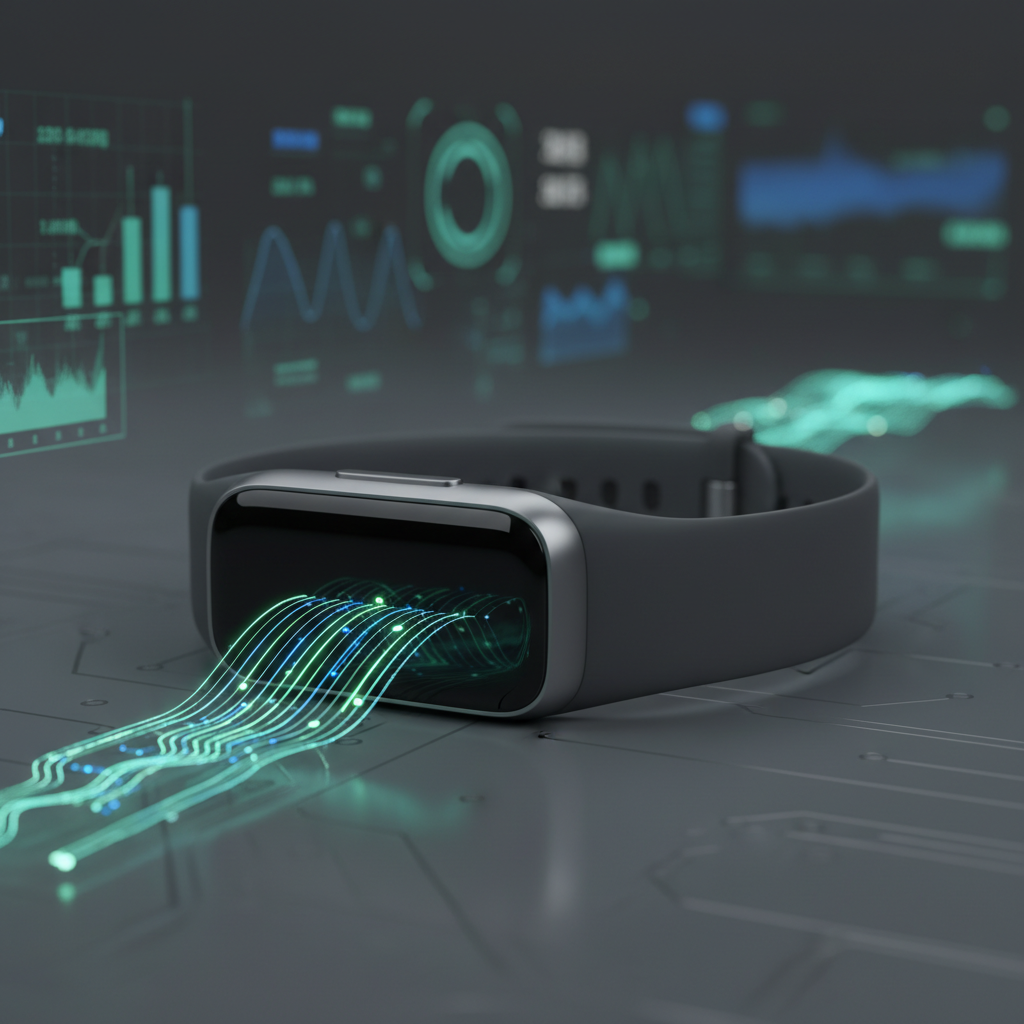
A new contender has entered the wearable ring, and it’s looking to shake things up without emptying your wallet. Say hello to the Fitbit Air, a sleek new device priced at just $100, engineered to work hand-in-hand with Google’s innovative AI Health Coach. This isn’t just another fitness band; it’s a strategic play designed to make personalized wellness coaching more accessible than ever before.
The core question on everyone’s minds is whether this budget-friendly, AI-driven approach can truly compete with established players like Whoop, known for its premium, data-rich subscriptions. Fitbit Air represents a significant shift, prioritizing intelligent guidance over an overwhelming deluge of raw metrics. It promises to bring sophisticated health insights to a broader audience, democratizing the path to better well-being.
Introducing the Fitbit Air: Smart, Simple, and Accessible
At its heart, the Fitbit Air is designed for simplicity and efficiency. Unlike many wearables boasting large, complex displays, the Air focuses on core functionality, capturing essential health data without unnecessary distractions. Its minimalist design makes it comfortable for all-day wear, blending seamlessly into your lifestyle rather than dominating it.
The true genius of the Fitbit Air lies in its purpose: to be the perfect data-gathering companion for Google’s AI Health Coach. It collects crucial biometric information, such as heart rate, activity levels, sleep patterns, and potentially stress indicators, which then feed directly into the AI system. This foundational data allows the AI coach to understand your unique physiological state and behavioral patterns.
This streamlined approach means less time deciphering complex graphs and more time acting on clear, personalized advice. The device itself acts as an unobtrusive sensor, allowing the intelligence to reside in the sophisticated algorithms of the Google AI. It’s a testament to the idea that sometimes, less hardware is more when backed by powerful software.
Unlocking Potential with Google’s AI Health Coach
The real game-changer here isn’t just the Fitbit Air; it’s the powerful synergy it creates with Google’s AI Health Coach. Imagine having a personal health expert available 24/7, ready to analyze your data and offer actionable recommendations tailored precisely to your needs. This AI isn’t just reporting numbers; it’s translating them into meaningful, personalized guidance.
This advanced AI learns from your habits, progress, and even your stated goals to provide intelligent nudges and strategic advice. Whether it’s suggesting a specific workout to optimize recovery, recommending adjustments to your sleep schedule, or prompting you to hydrate, the coach delivers timely interventions. It’s about moving beyond mere tracking to active coaching and behavioral change.
Users can expect a dynamic and adaptive experience, where the AI constantly refines its recommendations based on new data and your responses. This could include personalized challenges, educational content, and even proactive alerts designed to prevent burnout or encourage consistency. The goal is to foster sustainable healthy habits by making complex health science understandable and actionable for everyone.
Fitbit Air vs. Whoop: A Tale of Two Philosophies
The most immediate comparison for a health-focused wearable is often with Whoop, a device revered by athletes and wellness enthusiasts for its in-depth physiological tracking and recovery insights. However, the Fitbit Air and Google AI Health Coach present a fundamentally different philosophy. Whoop offers a premium device paired with a mandatory subscription, providing incredibly granular data on strain, recovery, and sleep directly within its robust app interface.
The Fitbit Air, at a one-time cost of $100, enters the market with a strong value proposition, especially when considering Whoop’s ongoing subscription model. While Whoop provides raw, detailed metrics that require a certain level of user interpretation, Fitbit Air offloads that interpretation to Google’s AI. This makes sophisticated health guidance accessible without requiring users to become data scientists.
Here’s a breakdown of the key differences:
- Price Model: Fitbit Air is a $100 upfront purchase (plus potential subscription for AI coaching, which is separate from the device itself), while Whoop requires a monthly subscription that includes the hardware.
- Data Philosophy: Whoop provides extensive raw data for deep dives by the user. Fitbit Air, conversely, funnels data to an AI coach for interpreted, actionable insights.
- User Experience: Whoop appeals to those who enjoy detailed self-analysis and advanced physiological understanding. Fitbit Air targets users seeking direct, personalized guidance and simplification of health data.
- Focus: Whoop heavily emphasizes athletic performance and recovery optimization. Fitbit Air, with its AI integration, aims for broader holistic wellness coaching and habit formation for everyday users.
Ultimately, the choice between Fitbit Air and Whoop depends on your needs and budget. If you crave comprehensive raw biometric data and are willing to pay a recurring fee for it, Whoop remains a top-tier choice. However, if you prioritize simplicity, affordability, and AI-driven personalized coaching to guide your wellness journey, the Fitbit Air with Google’s AI Health Coach offers a compelling alternative.
The Future of Accessible Wellness Coaching
The arrival of the Fitbit Air signals an exciting evolution in the wearable tech space. It highlights a growing trend towards actionable intelligence over mere data collection, making advanced health coaching more democratic. By stripping down the hardware cost and leveraging powerful AI, Google and Fitbit are paving the way for a future where personalized wellness is not a luxury, but an attainable reality for millions.
Could the Fitbit Air “whoop” Whoop? Not necessarily by replacing it, but by carving out a significant niche that Whoop doesn’t primarily serve. It’s designed for a broader audience seeking guided wellness without the premium price tag or the need to deep-dive into complex metrics. This $100 wearable could very well redefine expectations for what accessible, AI-powered health coaching can achieve.
Source: Google News – AI Search
