At ZDNET, our commitment is to provide you with the most reliable tech recommendations. We meticulously test, research, and compare products, drawing on extensive data from vendors, retailers, and independent review sites. Our goal is to empower you with expert advice, helping you make informed decisions on a vast array of tech gear and services.
When you navigate from our site to a retailer and make a purchase, we may earn affiliate commissions. This financial support helps us continue our work, but rest assured, it never influences our editorial coverage or the price you pay. Our content is crafted with strict guidelines to ensure complete independence from advertisers, always prioritizing our readers’ interests.
Framework’s Bold New Vision
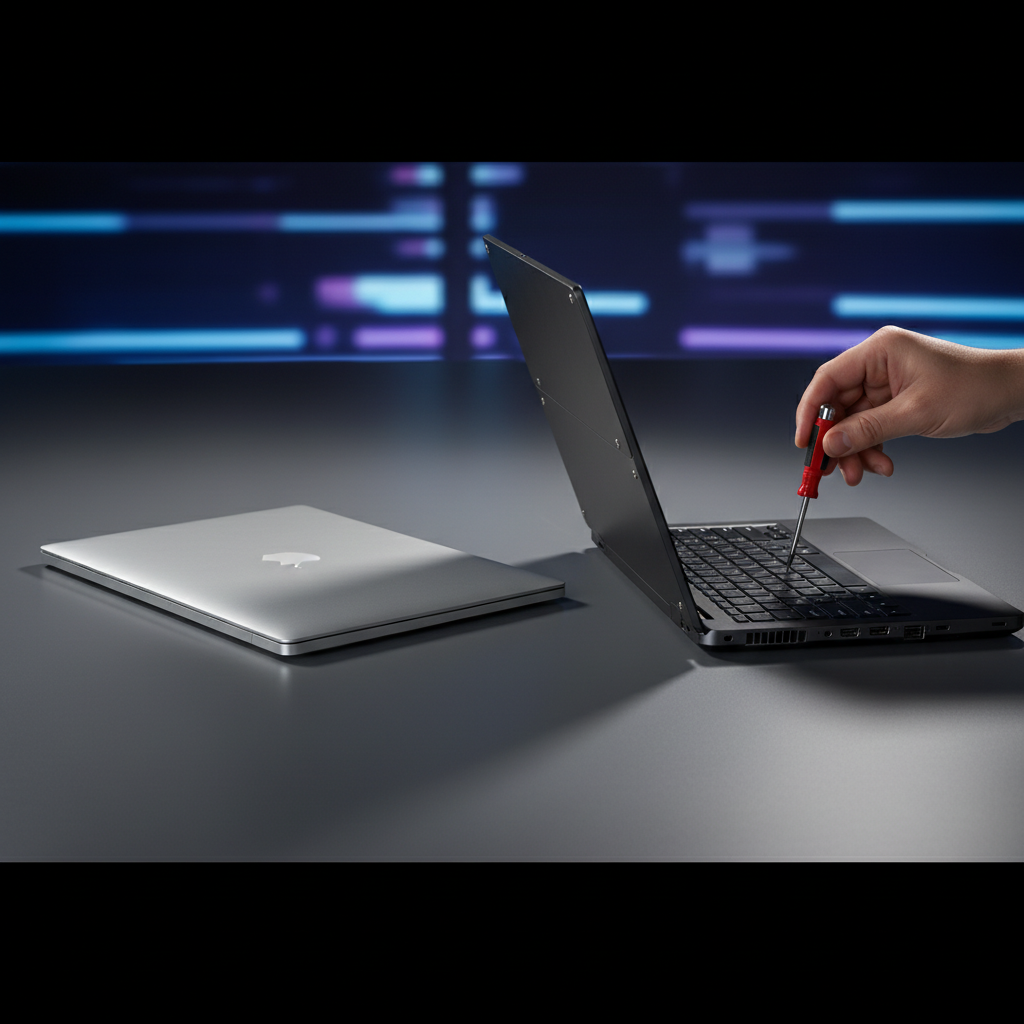
Framework CEO Nirav Patel recently unveiled the new Laptop 13 Pro, boldly calling it the “MacBook Pro for Linux users.” This statement highlights its sleek design and premium features, all while maintaining the modularity and customization Framework laptops are celebrated for. While comparisons to the classic MacBook Pro are fitting, the more pertinent parallel today is with Apple’s game-changing MacBook Neo.
The MacBook Neo, a 13-inch laptop priced at $599, has significantly disrupted the affordable PC market. Its impact isn’t just about its price point; it’s also about a renewed focus on repairability. Even industry giants like Asus CFO Nick Wu have acknowledged the MacBook Neo as “a shock to the entire market.”
However, Framework’s Patel expressed confidence in his company’s position, telling us they are “probably the least impacted” by the Neo’s arrival. He noted that Framework had already addressed the “dismal” sub-$1,000 market with the launch of their Framework 12 a year prior. This proactive approach underscores Framework’s unique strategic advantage in the evolving PC landscape.
Redefining Repairability and Value
Framework’s core mission has always been to offer a compelling alternative to conventional Windows PCs across all price points. In this sense, they aren’t directly competing with the MacBook Neo’s target demographic, but rather aligning with Apple’s new direction: both aim to elevate the standard of laptops, particularly in the value segment.
For too long, budget PCs have underdelivered, often featuring lackluster displays, flimsy plastic builds, and excessive pre-installed software. Consumers have grown weary of these compromises, alongside potential upsells for Microsoft 365 or even future Windows OS subscriptions, leading many to seek out better alternatives.
Patel encapsulated Framework’s philosophy during the Laptop 13 Pro’s livestream, stating, “This industry wants you to own nothing and be happy. We’re fighting for a future where you can own everything for free.” By “free,” he refers to the freedom of a truly modular, customizable, and repairable laptop that supports various operating systems, including Linux, starting at $1,199 for the DIY version.
Engineering with the User in Mind
Framework’s commitment to repairability isn’t just theoretical; Patel personally reviewed the MacBook Neo, disassembling it alongside the new Laptop 13 Pro. Unsurprisingly, the Framework laptop proved far easier to access and fully disassemble, even though the Neo has been lauded by iFixit as Apple’s “most repairable laptop in 14 years.”
While I haven’t personally gone hands-on with the Laptop 13 Pro, private demos reveal a truly impressive machine. It appears to be a significant win for consumers seeking a modular, repairable laptop that doesn’t compromise on build quality or aesthetics, addressing common pitfalls of many custom-built devices.
Drawing on customer feedback, the 13 Pro boasts a svelte, three-pound chassis, a unified single-plate bottom cover, and a premium haptic touchpad. It features a custom LCD display and promises marathon battery life, thanks in part to its efficient Intel Core Ultra Series 3 processors. These improvements directly address previous critiques of Framework models, such as physical inconsistencies and battery performance.
If the Framework Laptop 13 Pro aims to be the “ultimate portable developer and power user machine,” it must deliver on both performance and feel. Apple achieved this balance with the Neo, and it appears Framework has done the same. Despite their differing approaches, the Laptop 13 Pro and MacBook Neo share a common ground: pushing the boundaries of what consumers can expect from their tech, moving beyond the mediocrity of many traditional Windows PCs.
Source: ZDNet – AI
