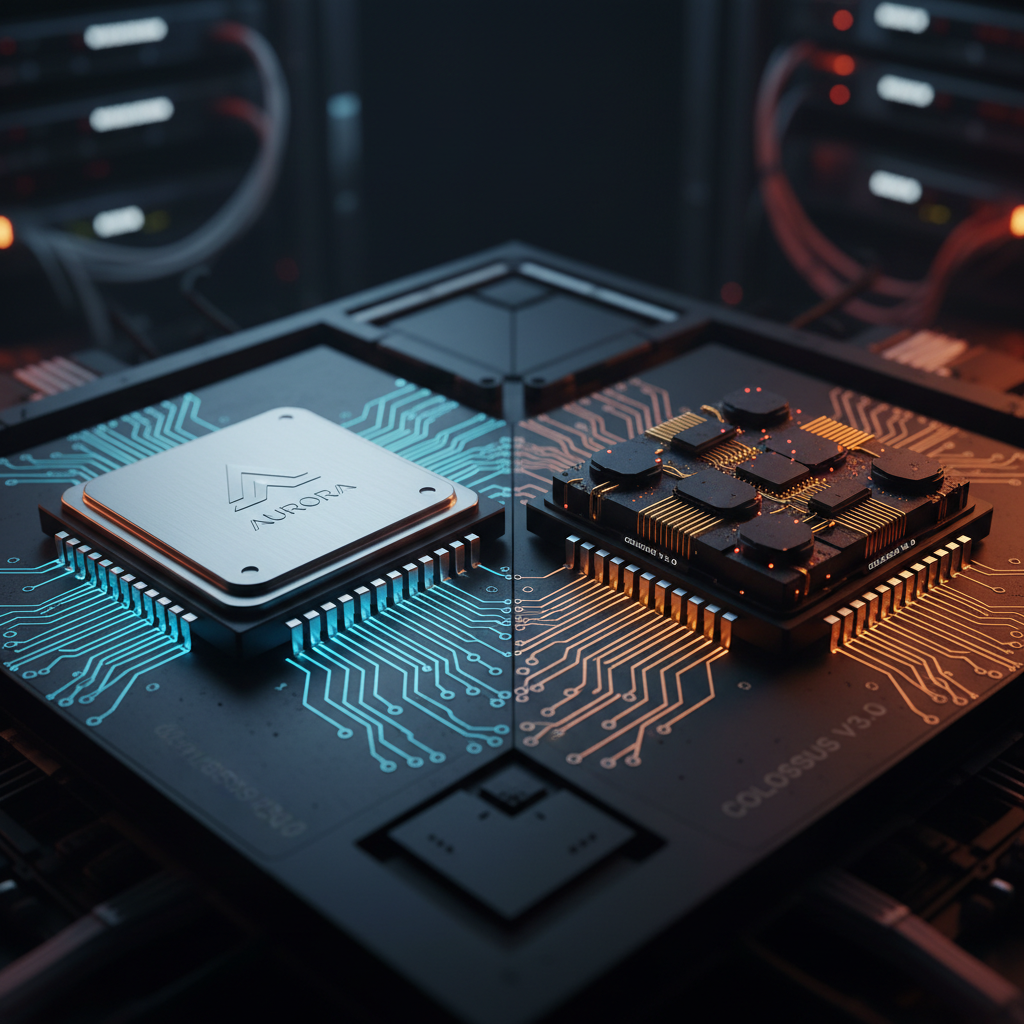
The artificial intelligence revolution has undeniably crowned Nvidia as a kingmaker, with its powerful GPUs fueling everything from groundbreaking research to the advanced large language models we interact with daily. For years, Nvidia has held a near-monopoly on the high-performance computing necessary for training complex AI systems, leading to an unprecedented surge in its stock value. However, a significant challenger is emerging from an unexpected corner: Google, which is increasingly flexing its muscles in custom AI chip development.
This shift isn’t just about another player entering the market; it signifies a strategic pivot by one of the world’s largest tech companies. Google, once a massive buyer of Nvidia’s hardware, is now perfecting its own silicon, potentially reshaping the competitive landscape. Understanding this dynamic is crucial for investors trying to gauge Nvidia’s long-term trajectory and the broader future of AI infrastructure.
Nvidia’s Undisputed Reign in AI
For a considerable period, Nvidia’s Graphics Processing Units (GPUs) have been the go-to architecture for accelerating AI workloads. Their flagship chips, such as the H100 and A100, are indispensable tools for data centers, cloud providers, and researchers pushing the boundaries of machine learning. This dominance isn’t merely about hardware power; it’s also deeply rooted in Nvidia’s comprehensive software ecosystem.
The company’s proprietary CUDA platform provides developers with a robust set of tools and libraries, making it incredibly easy to program and optimize applications for Nvidia GPUs. This strong ecosystem creates a significant barrier to entry for competitors, fostering a loyal developer base and solidifying Nvidia’s position as the industry standard. Consequently, Nvidia’s stock has soared, reflecting its critical role in the ongoing AI boom.
Google’s Strategic Bet: The Rise of TPUs
While Nvidia has been supplying the general-purpose AI compute, Google has been quietly building its own specialized silicon: the Tensor Processing Unit (TPU). Designed from the ground up to accelerate machine learning workloads, TPUs offer incredible efficiency for specific types of AI tasks, particularly those involving neural networks. Google developed these chips out of necessity, driven by the immense computational demands of its own services like Search, YouTube, and Gmail.
Initially, TPUs were primarily an internal solution, allowing Google to run its vast AI infrastructure more cost-effectively and efficiently than off-the-shelf GPUs. However, Google has since expanded its strategy, making TPUs available to external customers through its Google Cloud platform. This move transforms TPUs from a mere internal optimization tool into a direct competitor in the AI cloud compute market, offering an alternative to GPU-based services.
The inherent advantage of TPUs lies in their tailor-made architecture, which can deliver superior performance and energy efficiency for certain AI model training and inference tasks. This specialization means that for companies heavily invested in specific Google-centric AI frameworks, TPUs could present a compelling value proposition. It highlights a growing trend among hyperscale cloud providers to design custom silicon, aiming for greater control, optimization, and potentially lower costs for their massive infrastructure.
Implications for Nvidia Stock and the AI Landscape
So, what does Google’s deepening commitment to TPUs mean for Nvidia and its investors? While it’s unlikely to cause an immediate collapse, it introduces a significant shift in the competitive landscape. Major customers like Google, Amazon, and Microsoft, who traditionally purchased vast quantities of Nvidia GPUs, are now developing their own custom AI chips, potentially reducing their reliance on Nvidia for certain workloads.
This trend could introduce a cap on Nvidia’s growth rate in specific segments of the data center market, particularly as cloud providers aim to diversify their AI compute options. However, it’s crucial to remember that the overall AI market is experiencing explosive growth, with demand for specialized hardware far outstripping current supply. This immense demand suggests there’s ample room for multiple players and different chip architectures.
Nvidia’s strengths—its versatile hardware, pervasive software ecosystem, and continuous innovation—mean it remains a formidable force. Investors should closely monitor several key factors: Nvidia’s upcoming chip architectures, its strategic partnerships, and its expansion into new AI verticals like robotics and autonomous vehicles. The adoption rates of Google Cloud TPUs and the success of other custom silicon efforts from tech giants will also provide crucial insights into how market share might evolve.
Navigating the Future of AI Chips
The AI chip market is undeniably dynamic, characterized by rapid innovation and intense competition. While Google’s TPUs represent a significant strategic move, Nvidia’s established dominance and continuous investment in cutting-edge technology position it well for the foreseeable future. The growing demand for AI computing ensures that the pie is expanding, potentially accommodating a variety of specialized solutions alongside general-purpose GPUs.
For investors, the key lies in understanding the nuanced competition and the specific niches each player is targeting. Monitoring market share shifts, technological advancements, and the evolving needs of AI developers will be essential in discerning long-term winners in this pivotal industry.
Source: Google News – AI Search
