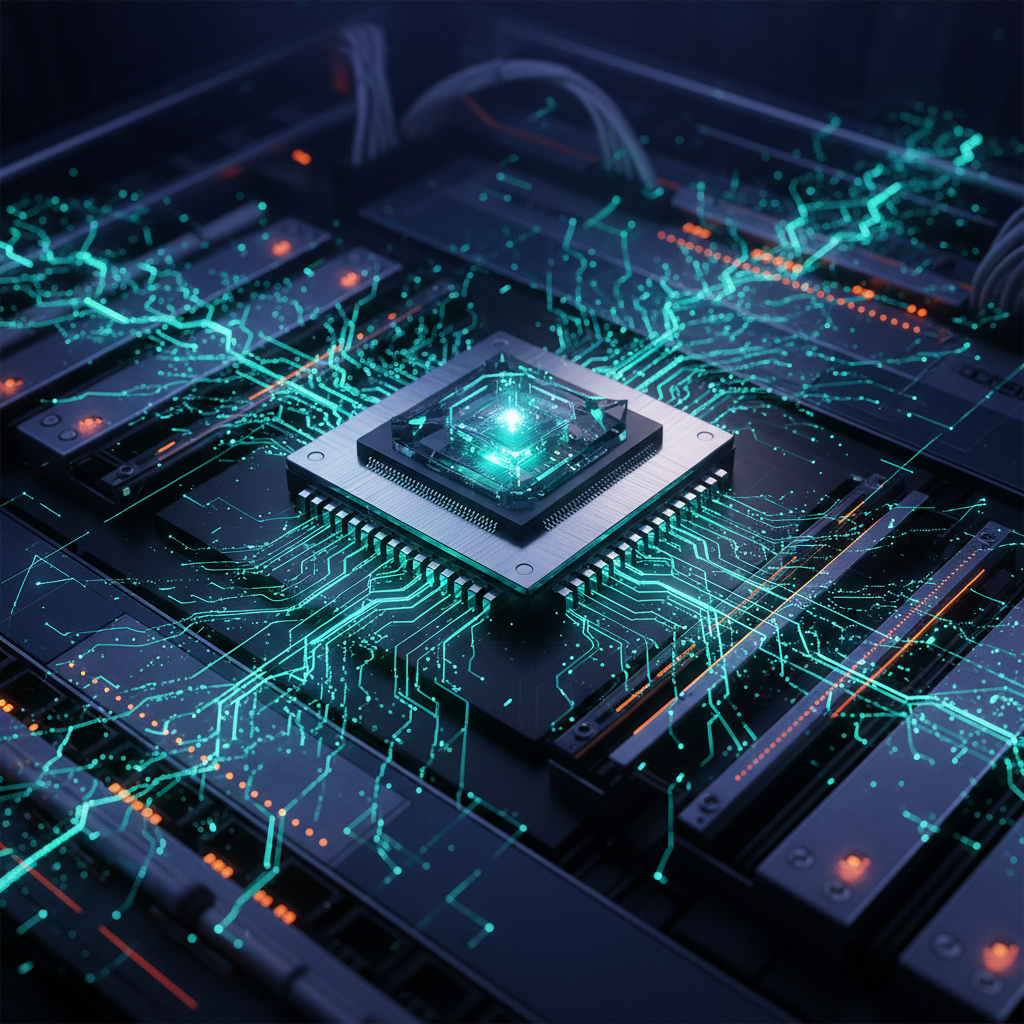
Google has once again cemented its position at the forefront of AI innovation, unveiling two groundbreaking Tensor Processing Unit (TPU) chips meticulously engineered for the burgeoning field of agentic AI. This strategic announcement marks a significant leap in specialized hardware development, promising to unlock new capabilities for intelligent systems that can plan, reason, and act with increasing autonomy.
The introduction of these distinct TPUs underscores Google’s commitment to pushing the boundaries of what AI can achieve, moving beyond traditional pattern recognition to more dynamic, decision-making architectures. As AI models grow in complexity and ambition, specialized hardware becomes not just an advantage, but a necessity for efficient development and deployment.
Understanding Agentic AI and Its Demands
Before diving into the hardware, it’s crucial to grasp what agentic AI entails and why it demands a new class of computational power. Unlike conventional AI, which often performs specific tasks based on predefined inputs, agentic AI systems are designed to operate more like intelligent agents. They can perceive their environment, establish goals, formulate plans, execute actions, and learn from the outcomes, often engaging in multi-step reasoning processes.
This autonomy brings with it immense computational challenges. Agentic AI requires continuous processing, dynamic memory management, and rapid decision-making across varied tasks, demanding hardware that can efficiently handle both the training of intricate models and the real-time inference necessary for dynamic interaction. Traditional general-purpose CPUs or even some existing GPUs struggle to meet these specialized requirements without significant bottlenecks.
The Dual-Chip Strategy for Agentic Workloads
Google’s response to these challenges comes in the form of two distinct TPU chips, each optimized for different facets of the agentic AI lifecycle. While specifics of their architecture remain under wraps, the “distinct” nature strongly suggests a specialized division of labor, typical in high-performance computing.
- The Training-Optimized TPU: One variant is likely designed to accelerate the rigorous training phase of complex agentic models. This involves processing vast datasets, refining intricate neural network architectures, and optimizing parameters for multi-step reasoning and planning capabilities. Such a chip would feature high memory bandwidth, massive parallel processing units, and robust inter-chip communication to handle distributed training effectively.
- The Inference-Optimized TPU: The second chip is almost certainly tailored for ultra-efficient inference. Agentic AI often requires real-time responses and decision-making in live environments, making low latency and high throughput paramount. This TPU would excel at deploying trained agentic models, executing complex decision trees, and generating swift actions with minimal power consumption, crucial for edge computing or responsive cloud services.
This dual-chip approach allows Google and its partners to tackle the full spectrum of agentic AI development, from initial model creation to final deployment, with unparalleled efficiency. By dedicating resources to specific computational tasks, these TPUs can deliver performance gains far exceeding what more generalized hardware can offer.
Driving Innovation in Autonomous Systems
The introduction of these specialized TPUs is set to be a game-changer for a multitude of applications across various industries. From sophisticated robotics that can adapt to changing environments, to highly responsive virtual assistants capable of complex task execution, to intelligent automation in critical infrastructure, the possibilities are immense.
Developers working on cutting-edge AI agents will benefit from significantly reduced training times and more robust, real-time inference capabilities. This acceleration of the development cycle means faster iteration, quicker deployment of advanced features, and ultimately, more capable and reliable autonomous systems entering the market.
Google’s Strategic Vision and the Future of AI Hardware
Google’s continued investment in custom silicon, particularly TPUs, underscores its strategic vision for maintaining a competitive edge in the rapidly evolving AI landscape. By designing hardware that is precisely aligned with its software innovations, Google ensures optimal performance and efficiency for its own AI initiatives, as well as for its cloud customers.
These new TPUs for agentic AI are more than just powerful processors; they represent a foundational shift in how we approach the creation of truly intelligent and autonomous systems. As agentic AI continues to mature, hardware innovations like these will be pivotal in transforming ambitious theoretical concepts into practical, impactful real-world applications, further solidifying Google’s role as a leader in the global AI race.
Source: Google News – AI Search
