A fascinating convergence of innovation is brewing between tech giants LG and NVIDIA. Recent exploratory discussions between the two powerhouses signal a significant step forward for the future of physical AI, data centers, and advanced mobility solutions. This potential collaboration could redefine how intelligent systems interact with the real world.
Following a pivotal meeting in Seoul between LG CEO Ryu Jae-cheol and Madison Huang, NVIDIA’s Senior Director of Product Marketing for Omniverse and Robotics, the critical operational needs for complex automated systems became clear. While no formal investment amounts or timelines have been announced, the companies’ shared priorities highlight the substantial capital expenditure required to transition autonomous technologies from simulation to reality.
Powering the AI Revolution: A Data Center Partnership
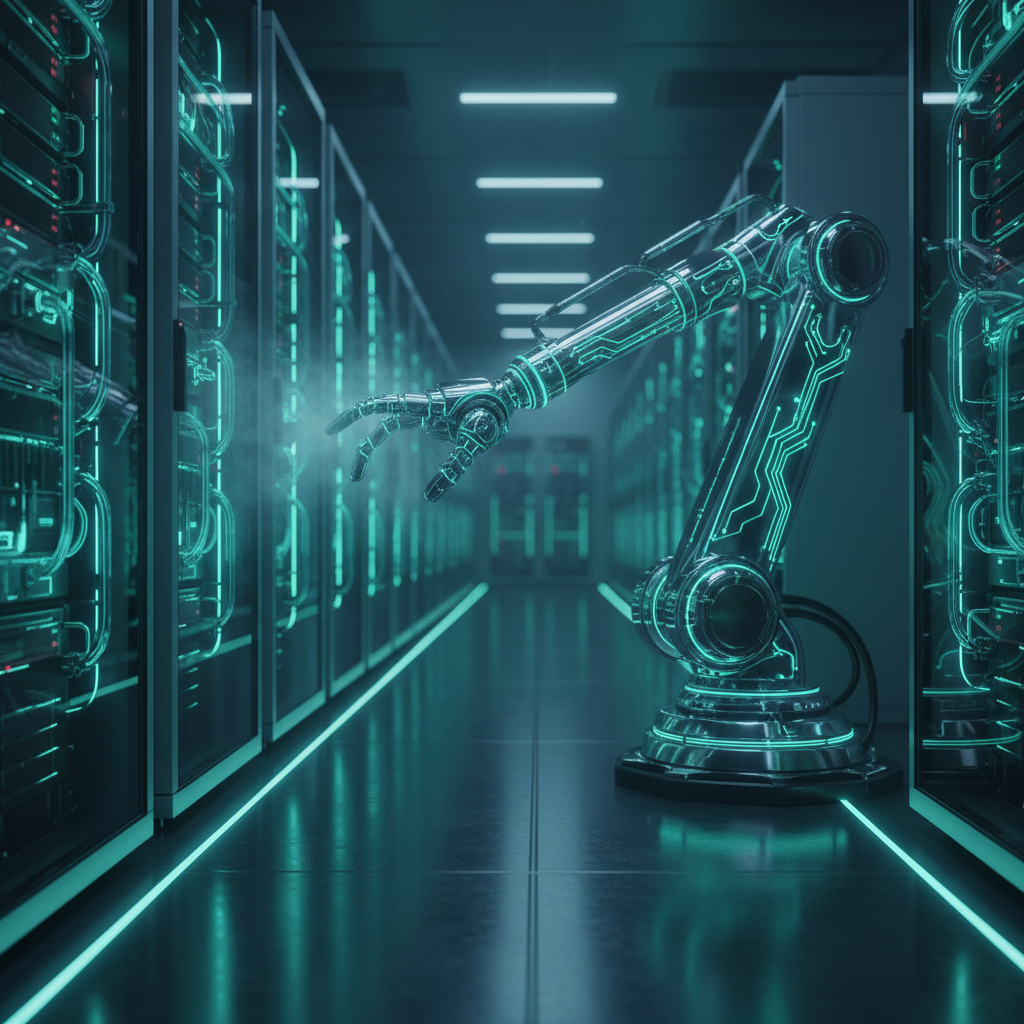
The explosive growth of artificial intelligence demands an unprecedented level of computational power, leading to a pressing physical challenge within AI data centers. The sheer density of compute clusters required for sophisticated machine learning models pushes traditional cooling infrastructure beyond its safe operating limits. Even as NVIDIA’s data center business achieves record revenues, keeping these high-density server racks cool is a major hurdle.
Recognizing this critical need, LG positioned its commercial divisions at CES 2026 to offer cutting-edge high-efficiency HVAC and thermal management solutions specifically engineered for AI data centers. As power density continues its meteoric rise, conventional air cooling methods are simply no longer adequate. When server farm temperatures soar past safe thresholds, compute nodes throttle performance, directly eroding the significant return on investment expected from high-end silicon.
This is where the synergy between LG and NVIDIA becomes incredibly powerful. Integrating LG’s advanced thermal hardware directly into NVIDIA’s infrastructure ecosystem provides a robust solution to this margin drain. It empowers facility operators to pack more processing power into smaller footprints without the risk of hardware burnout, optimizing both efficiency and longevity.
For LG, this strategic move establishes them as a vital infrastructure supplier within a highly lucrative technology ecosystem. It promises recurring enterprise revenue by complementing the compute layer rather than competing against it. Underscoring this broader push into connected enterprise systems, LG subsidiary LG CNS is a proud sponsor of this year’s IoT Tech Expo North America, highlighting the company’s aggressive expansion across smart infrastructure initiatives.
Bringing AI to Life: The Future of Home Robotics
Beyond server infrastructure, the discussions also aim to tackle the computational latency inherent in developing autonomous consumer hardware. LG’s ambitious future growth strategy heavily relies on automating household manual and cognitive workloads, envisioning a new era of home assistance. This vision necessitates flawless, real-time decision-making from intelligent machines.
LG recently unveiled CLOiD, an impressive home robot equipped with two arms boasting seven degrees of freedom and five individually-actuated fingers per hand. This advanced hardware is powered by LG’s innovative ‘Affectionate Intelligence’ platform, designed for contextual awareness and continuous environmental learning. However, translating a computational command into precise physical movement demands a flawless, zero-latency inference pipeline.
Consider a robot reaching for a glass: the system must process real-time visual data, query local vector databases to identify the object’s properties, and accurately calculate the exact required grip force. Any miscalculation within this complex inference pipeline carries the tangible risk of causing physical damage within a user’s home. Achieving this level of precision securely and reliably is paramount.
Currently, LG lacks the comprehensive digital twin infrastructure, pre-trained manipulation models, and sophisticated simulation environments needed to securely compress this deployment pipeline. This is precisely where NVIDIA steps in, offering its robust architecture through the Omniverse and Isaac robotics stack. These platforms are expertly optimized for real-time physical AI inference, providing the backbone LG needs.
Bridging the Gap: From Factories to Homes and Roads
By adopting NVIDIA’s cutting-edge edge-compute capabilities, LG can process complex spatial variables locally, significantly reducing the cloud compute costs associated with continuous spatial mapping and video ingestion. This proven pipeline not only enhances performance but also dramatically compresses the time required to move from an initial prototype to full commercial production. It’s a game-changer for speeding up innovation.
NVIDIA is also rigorously validating its robotics stack, recently wrapping up a two-week Siemens factory trial in January 2026. This trial, announced at Hannover Messe in April, saw a Humanoid HMND 01 Alpha successfully execute live logistics operations over an eight-hour period. However, factory floors in Erlangen are highly structured and regulated environments, a stark contrast to the extreme variability, changing lighting, and unpredictable human interference found in typical consumer living rooms.
This is where LG provides immense value to NVIDIA: access to its extensive ThinQ ecosystem and mass-market distribution creates an invaluable data-rich training environment. Bringing robots into homes requires training models on actual domestic variability, moving beyond sterile simulations to real-world scenarios. This collaboration will be crucial for creating truly adaptable home robots.
This expansion beyond industrial settings into consumer electronics gives NVIDIA’s Omniverse platform the potential to become the universal development infrastructure for real-world autonomy. This mirrors how its groundbreaking GPU architecture captured the cloud processing market, setting a new industry standard. The possibilities for pervasive physical AI are immense.
The final key alignment point covers automotive integration, another rapidly growing segment for both companies. LG’s automotive components division is one of its fastest-growing segments, manufacturing advanced in-vehicle infotainment systems, crucial EV components, and innovative in-cabin generative platforms that incorporate gaze-tracking and adaptive displays. Simultaneously, NVIDIA’s powerful DRIVE platform commands a massive deployment share in both autonomous and semi-autonomous vehicle computing.
Automotive manufacturers frequently grapple with the challenge of bridging legacy infotainment systems with advanced autonomous compute nodes. A formal collaboration between LG and NVIDIA would strategically unite LG’s superior interior experience layer with NVIDIA’s underlying compute platform. This unification allows fleet operators to standardize their reference architectures, significantly reducing the engineering hours often wasted on custom API integrations and securing a unified pathway for vital over-the-air machine learning updates.
These exploratory talks between LG and NVIDIA are not just about a potential partnership; they are about precisely defining the intricate hardware and processing requirements necessary to reliably execute physical AI on a global scale. This collaboration promises to accelerate the deployment of intelligent systems across our homes, data centers, and vehicles, shaping the future of technology.
Source: AI News
