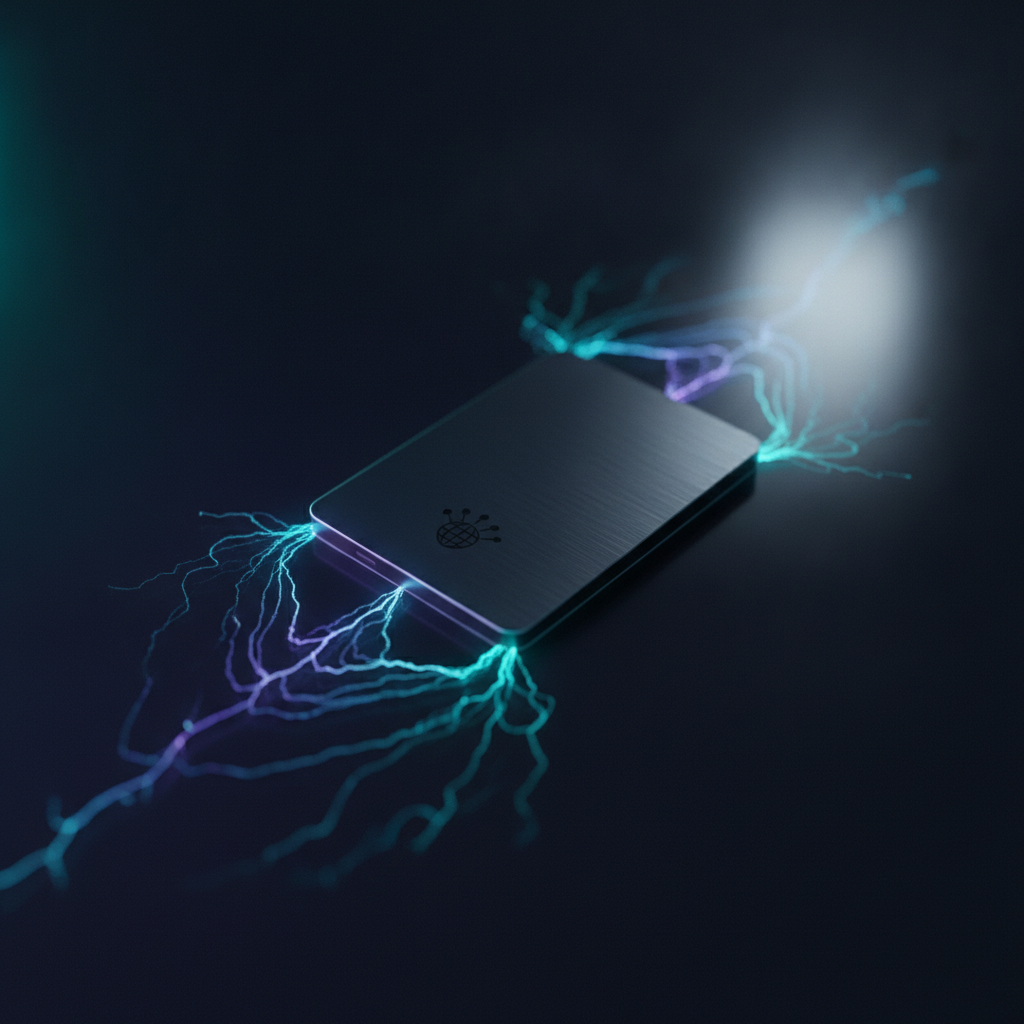
In today’s fast-paced world, keeping track of our valuables has become more crucial than ever. Many of us, myself included, have found Apple AirTags to be absolute game-changers, offering the peace of mind of locating keys, wallets, and other essentials globally. This widespread adoption has led to a boom in third-party trackers, catering to a myriad of specific needs and applications.
However, a common limitation across many of these devices is their reliance on cellular and Wi-Fi networks for connectivity. What if you needed a tracker that could operate independently, forging its own communication pathways without depending on infrastructure built by multi-billion dollar corporations? This is precisely where the Seeed Studio SenseCAP T1000-E tracker card truly shines, offering a unique solution for long-range, low-power communication.
At ZDNET, we believe in providing our readers with the most accurate and insightful advice possible. Our recommendations, including this one, stem from countless hours of rigorous testing, in-depth research, and careful comparison shopping. We meticulously gather data from reputable sources, including direct vendor information, retailer listings, and independent review sites, alongside poring over genuine customer feedback to understand real-world experiences.
When you purchase through our links, we may earn an affiliate commission, which supports our ongoing work. Rest assured, this never influences our editorial coverage, how we present information, or the price you pay for a product. Our strict guidelines ensure that ZDNET’s content remains unbiased and untainted by advertiser influence, allowing us to consistently deliver content that meets the highest journalistic standards.
Unveiling the SenseCAP T1000-E: Beyond Traditional Tracking
The SenseCAP T1000-E isn’t just another tracker card; it’s a gateway into the fascinating world of LoRa mesh networking. LoRa, short for Long Range Radio, is an innovative wireless protocol designed for creating robust, long-range mesh networks that are both open-source and decentralized. This means devices can communicate peer-to-peer, entirely independent of traditional cell towers or the internet.
Imagine an off-grid, low-power communication system ideal for emergencies, remote areas, or even just adventurous hobbyists. While many things impress about the T1000-E, be warned: this card might just be the catalyst that pulls you into the deep and rewarding rabbit hole of LoRa mesh technology. For those who enjoy tinkering and exploring unique tech, you might soon find yourself immersed in mesh transceivers and setting up your own solar-powered nodes.
It’s crucial to note that you should specifically look for the T1000-E variant. Unlike the A or B models, which rely on LoRaWAN networks requiring specific gateways, the E variant is engineered for direct peer-to-peer mesh communication. This distinction is key to unlocking its full, independent networking potential.
Physically, the T1000-E is designed to be highly portable, mirroring the size of a credit card and roughly the thickness of a small stack. Inside, a 700 mAh battery provides a couple of days of power, alongside the sophisticated tech that enables its communication and location capabilities. It boasts a super-loud buzzer, an LED status light, and a single button for power and Bluetooth control.
Features and Connectivity: A Deep Dive
With an IP65 rating, the SenseCAP T1000-E is well-protected against dust and water intrusion, making it perfect for outdoor adventures. This robust design, however, necessitates a proprietary magnetic charging cable with pogo pins, which is a minor drawback. While this ensures waterproofing, it means you’ll need the specific cable for charging and may find it challenging to keep the connection secure if charging on the go with a power bank.
Out of the box, setting up the T1000-E typically involves the SenseCraft app, available for both iOS and Android. While functional, the app can sometimes be a bit vague in its instructions, occasionally featuring unlocalized sections, and even attempts to upsell additional products. If you encounter any hurdles, the extensive online support documentation and the vibrant r/meshtastic community on Reddit are invaluable resources.
For basic tracking needs, the SenseCraft app provides a map displaying your card’s location, and you can also use it to beacon your position to others. The card supports a range of connectivity options, including Bluetooth, LoRaWAN, Meshtastic, Amazon Sidewalk, and Helium networks. This versatility means that if you’re in an area with existing mesh users or Amazon devices, you’ll likely find a robust network to leverage.
The T1000-E truly excels beyond simple tracking. It’s a fully functional mesh transmitter, capable of sending and receiving messages between other compatible devices. This opens up possibilities for off-grid communication, making it ideal for scenarios where traditional networks are unavailable, like in remote wilderness or even on cruise ships where Wi-Fi can be prohibitively expensive. Its excellent GPS receiver performs reliably, even in less-than-ideal conditions, and a convenient lanyard slot allows for easy attachment to gear.
Unlocking Advanced Capabilities and Value
For those eager to delve deeper, the T1000-E offers incredible customization. You can easily flash it with stock Meshtastic firmware using an online flasher tool, replacing the default Seeed Studio firmware. This unlocks the Meshtastic app (also on iOS and Android), which provides a more comprehensive interface for exploring the card’s advanced features, transforming it into a powerful communication device.
The Seeed Studio SenseCAP T1000-E tracker card typically retails for around $50, though prices can fluctuate. While this might seem a bit steep for a basic tracker, its true value becomes apparent when you consider its multifunctional nature. It’s not just a tracker; it’s also a powerful, free messaging client, making it a highly compelling option for specialized off-grid communications or as a reliable AirTag alternative for those seeking robust independent networking capabilities.
Source: ZDNet – AI
