In our increasingly connected world, a robust and reliable home Wi-Fi network isn’t just a luxury — it’s a necessity. From streaming your favorite shows to powering smart home devices, every aspect of modern living relies on a strong wireless signal. At ZDNET, we understand the importance of making informed decisions about your tech, and that’s why we independently test, research, and compare products to bring you the best advice.
Our recommendations are built on countless hours of detailed analysis, drawing data from vendor specifications, retailer listings, and comprehensive reviews across the web. We also delve deep into customer feedback, ensuring our insights reflect what truly matters to real users. When you see a ZDNET recommendation, you can trust that it’s backed by thorough investigation and an unwavering commitment to accuracy.
You might remember the days of adjusting “rabbit ear” antennas on old CRT TVs to get a clear picture. While technology has advanced dramatically, the need for signal optimization hasn’t entirely disappeared. Many of us still find ourselves wrestling with inconsistent Wi-Fi, even with the latest routers.
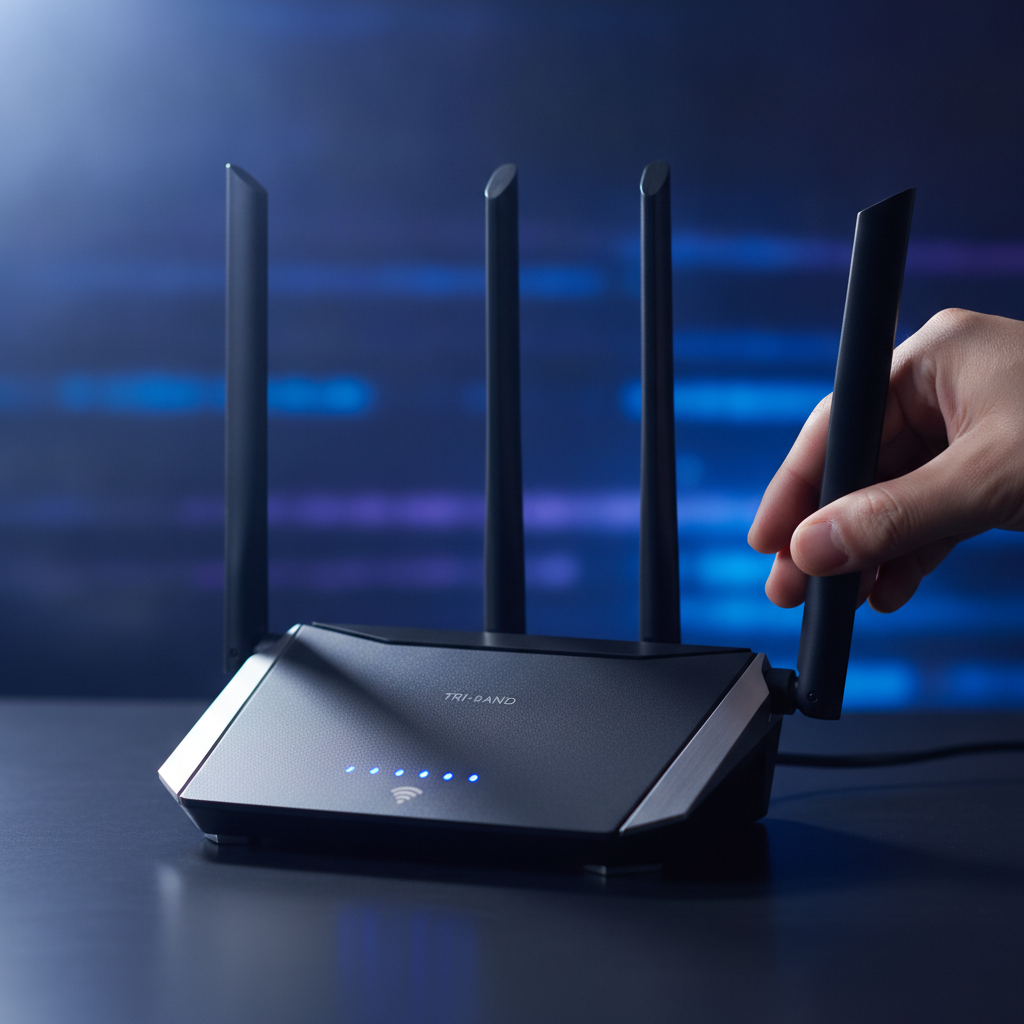
The truth is, simply plugging in your router and placing it wherever there’s space often isn’t enough. The way you position your router’s antennas plays a surprisingly significant role in how effectively your Wi-Fi signal reaches every corner of your home. This guide will walk you through practical tips and tricks to help you achieve the strongest, most consistent wireless network possible.
Mastering Your Router’s Antennas
When it comes to optimizing your Wi-Fi, the “right” antenna setup largely depends on your specific living space and how you want the signal to propagate. Think of your router’s antennas as aiming devices; their orientation directly impacts the direction and reach of your wireless signal. A slight adjustment can make a world of difference.
For those in an apartment or a single-story home, the general consensus, echoed by experts like TP-Link, is to position all your router’s antennas **vertically**. This vertical orientation helps the Wi-Fi signal radiate outward evenly across a flat plane, maximizing coverage across a single floor. It creates a broad, horizontal spread that’s ideal for this type of dwelling.
If you’re navigating a multi-story environment, such as a two-story home, you’ll need a different strategy. In these cases, angling the antennas to about **30 degrees** can significantly improve vertical coverage between floors. This subtle tilt allows the signal to better penetrate upwards and downwards, connecting devices on different levels more effectively.
For larger, more open spaces, ISP brand Optimum suggests setting antennas at roughly **45-degree angles** to establish broad-reaching coverage. However, the situation becomes more intricate when you’re aiming to cover multiple floors and numerous devices simultaneously. This is where a bit of experimentation comes into play.
In complex layouts, TP-Link even recommends trying unique setups, such as positioning the router on its side and spreading the antennas in various directions to maximize signal distribution. Similarly, Optimum advises alternating antenna angles to optimize coverage throughout a varied home environment. Every home is unique, meaning a bit of **trial and error** is often key to finding your perfect setup.
Monitor Your Wi-Fi Signal Like a Pro
Guessing isn’t a strategy; understanding your signal strength is crucial for effective optimization. Most modern Wi-Fi routers come with a companion app that allows you to monitor signal strength in real-time. These apps are invaluable tools for seeing the immediate impact of your antenna adjustments or router repositioning.
Signal strength is typically displayed in **dBm (decibel-milliwatts)**, with readings closer to zero indicating a stronger connection. For instance, a reading of around **-33 dBm** is considered excellent, signifying a very robust signal. Conversely, readings like -70 dBm or lower suggest a weak connection that needs attention.
By checking your dBm readings in different rooms, you can identify dead zones and pinpoint areas where your signal needs improvement. This data-driven approach allows you to make precise adjustments to your router’s antennas and placement, ensuring you’re getting the most out of your home network. It’s an easy way to verify if your tweaks are actually making a difference.
Beyond Antennas: General Router Placement Rules
While antenna angles are vital, the physical location of your router is equally critical to a strong Wi-Fi signal. The most fundamental rule is to place your router in a **central location** within your home, roughly equidistant from all your frequently used devices. This helps the Wi-Fi signal spread out more evenly, providing consistent coverage throughout your entire living space.
It’s also essential to be mindful of nearby obstacles that can interfere with your wireless signal. Optimum recommends **avoiding enclosed spaces** such as closets or behind large pieces of furniture, as these can significantly weaken and obstruct your Wi-Fi. Think of your Wi-Fi signal as a sound wave; you want it to have a clear path to your devices.
Furthermore, keep your router away from metallic objects, as Wi-Fi signals can bounce off metal, creating uneven and inconsistent coverage. You should also avoid placing your router directly on the floor. An elevated position, like on a shelf or table, allows the signal to radiate more effectively both horizontally and vertically, enhancing overall distribution and reach.
Considering a Mesh Wi-Fi System?
If the thought of continually fussing with router antennas doesn’t appeal to you, or if you live in a very large home with persistent dead zones, a **mesh Wi-Fi system** might be your ideal solution. These innovative devices work together to extend wireless signals to the farthest corners of your home, creating a seamless blanket of coverage. Many mesh systems don’t even have visible antennas, simplifying setup and eliminating the need for manual adjustments.
Mesh systems are fantastic for ensuring a consistently strong signal throughout your entire property, regardless of its size or layout. The biggest drawback, however, is often the cost. While they offer superior coverage and ease of use, they typically come with a higher price tag than traditional routers.
For example, the **TP-Link Deco 7 Pro** is an excellent mesh system that provides consistently strong signals, but it can be a significant investment, costing hundreds of dollars for a multi-unit setup. Ultimately, whether you fine-tune your existing router or invest in a mesh system, a little attention to your Wi-Fi setup can lead to a dramatically better connected home experience.
Source: ZDNet – AI
