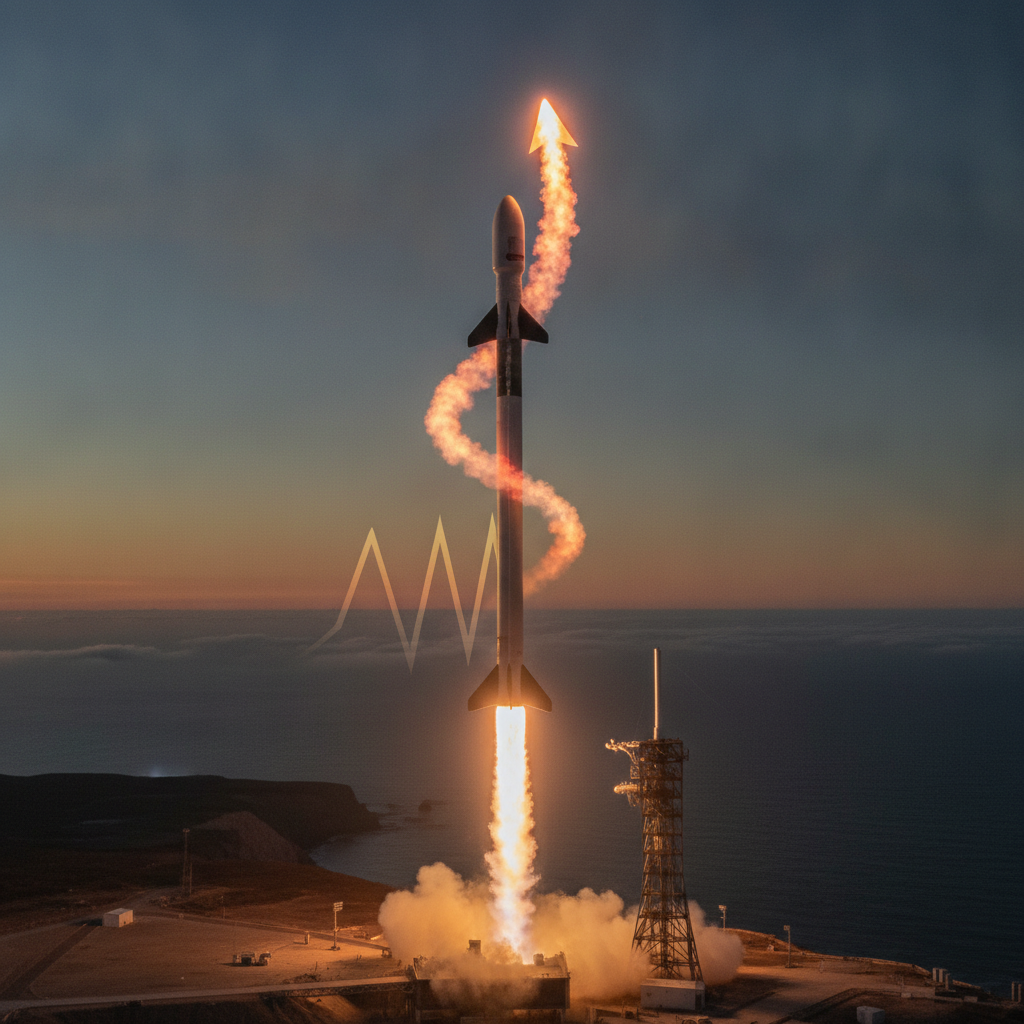
The highly anticipated Initial Public Offering (IPO) of SpaceX has finally arrived, marking a monumental moment for the space exploration company and the financial world alike. After years of captivating global attention with its groundbreaking reusable rocket launches, the ambitious Starlink satellite internet network, and the visionary leadership of founder and CEO Elon Musk, SpaceX has made its grand debut on the public market. This IPO is not just big; it’s a record-breaker, poised to reshape the landscape of public offerings.
For two decades, SpaceX has pushed the boundaries of what’s possible in space. Now, its journey has reached an unprecedented financial milestone, culminating in what is officially the largest IPO in history. This move reflects not only the company’s remarkable achievements but also the immense investor confidence in its future.
SpaceX Takes Flight: The Historic IPO
SpaceX priced its impressive offering of 555.6 million shares at $135 each, successfully raising an astounding $75 billion. This unprecedented figure firmly establishes it as the largest initial public offering ever recorded. Such a valuation also positions Elon Musk on a trajectory to potentially become the world’s first trillionaire, further amplifying the buzz around this historic event.
The company has made its official debut on the NASDAQ exchange, a significant moment for the market. While financial news outlets like Bloomberg and CNBC are providing continuous, up-to-the-minute coverage, the NASDAQ listing itself will display the official trading price as soon as it’s recorded. This public listing opens up a new chapter for SpaceX, inviting a broader range of investors to participate in its ambitious ventures.
Unpacking the S-1: A Glimpse Behind the Curtain
The S-1 registration document, a crucial filing for any company going public, has offered an unprecedented look into SpaceX’s inner workings and financial health. While the company generated over $18 billion in revenue in 2025, it also reported a significant loss of $4.9 billion for the same year. This brings its cumulative losses since inception to a substantial sum exceeding $37 billion, highlighting the immense capital required for its long-term, capital-intensive projects.
A key revelation from the S-1 is the remarkable concentration of power in the hands of its founder. Elon Musk holds approximately 85.1% of the company’s total voting power, ensuring a monarchical grip over the publicly traded entity. This level of control is far greater than what many other tech founders maintain post-IPO, giving Musk unparalleled influence over SpaceX’s strategic direction.
Beyond the top-tier investors, a significant number of SpaceX employees are also set to benefit substantially. Reports suggest that as many as 4,400 SpaceX employees could become millionaires as a result of this IPO. This highlights a significant wealth creation opportunity for those who have contributed to the company’s journey.
However, the S-1 also brought to light potential complexities for lower-tier Special Purpose Vehicle (SPV) investors. These investors may face hidden fees, prolonged payout delays, and even the risk of outright fraud once post-IPO lock-ups are lifted. Furthermore, the filing detailed the company’s strong reliance on its Starlink satellite internet service, its ambitious plans for the xAI division, and the significant engineering hurdles still facing its Starship program, particularly concerning its path to full reusability.
Strategic Moves and Future Outlook
Leading up to its IPO, SpaceX engaged in a series of strategic deals, primarily involving the sale of high-performance compute resources. These agreements were instrumental in bolstering the company’s balance sheet in anticipation of going public. Notably, Anthropic committed to paying xAI $1.25 billion per month for compute services, a major revenue stream, though the exact duration of this lease has been a subject of varying opinions, often downplayed by Elon Musk himself.
Another significant pre-IPO deal saw Google agreeing to pay SpaceX $920 million per month for compute services. This short-term arrangement was reportedly a response to unexpected demand for Google’s recently launched AI products, demonstrating the high value of SpaceX’s infrastructure. These deals underscore the company’s diverse revenue streams and its pivotal role in the burgeoning AI compute market.
The S-1 also included a crucial warning to prospective investors regarding potential future dilution, a disclosure that has added fuel to ongoing rumors about a possible merger with Tesla. This forward-looking statement signals that major financial restructuring or capital raises could be on the horizon, further shaping SpaceX’s trajectory as a public company. As SpaceX embarks on this new chapter, its blend of visionary projects, significant financial backing, and complex challenges will continue to make it a focal point in both the tech and financial worlds.
Source: TechCrunch – AI
