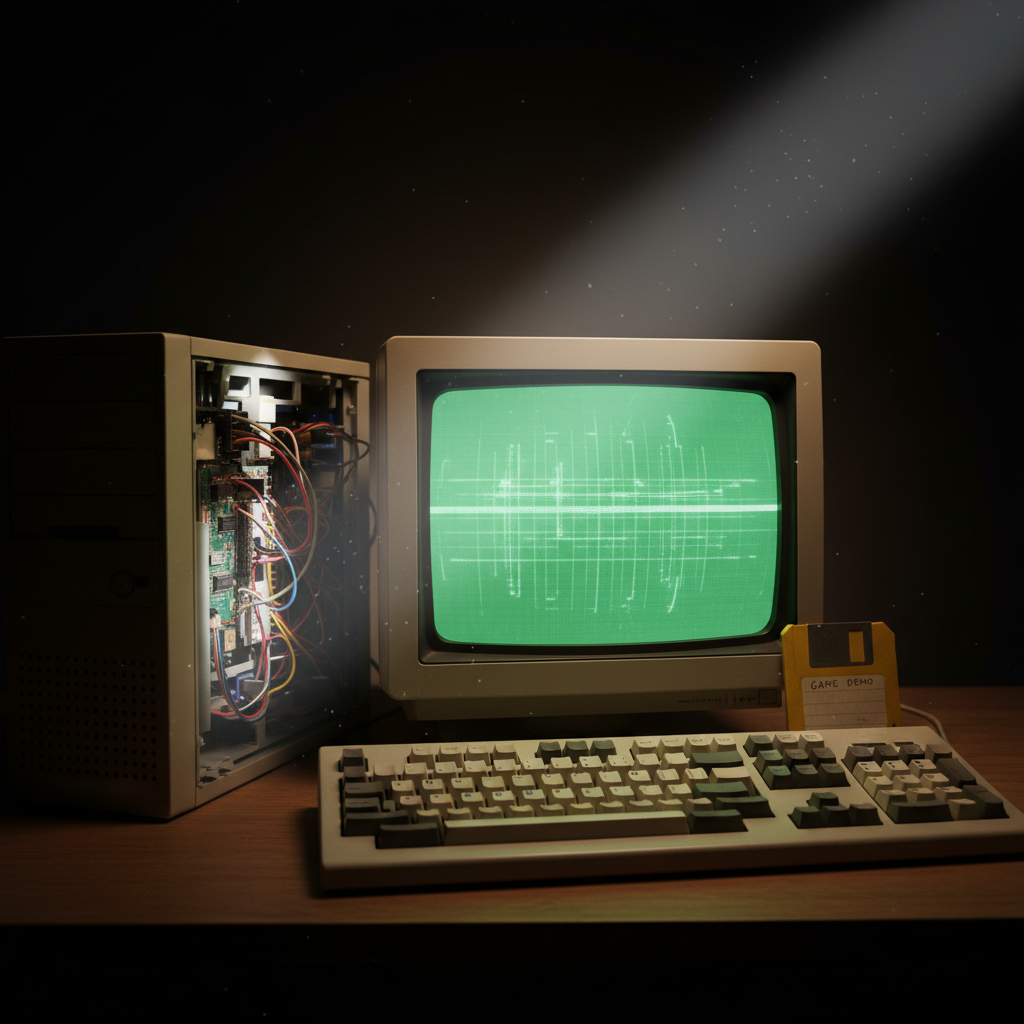
Ever wonder where it all began for the personal computer? Microsoft has just pulled back the curtain on its earliest days, open-sourcing the foundational code for PC-DOS 1.00. This isn’t just a nostalgic trip; it’s a rare, invaluable look into the operating system that kickstarted the PC revolution.
Before “Micro-Soft” became the household name we know today, Bill Gates was busy writing BASIC interpreters. While Xenix, a Unix distribution, was Microsoft’s first shipping operating system, their true shot at the big leagues came in 1980. IBM approached Gates, seeking an operating system for their groundbreaking new IBM PC, and the rest, as they say, is history.
A Glimpse into Computing History
With an existing AT&T Unix license that didn’t permit porting Xenix to the x86 IBM PC, Microsoft needed a solution fast. Developing an OS from scratch was out of the question given the tight deadline. Instead, they made a pivotal acquisition, purchasing 86-DOS, also known as QDOS, from Seattle Computer Products and its creator, Tim Patterson.
This shrewd move, costing Microsoft a mere $100,000, would pave their path to tech industry dominance. IBM, having found Digital Research’s CP/M unavailable, turned to Microsoft, who adapted 86-DOS with its CP/M-style APIs into PC-DOS 1.0, shipped in August 1981.
Crucially, Microsoft retained the right to sell it independently as MS-DOS to other PC-compatible manufacturers. This strategic foresight laid the groundwork for their market dominance throughout the 1980s and early 1990s. Though incredibly basic by modern standards – running from 160KB floppies with no subdirectories or hard-disk support – DOS 1.0 was the bedrock of the PC era.
Beyond the Code: A Developer’s Time Capsule
This latest release is far more than just raw source code; it’s a meticulously preserved archive. Microsoft states these aren’t just traditional OS releases; many listings represent point-in-time working states and include handwritten notes, carefully preserved by Tim Patterson himself.
Imagine this treasure trove as a printed commit history of a Git repository, offering unparalleled insight into early software development practices. The materials include listings for the 86-DOS 1.00 kernel, several development snapshots of the PC-DOS 1.00 kernel, and well-known utilities like CHKDSK.
- Sources to the 86-DOS 1.00 kernel
- Several development snapshots of the PC-DOS 1.00 kernel
- Well-known utilities such as CHKDSK
- Listings for the assembler itself
Beyond the OS code, the package even includes the source for the assembler used to create it. This offers a rare, unvarnished look at how MS-DOS/PC-DOS truly came into being, showcasing the actual development process as it happened.
While not for modern computing, DOS 1.0’s small size and feature limitations make its codebase incredibly comprehensible. It’s a fantastic educational resource for understanding the fundamental structure of operating systems on first-generation 8086 hardware, especially compared to today’s complex systems.
The Evolution of Open Source and Historical Clarity
This release continues a trend begun in 2014 when Microsoft and the Computer History Museum first published early MS-DOS sources. Initially restrictive, licensing significantly shifted in 2018 with the republishing of MS-DOS 1.25 and 2.0 on GitHub under the permissive MIT license.
The MIT license, celebrated by the Free Software Foundation as GPL-compatible, allows for almost unrestricted reuse, modification, and redistribution. By placing DOS 1.0 under this same open-source license, Microsoft has completed the historical narrative from the absolute beginning of the PC era. What was once confined to archives is now a fully browsable Git tree.
This move empowers system programmers, educators, and retrocomputing enthusiasts to clone, build, and experiment with the very earliest versions of DOS using contemporary toolchains. Moreover, this open-sourcing effort helps resolve long-standing historical ambiguities regarding DOS versioning.
Historians previously grappled with reconciling IBM’s PC-DOS 1.0, internal Microsoft version numbers, and various OEM releases like MS-DOS 1.25. Now, with a clearly labeled DOS 1.0 code drop directly tied to the original IBM PC era, researchers have a definitive, concrete reference point for that complex early history of DOS builds.
For anyone craving a genuine blast from the past or a profound understanding of computing’s roots, this code is a must-explore. It vividly illustrates the incredible journey from the PC’s rudimentary beginnings to today’s world, where your pocket device holds exponentially more power than the entire Microsoft operation back then.
Source: ZDNet – AI
