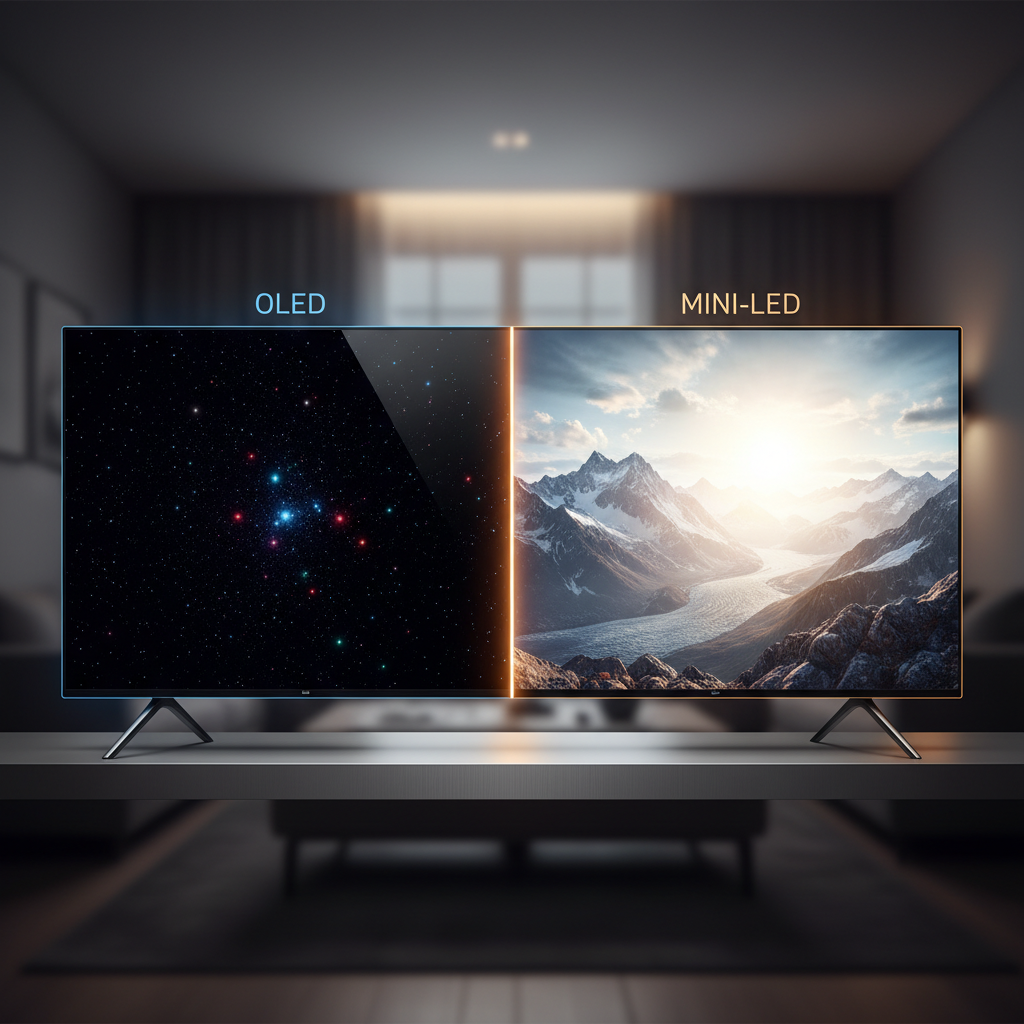
Navigating the ever-evolving world of television technology can feel overwhelming, especially when you’re on the hunt for a new set. With innovations happening constantly, it’s easy to get lost in the jargon and countless options. Thankfully, choosing the perfect TV for your home doesn’t have to be a daunting task once you understand the core differences.
Today, the two primary display technologies dominating the market are Mini LED and OLED. Each offers a distinct approach to picture quality, bringing its own set of compelling benefits and a few limitations. At ZDNET, our recommendations are built on countless hours of independent testing, rigorous research, and comprehensive comparison shopping. We meticulously gather data from top sources, pore over customer reviews, and ensure our advice helps you make informed buying decisions without bias.
Decoding Today’s Leading TV Technologies
Before diving into the pros and cons, let’s break down how these two impressive technologies work their magic. Understanding their fundamental differences is key to appreciating what each brings to your viewing experience. They might both deliver stunning visuals, but they achieve it in noticeably different ways.
An OLED TV, which stands for Organic Light-Emitting Diode, is truly revolutionary because each individual pixel generates its own light. This allows for absolute control over brightness and color at a pixel level, meaning pixels can completely turn off to produce perfect, inky blacks. The result is unparalleled contrast and a picture depth that is incredibly lifelike.
On the other hand, Mini LED TVs represent an advanced form of traditional backlit LCD technology, often branded as QLED or QNED by manufacturers. Instead of a single large backlight, these displays feature thousands of tiny LEDs grouped into numerous local dimming zones. While individual pixels don’t light up independently like OLED, these zones can dim or brighten collectively, providing significantly better contrast and black levels than older LCDs.
Why a Mini LED TV Might Be Your Perfect Match
If you’re seeking a blend of impressive performance, larger screen sizes, and better value, a Mini LED TV could be your ideal choice. This technology has rapidly matured, offering stunning visuals that rival, and in some areas surpass, OLED. Here are a few compelling reasons to consider Mini LED.
-
Cost-Effectiveness for Bigger Screens: Generally speaking, Mini LED TVs offer a more budget-friendly entry point, especially when you start looking at larger screen sizes. You can often snag a significantly larger Mini LED TV for the same price as a smaller OLED, giving you more screen real estate for your money. This makes them a fantastic option if you want a big-screen experience without breaking the bank for streaming, live sports, or casual console gaming.
-
Superior Brightness for Any Room: Mini LED technology excels in brightness, often achieving 3-4 times the peak brightness of OLED displays. This incredible luminosity is a game-changer if you watch TV in a brightly lit room with abundant natural light or harsh overhead fixtures. The enhanced brightness helps cut through glare and maintains vibrant colors, ensuring a clear, punchy image even in challenging environments.
-
Virtually Immune to Burn-In: While modern OLED TVs have introduced technologies to mitigate burn-in, Mini LED displays are significantly less susceptible to this phenomenon. Burn-in, a rare but persistent ghosting of static images on screen, is a concern for some users who watch the same content or play the same game for extended periods. If absolute peace of mind against image retention is a top priority for you, Mini LED offers a worry-free viewing experience.
Why OLED TVs Deliver the Ultimate Visuals
For those who prioritize absolute picture perfection and an immersive, cinematic experience, an OLED TV remains the gold standard. Its unique panel construction allows for visual feats that other technologies struggle to match. If you want the best of the best, OLED often comes out on top.
-
Unrivaled Picture Quality and Contrast: OLED’s ability to control light at the individual pixel level results in the deepest, truest blacks imaginable and infinite contrast. This creates images with incredible depth, detail, and vibrant, accurate colors that truly pop off the screen. Additionally, OLED TVs boast much wider viewing angles compared to Mini LED, ensuring a consistent and stunning picture even if you’re seated off to the side.
-
Lightning-Fast Response Times for Gamers: For competitive gamers where every millisecond counts, OLED TVs offer an undeniable edge. They feature incredibly fast response times, often as low as 0.1ms, meaning pixels switch colors almost instantly. This virtually eliminates motion blur and ghosting, providing a smoother, more fluid gaming experience.
-
Advanced Gaming Features: Beyond speed, OLED TVs were among the first to widely support crucial gaming technologies like Variable Refresh Rate (VRR) standards, including Nvidia G-Sync and AMD FreeSync. These features prevent screen tearing and stuttering, delivering a seamlessly synchronized picture. Many also support Dolby Vision Gaming 4K at 120Hz, providing cutting-edge graphics for serious players.
Ultimately, the choice between Mini LED and OLED comes down to your priorities and viewing habits. Both technologies offer exceptional viewing experiences, but their distinct strengths cater to different needs and preferences. Consider your budget, room lighting, and how you plan to use your TV to make the best decision for your home entertainment setup.
Source: ZDNet – AI
