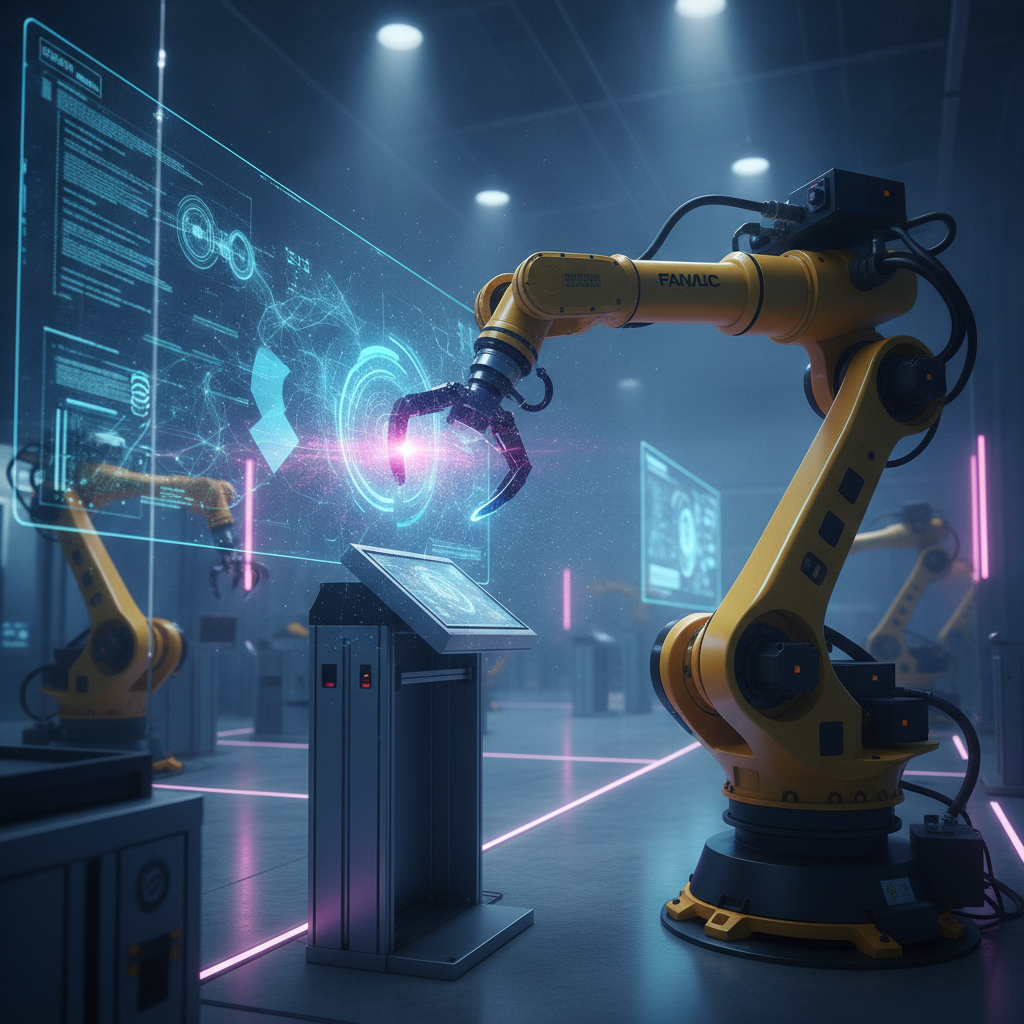
The world of industrial automation is on the cusp of a profound transformation, driven by an exciting new collaboration between two industry titans. Global robotics leader FANUC has teamed up with tech giant Google to significantly accelerate the development and deployment of “Physical AI.” This partnership promises to unlock unprecedented levels of intelligence and adaptability in manufacturing and beyond, ushering in a new era for smart factories.
This strategic alliance aims to bridge the gap between advanced artificial intelligence research and its practical application in real-world industrial settings. By combining FANUC’s robust hardware and decades of manufacturing expertise with Google’s cutting-edge AI capabilities, the future of automation looks set to become far more dynamic and responsive.
Understanding Physical AI and Its Potential
So, what exactly is “Physical AI”? At its core, Physical AI refers to intelligent systems that can perceive, reason, and act within the physical world. Unlike traditional industrial robots that meticulously follow pre-programmed instructions, Physical AI-driven robots are designed to learn from their environment, adapt to unforeseen changes, and perform complex tasks with human-like dexterity and problem-solving skills.
Imagine a robot not just repeating a weld path, but dynamically adjusting to variations in material or part placement, or handling delicate items without explicit programming. This capability is crucial for tackling intricate assembly, precise quality inspection, and flexible material handling in increasingly complex manufacturing scenarios. It moves us closer to truly autonomous and highly flexible production lines.
FANUC brings an unparalleled legacy of excellence in industrial robotics, CNC systems, and factory automation. Their reputation for building incredibly reliable, precise, and durable machinery is second to none, making them a cornerstone of modern manufacturing operations worldwide. This deep understanding of industrial environments and the practical demands of production lines is invaluable.
Their extensive installed base and robust hardware platforms provide the perfect physical foundation for Google’s advanced AI algorithms to learn and operate within. This collaboration is not just about putting AI into robots, but about creating a synergistic relationship where the hardware and software evolve together to optimize performance. FANUC’s commitment to reliability ensures that these intelligent systems can operate continuously and effectively in demanding industrial conditions.
On the other side of this powerful partnership is Google, a company synonymous with innovation in artificial intelligence and machine learning. Google’s expertise spans vast datasets, sophisticated algorithms, and scalable cloud infrastructure, providing the computational backbone necessary for developing and training complex AI models for robotics. Their research pushes the boundaries of what AI can achieve.
Google’s cloud platform, with its robust processing power and machine learning tools, will enable FANUC robots to process sensor data, learn from experiences, and make intelligent decisions in real-time. This includes capabilities like advanced computer vision, reinforcement learning, and predictive analytics, all crucial for creating truly adaptive robotic systems. The fusion of these strengths promises to unlock new frontiers in robotic capabilities.
The Synergistic Benefits of This Alliance
The collaboration between FANUC and Google is set to yield significant advantages for industries grappling with evolving market demands and labor challenges. Key benefits include the acceleration of R&D cycles, allowing new robotic functionalities to move from concept to deployment much faster than before. This rapid innovation is critical in today’s competitive global landscape.
- Enhanced Flexibility: Robots will be able to adapt to new tasks and varying production requirements with minimal reprogramming, improving operational agility.
- Increased Efficiency and Quality: AI-driven precision and continuous learning will lead to fewer errors, optimized processes, and higher-quality outputs.
- Reduced Downtime: Predictive maintenance, powered by AI, can anticipate and prevent equipment failures before they occur, maximizing uptime.
- Addressing Labor Shortages: More intelligent robots can take on complex or monotonous tasks, freeing human workers for higher-value, creative activities.
- Accessibility: The partnership aims to make advanced AI robotics more accessible and easier to integrate for a wider range of businesses, not just large corporations.
This collaboration will undoubtedly reshape manufacturing processes, moving towards fully autonomous and highly responsive production environments. It signifies a major step towards the realization of “Industry 5.0,” where human ingenuity and advanced AI work in harmony to create more resilient, sustainable, and human-centric industrial systems.
Looking Ahead: The Future of Smart Manufacturing
The accelerating development of Physical AI through this partnership has profound implications for the future of smart manufacturing. We can anticipate factories becoming more agile, capable of quickly reconfiguring production lines and responding to sudden shifts in consumer demand or supply chain disruptions. This level of responsiveness will be a game-changer for businesses aiming for resilience and innovation.
Furthermore, this collaboration extends beyond the factory floor, potentially impacting logistics, healthcare, and even agriculture. The ability of robots to learn and adapt in dynamic physical environments opens up a myriad of applications across various sectors, promising efficiencies and capabilities previously unimagined. FANUC and Google are not just building better robots; they are building the foundation for a more intelligent and automated world.
In essence, this alliance represents a pivotal moment in industrial automation, where the robust reliability of traditional robotics meets the transformative power of artificial intelligence. It promises to unlock a new era of productivity, flexibility, and innovation, ensuring that industries worldwide are well-equipped for the challenges and opportunities of the 21st century.
Source: Google News – AI Search
