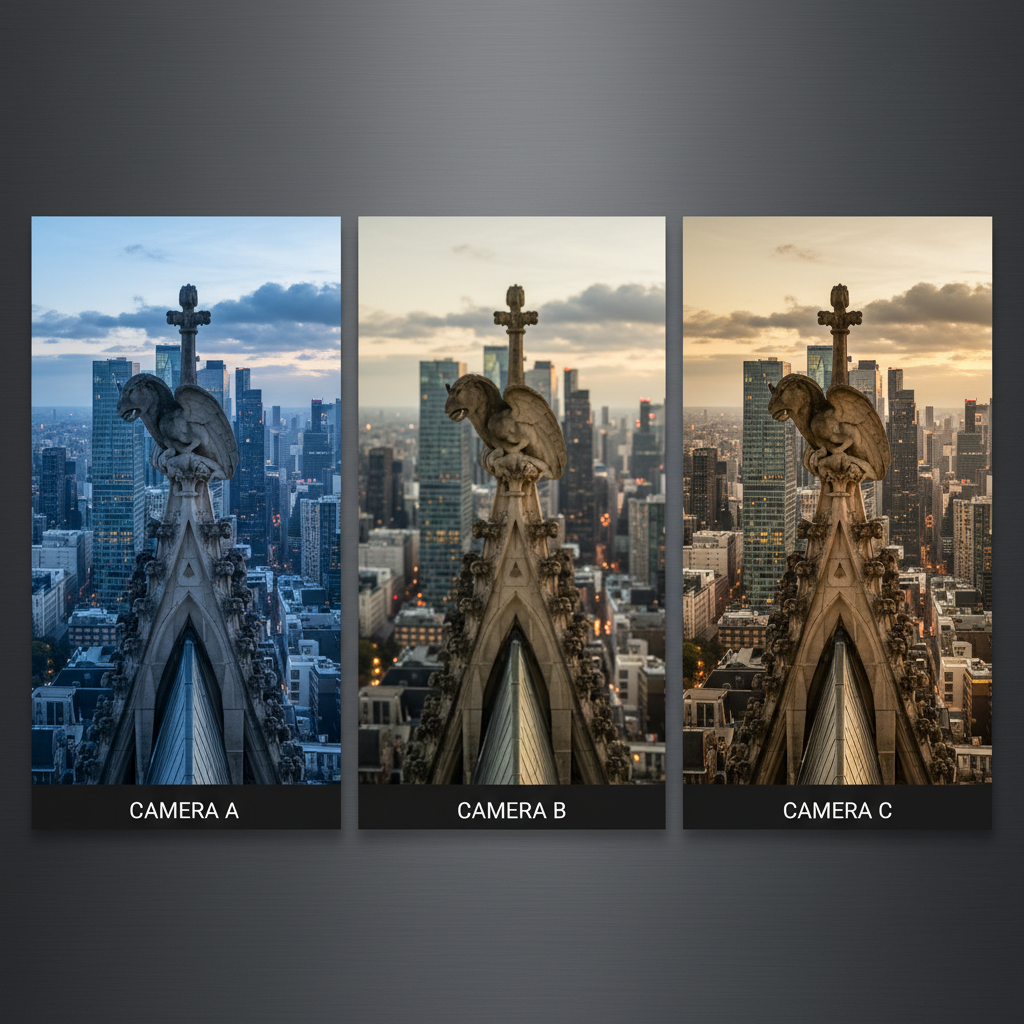
In the ever-evolving world of smartphone cameras, the pursuit of extreme zoom capabilities continues to push boundaries. As a tech enthusiast and reviewer, I recently put three leading contenders to the ultimate test: the Samsung Galaxy S26 Ultra, the Google Pixel 10 Pro, and the Motorola Razr Fold. My mission? To uncover which device truly reigns supreme in the challenging realm of 100x super resolution zoom, and the results were nothing short of surprising.
My journey into super zoom began during a press trip to the majestic Grand Canyon, where I was initially reviewing the Motorola Razr Fold. This foldable phone boasts an impressive Super Res Zoom feature, promising crisp 100x photos. Spotting a distant river, I naturally reached for the Razr Fold, eager to capture the scene.
However, a thought struck me: I also had the Samsung Galaxy S26 Ultra in my pocket, a device from a brand often considered the pioneer of super resolution zoom. I decided to capture the same shot with Samsung’s flagship, expecting a similar, if not superior, result. To my astonishment, the Razr Fold produced a remarkably clear image, while the Samsung photo appeared blurry and splotchy.
This initial comparison was stark: the Razr Fold’s image looked fantastic on the phone’s screen, though it showed some pixelation when cropped to 100%. The Galaxy S26 Ultra’s attempt, on the other hand, was disappointingly fuzzy. This unexpected outcome sparked my curiosity, prompting a more extensive investigation into how these super-zoom capabilities truly stack up.
Putting 100x Zoom to the Ultimate Test
Upon returning home, I felt compelled to determine if my Grand Canyon experience was an isolated incident or a consistent trend. To make the comparison even more robust, I introduced another major player known for its super resolution zoom: the Google Pixel 10 Pro. My testing ground for this expanded comparison became a local Six Flags amusement park in Chicago, offering a plethora of challenging long-distance subjects.
For each object I photographed with 100x zoom, I also captured a close-up reference shot using my Meta Oakley HSTN glasses. This provided a crucial benchmark, allowing for a clear visual assessment of how effectively each phone’s zoom managed to bridge vast distances. The goal was to understand not just what each camera could achieve, but how accurately it could render fine details from afar.
An interesting difference emerged in how each phone processed its super-zoom images. The Pixel 10 Pro, for instance, displays a subtle “sparkle” animation on screen as it refines the photo, offering a clear visual cue that post-processing is underway. The Razr Fold also cleans up its images after a brief delay, but without any on-screen indicator.
Conversely, the Galaxy S26 Ultra seemed to skip this processing entirely, which I found quite ironic given Samsung’s pervasive use of AI throughout its devices. This lack of visible processing hinted at a potential reason for some of its less-than-stellar results. With the methodology established, it was time to dive into the individual test shots.
Field Tests: From Statues to Stuffed Animals
My first subject was a statue of Foghorn Leghorn, positioned roughly 250 feet away. The challenge here was to resolve the details of the character from a significant distance. The results were quite telling, with a clear hierarchy emerging in image quality.
- The Samsung Galaxy S26 Ultra struggled, showing virtually no image cleanup and rendering a blurry, undefined subject.
- The Motorola Razr Fold performed much better, though it appeared to interpret reflections as textures, giving a slightly stylized look.
- The Google Pixel 10 Pro, however, delivered the most impressive outcome, producing a smooth and surprisingly detailed image. This round unequivocally went to the Pixel.
Next, I tackled a clock face located approximately 450 feet away. Clock faces are excellent subjects for zoom tests, as their familiar structure allows AI algorithms more data to work with. Despite this potential advantage, the pattern observed with Foghorn Leghorn largely repeated itself.
- Once again, the Samsung Galaxy S26 Ultra yielded the blurriest result, making it difficult to discern the time.
- The Motorola Razr Fold improved upon Samsung’s attempt but still lagged behind in clarity.
- The Google Pixel 10 Pro delivered an exceptionally clean and readable image, making it the clear winner for this long-distance detail shot.
My third outdoor test involved a stand of stuffed animal prizes, shot from about 325 feet away while I was elevated on a roller coaster platform. This scenario offered a different perspective and lighting challenge. Here, the competition tightened considerably between the Razr Fold and the Pixel 10 Pro.
While the Pixel produced a smoother image, I found that the Motorola Razr Fold subtly edged it out, capturing slightly better texture and lighting detail. It was a close call, showcasing the impressive capabilities of both devices in challenging conditions, but with a slight win for Motorola in this particular scenario.
The Ultimate Test: Shooting the Moon
No 100x zoom camera comparison is complete without attempting the quintessential smartphone super-zoom shot: the moon. Knowing that Samsung has historically excelled here, I purposefully stacked the deck in its favor by conducting this test on a clear, dark night. This was Samsung’s chance to shine and reclaim its super-zoom crown.
However, the Pixel 10 Pro proved surprisingly difficult to use for moon photography. Its viewfinder often jumped erratically, frequently showing only a pinpoint of light until I meticulously zoomed in slowly. Even then, the resulting image was often overexposed, making it a challenging and frustrating experience.
The Samsung Galaxy S26 Ultra, as expected, captured a decent image of the moon, offering a recognizable if slightly soft rendition. The Motorola Razr Fold, however, managed to produce a shot that was quite similar to Samsung’s but with a noticeable edge in sharpness and detail.
This final test highlighted a key difference in the AI approach of these devices. Samsung’s super resolution zoom often performs best with specific, recognizable subjects like the moon, where its AI likely has vast pre-trained data to apply. In contrast, the Razr Fold and Pixel 10 Pro seem to employ a more generalized AI, capable of robust image cleanup across a wider variety of scenes.
Ultimately, it appears the Samsung Galaxy S26 Ultra is beginning to slip behind its competitors in the super resolution zoom category. While Samsung’s overall camera performance remains strong, its 100x zoom needs significant improvement to match the impressive processing seen in the Pixel 10 Pro and, surprisingly, the Motorola Razr Fold. The fact that a foldable phone like the Razr Fold, which often involves camera compromises, could contend so strongly is a true testament to Motorola’s advancements in camera technology.
Source: ZDNet – AI
