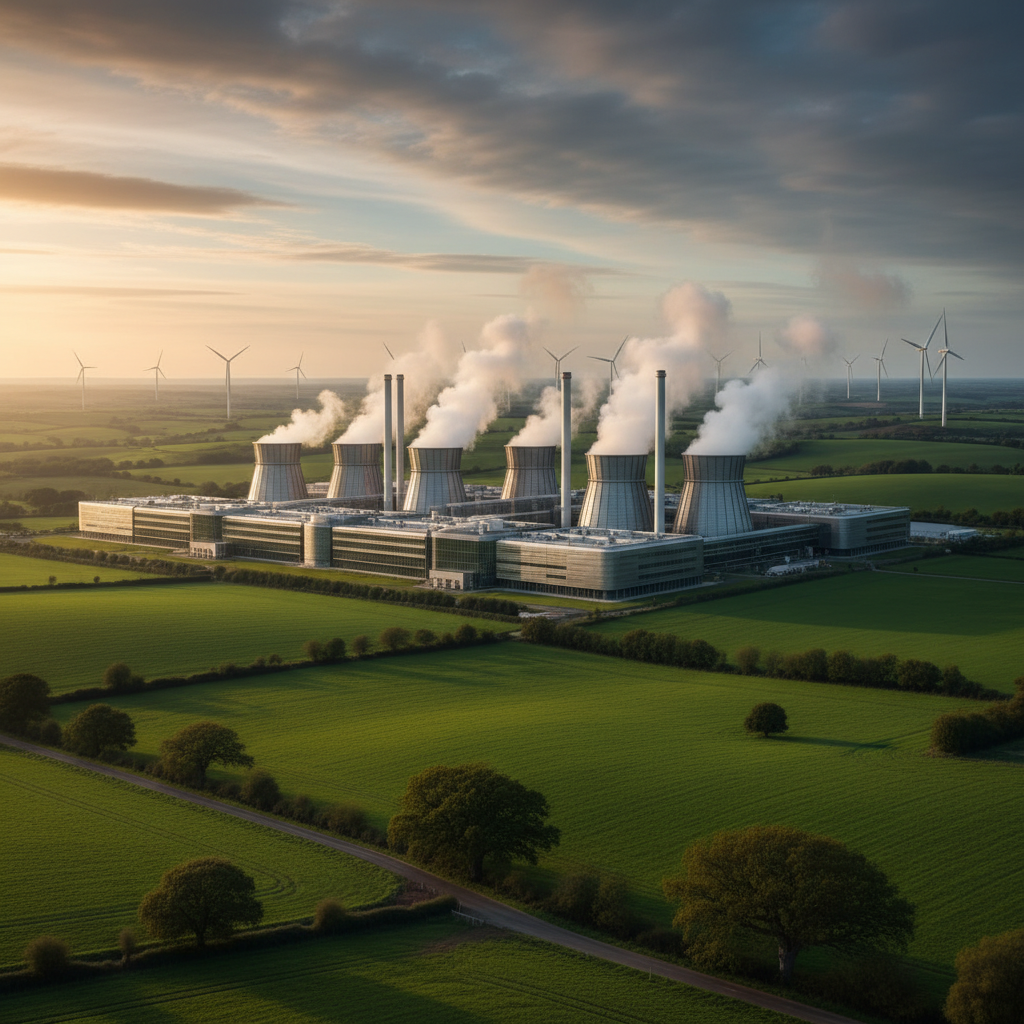
The rise of artificial intelligence is undeniably transforming our world, promising unparalleled advancements across industries. However, a less-talked-about consequence is now coming to light: the colossal energy demands of the datacenters powering these AI innovations. Recent revelations suggest that UK officials have significantly underestimated the carbon emissions impact of these facilities, posing a serious challenge to the nation’s ambitious net-zero targets.
This oversight highlights a critical blind spot in our collective understanding of AI’s environmental footprint. As AI models become more complex and widespread, their foundational infrastructure—massive datacenters—requires an exponential increase in power, consuming electricity at a rate that far outstrips initial projections.
The Insatiable Appetite of AI Datacenters
Modern AI, especially large language models and advanced machine learning, demands immense computational power. This isn’t just about processing data; it’s about continuously learning, inferring, and executing complex algorithms at scale. Each operation translates into energy consumption, and when multiplied across millions or billions of calculations per second, the numbers become staggering.
Beyond the raw processing, these datacenters also have an Achilles’ heel: heat. The constant operation of thousands of servers generates enormous amounts of heat, necessitating sophisticated and equally energy-intensive cooling systems. Many of these systems rely on vast quantities of water, adding another layer to their environmental impact that often goes unnoticed.
The sheer scale of these operations means that a single large AI datacenter can consume as much electricity as a small town. This energy isn’t always green, especially in regions still heavily reliant on fossil fuels for electricity generation. Consequently, the carbon footprint of these digital behemoths swells, making them significant contributors to greenhouse gas emissions.
UK’s Net-Zero Goals at Risk
For the UK, which has committed to achieving net-zero carbon emissions by 2050, this underestimation presents a formidable obstacle. Initial government forecasts for datacenter energy consumption clearly failed to account for the explosive growth and specific demands of AI infrastructure. This means that carbon budgets and energy grid planning may already be critically flawed, based on outdated assumptions.
Experts are now calling for an urgent reassessment, emphasizing that the energy consumption of AI datacenters could derail progress towards climate targets. Without a realistic understanding of this demand, it becomes incredibly difficult to plan for adequate renewable energy sources or implement effective carbon reduction strategies. The integrity of the UK’s climate commitments hinges on addressing this gap with immediate action.
- Underestimated Growth: Previous models did not anticipate the rapid expansion and energy intensity of AI workloads.
- Grid Strain: Increased demand puts pressure on the national grid, potentially delaying the transition away from fossil fuels.
- Policy Lag: Regulatory frameworks and environmental policies have not kept pace with technological advancements.
- Investment Imperative: There’s an urgent need for greater investment in renewable energy infrastructure specifically to power these growing digital hubs.
Charting a Sustainable Path for AI
Acknowledging the problem is the first crucial step towards finding solutions. Moving forward, a concerted effort is needed from government, industry, and energy providers to mitigate the environmental impact of AI. This includes prioritizing the development and adoption of energy-efficient AI algorithms and hardware, alongside innovations in cooling technologies.
Critically, the future development of AI datacenters must be intrinsically linked to renewable energy sources. This means building new facilities near sources of clean power and investing heavily in solar, wind, and other sustainable grids. Policy makers must also implement stronger regulations that mandate energy efficiency standards and transparent reporting of environmental footprints for all new datacenters.
The promise of AI is immense, but its growth cannot come at the expense of our planet. By proactively addressing its environmental challenges, we can ensure that artificial intelligence truly serves humanity, fostering innovation without compromising our climate goals. It’s time to bring the hidden costs of our digital future into the light and plan accordingly.
Source: Google News – AI Search
