ZDNET’s Commitment to You
At ZDNET, our priority is to deliver reliable tech recommendations and expert advice. We achieve this through rigorous product testing, in-depth research, and comprehensive comparison shopping, ensuring our insights are always trustworthy.
Our “ZDNET Recommends” badge signifies that our suggestions stem from meticulous investigation. We gather data from diverse sources, including vendor listings, retailers, and independent reviews, alongside customer feedback, to understand real-world user experiences.
While we may earn affiliate commissions when you purchase through our links, this income supports our work and never influences our editorial content, ratings, or pricing. We adhere to strict guidelines, guaranteeing our reviews remain unbiased and free from advertiser influence.
Our editorial team writes for you, the reader, committed to accurate information and knowledgeable advice for smarter buying decisions. Every article undergoes thorough fact-checking to meet our highest standards. We promptly correct any errors and encourage you to report inaccuracies via our feedback form.
Alienware 15 (2026): A Mixed Bag
The idea of a “budget-friendly” Alienware laptop was exciting, promising a distinct Alienware experience at a more accessible price. However, balancing premium features, robust build, and affordability proves challenging in today’s market, and the Alienware 15 presents its own set of compromises.
This gaming machine features a 300-nit WUXGA display, an Intel Core 7 “Raptor Lake” CPU, and GPU options from RTX 4050, 5050, or 5060, with 16GB or 32GB of RAM. While standard for entry-level gaming, its $1,300 starting price quickly climbs, making its value proposition debatable.
My unit featured a 10-core Intel Core 7 240H (a 2022 CPU) and graphics comparable to Dell’s Alienware 16. Notably, the GPU is limited to 85W TDP, below its 115W potential. Competitors like the Lenovo LOQ 15 utilize the same GPU at full power, with a better display and lower cost.
Expandability includes one M.2 slot and two SODIMM slots, allowing up to 32GB dual-channel RAM.
Design, Display, and Performance Insights
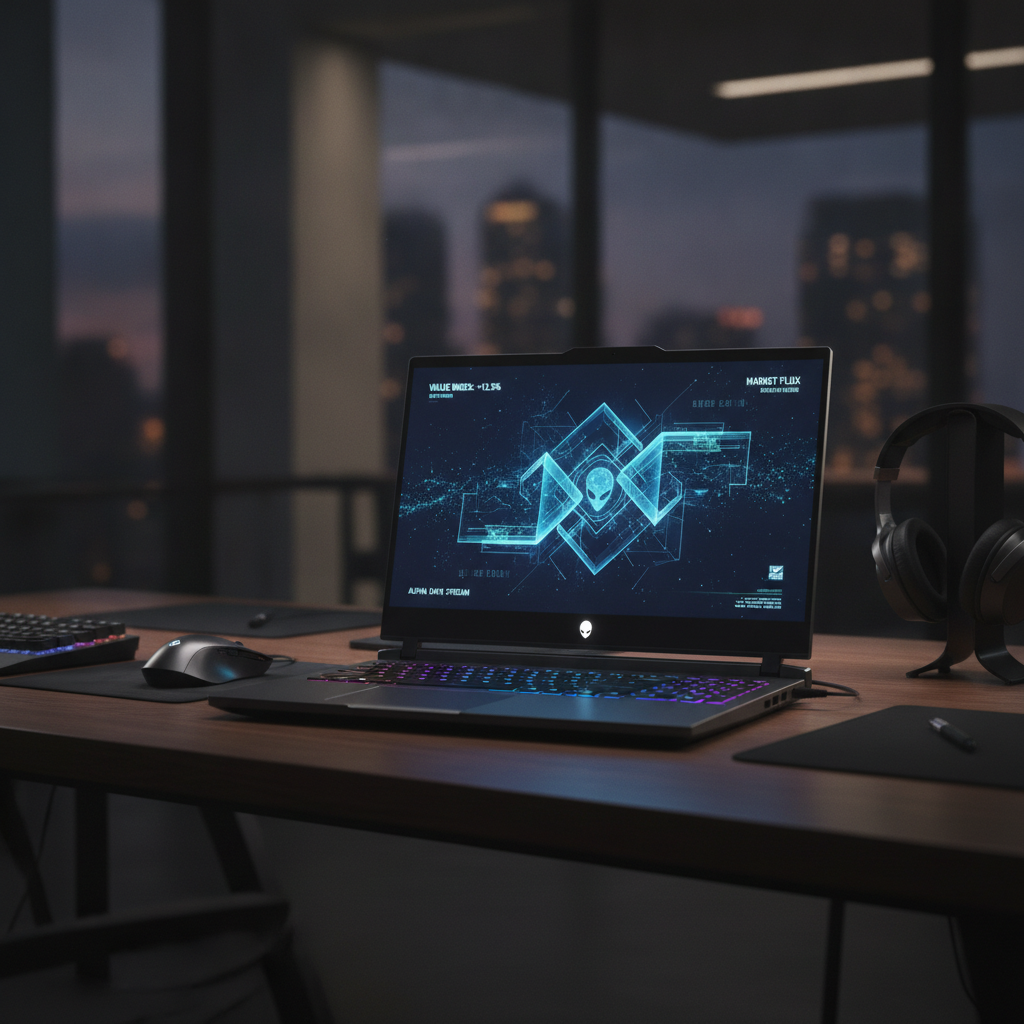
The Alienware 15 features a minimalist, rigid chassis, almost identical to the Aurora 16, with convenient side-mounted ports. Its all-plastic construction feels surprisingly premium, a testament to thoughtful design that even makes the display bezels acceptable.
The full-size keyboard is notably good, offering 1.3mm of key travel and a satisfyingly snappy feel, with two levels of backlighting but no RGB. The trackpad is functional, though small and left-aligned.
The 15.3-inch WUXGA (1920 x 1200) display is a significant drawback. It peaks at only 300 nits brightness and covers just 62.5% of the sRGB color gamut, resulting in drab, uninspiring visuals, despite its 165Hz refresh rate.
Viewing angles are poor, and the low brightness combined with a matte finish struggles in well-lit environments. This panel isn’t recommended for creative professionals without external monitors, and its down-firing speakers deliver tinny, shallow audio.
During testing, I experienced connectivity issues with docking stations and external monitors. A Thunderbolt 3 cable caused a Windows BSoD and briefly bricked the system, indicating potential initial instability that may require firmware updates.
The left USB-C 3.2 Gen 2 port is versatile (10Gbps data, DisplayPort 1.4, 100W power), but the right USB-C lacks these features. The bulky 180W charging brick is essential for the 70Wh battery, which offers about 5.5 hours for office tasks or 6.5 hours livestreaming.
Gaming unplugged yields under two hours with reduced performance. Connectivity is limited to Wi-Fi 6 and Bluetooth 5.2. Despite these issues, gaming performance is generally good, running demanding titles well with adjusted settings, and older games smoothly in performance mode.
Value and Alternatives in a Tough Market
The Alienware 15’s place in the market must be understood in the context of rising costs for entry-level gaming laptops. The “beefy hardware, but budget” mantra is increasingly difficult to achieve, affecting this segment significantly.
While offering solid build and respectable performance, the Alienware 15’s value is debatable given its features and premium branding. It targets entry-level but retains a price point that struggles to dominate the true budget segment.
Consider these compelling alternatives:
- The Lenovo LOQ 15 (AMD Ryzen 5 220, RTX 5050) starts at $1,749 with a better display.
- For slightly more, the MSI Katana 15 HX offers an RTX 5070, 32GB RAM, a QHD 165Hz display, and full four-zone RGB lighting.
- Dell’s own Alienware Aurora 16, starting at $1,649, frequently provides superior hardware options, including a better display.
Given Dell’s frequent sales, an Aurora model could offer better specs for the same price or less than the Alienware 15. Strategic timing and comparison shopping are crucial to maximize your investment in this competitive gaming laptop market.
Source: ZDNet – AI
