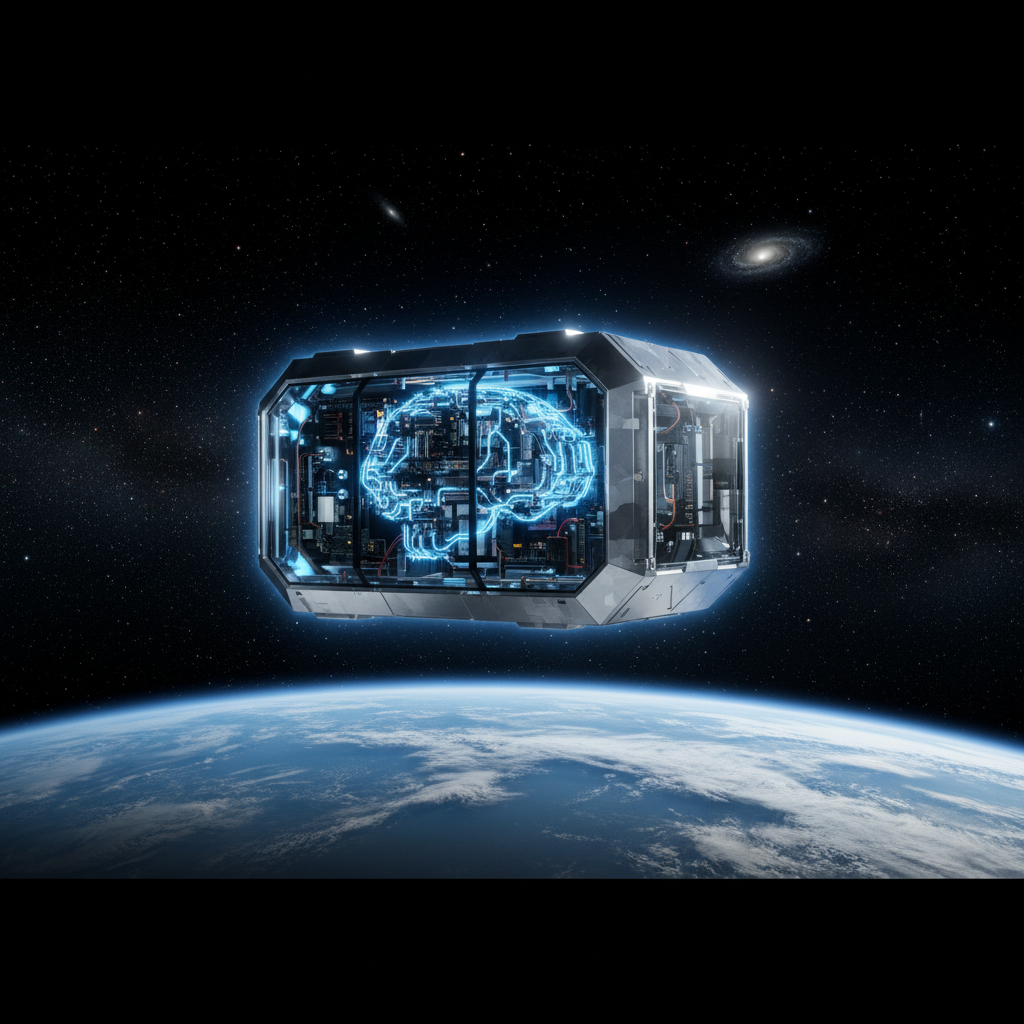
In a groundbreaking move that could redefine the future of cloud computing, tech giant Google is reportedly partnering with SpaceX to explore the ambitious concept of space-based AI data centers. This collaboration, emerging from strategic discussions, signals a bold leap into orbital infrastructure, aiming to leverage the unique advantages of an extraterrestrial environment for advanced artificial intelligence operations.
The synergy between Google’s unparalleled AI expertise and cloud services, combined with SpaceX’s formidable capabilities in space launch and satellite networks like Starlink, promises to unlock new frontiers. This isn’t just about putting servers in space; it’s about creating a fundamentally new paradigm for processing vast amounts of data with unprecedented efficiency and reach, potentially mitigating many challenges faced by terrestrial data centers.
Why Move Data Centers to Space? The Orbital Advantage
The notion of hosting data centers in orbit might sound like science fiction, but it addresses several pressing issues faced by ground-based infrastructure. One primary driver is the potential for significantly reduced latency, especially for users in remote or underserved regions. By minimizing the physical distance data travels, particularly when linked with a global satellite constellation, processing speeds for critical AI applications could see substantial improvements.
Environmental benefits also play a crucial role. Terrestrial data centers consume immense amounts of power and water for cooling, contributing to significant carbon footprints. In space, the vacuum and extreme cold offer natural thermal management solutions, potentially reducing energy consumption and environmental impact on Earth. Furthermore, the inherent isolation of space-based facilities could offer enhanced security against physical threats and natural disasters, providing a robust and resilient computing platform.
This move could also alleviate the growing pressure on land and energy resources in densely populated areas, where building and expanding data centers is becoming increasingly challenging. By offloading some of this infrastructure to orbit, Google and SpaceX could create a scalable, globally accessible network that bypasses traditional geographical constraints. Imagine AI computations running closer to where the data is generated, whether it’s on Earth or eventually, on other planets.
Google’s Vision: AI at the Edge of Space
For Google, the partnership with SpaceX aligns perfectly with its long-term vision for artificial intelligence and cloud services. AI models require extraordinary computational power, and placing these capabilities in space could provide a dedicated, high-performance environment for the most demanding workloads. This could accelerate breakthroughs in fields like climate modeling, scientific research, global logistics, and even deep space exploration, where real-time AI processing could be critical.
The integration with Google Cloud’s existing infrastructure would allow enterprises and developers to tap into these orbital resources seamlessly. Imagine a future where your cloud applications can intelligently decide whether to process data terrestrially or send it to a space-based node for optimal performance and resource utilization. This distributed approach promises a more resilient and versatile computing ecosystem for complex AI tasks.
- Reduced Latency: Faster data processing for global users, especially in remote areas.
- Environmental Sustainability: Leveraging space’s vacuum for cooling, reducing terrestrial energy and water consumption.
- Enhanced Security & Resilience: Protection against physical threats and natural disasters on Earth.
- Global Accessibility: Bypassing geographical limitations for universal AI access.
- Scalable Infrastructure: A new frontier for expanding computational power without terrestrial constraints.
SpaceX’s Role: Building the Orbital Backbone
SpaceX’s involvement is indispensable, bringing its proven expertise in rocket technology, satellite deployment, and orbital operations to the table. The company’s Starlink constellation, already providing global internet access, could serve as the crucial communication backbone for these space-based data centers, ensuring seamless connectivity between Earth and orbit.
Their experience in designing, launching, and managing thousands of satellites provides the logistical foundation for deploying complex data center modules into space. From designing radiation-hardened hardware to orchestrating precision orbital maneuvers, SpaceX will be instrumental in making this ambitious project a reality. This collaboration signifies a significant step beyond simply providing internet from space; it’s about building entirely new orbital infrastructure for the digital age.
Furthermore, SpaceX’s ongoing developments in reusable rocket technology will be vital for making such deployments economically viable and scalable. Frequent, cost-effective access to space is a prerequisite for building and maintaining a network of orbital data centers, and SpaceX is currently at the forefront of this capability.
Challenges and the Road Ahead
While the vision is compelling, the journey to space-based AI data centers is fraught with significant challenges. Overcoming the harsh environment of space – including radiation, microgravity, and extreme temperatures – requires specialized hardware and robust engineering. Developing reliable cooling systems, ensuring power efficiency, and designing fault-tolerant architectures are paramount for long-term operation.
Regulatory frameworks, international space law, and orbital debris management also present complex hurdles that will require careful navigation. Despite these challenges, the potential rewards—a truly global, highly resilient, and environmentally conscious AI computing infrastructure—are immense. This partnership between Google and SpaceX marks a thrilling new chapter in both space exploration and technological innovation, promising to bring the future of AI closer than ever to the stars.
Source: Google News – AI Search
