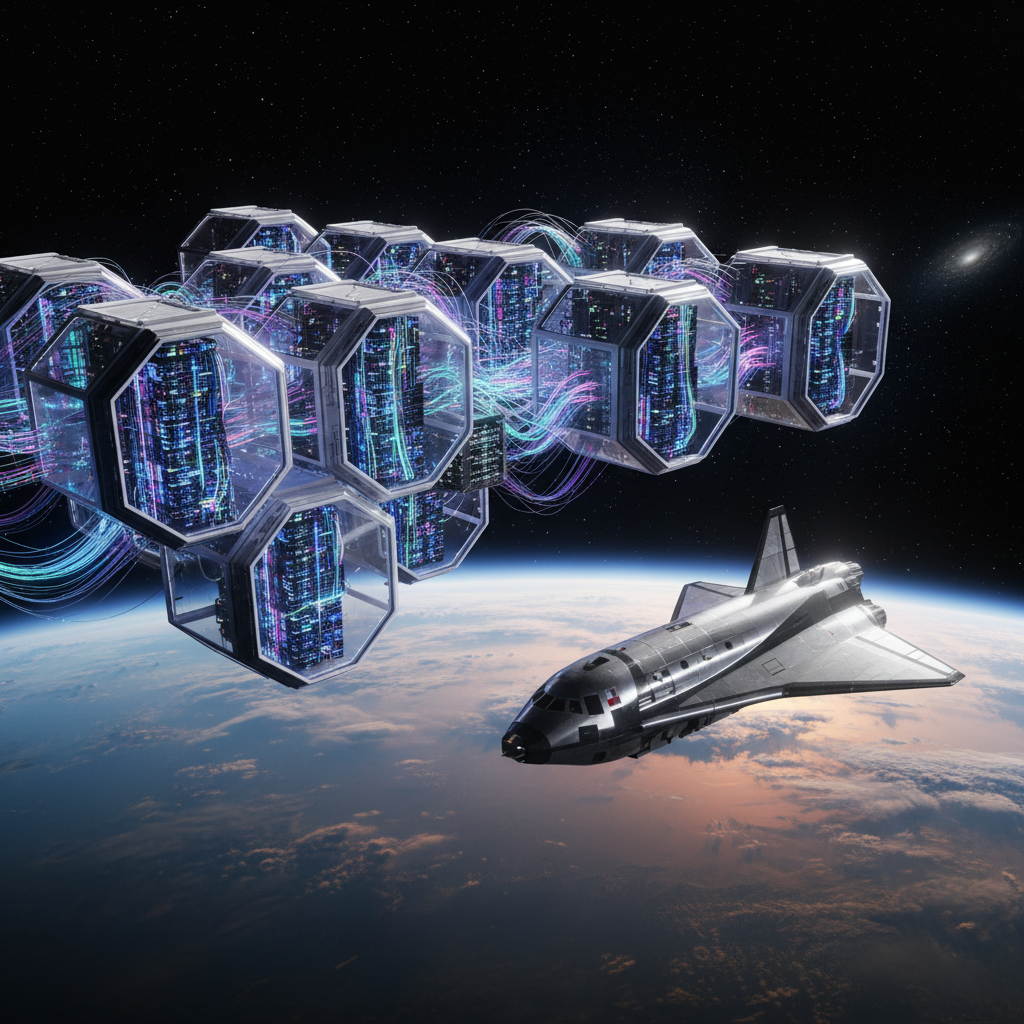
Imagine a future where the servers powering our digital lives aren’t just in remote warehouses on Earth, but orbiting high above us. This isn’t science fiction anymore. Tech giants are increasingly looking skyward, and recent buzz suggests that Google is exploring the audacious concept of orbital AI data centers, potentially in collaboration with SpaceX. This venture could revolutionize how we process data, particularly for the demanding world of artificial intelligence.
The idea of placing data centers in space might sound extreme, but it addresses some very real challenges facing modern computing. As AI models grow ever more complex, they demand unprecedented levels of processing power and, crucially, minimal latency. Placing these computational hubs in orbit could unlock new efficiencies and capabilities currently out of reach on terra firma.
Why Space? The Allure of Orbital AI Computing
So, why take our critical computing infrastructure to the final frontier? The motivations are compelling, especially when considering the rapid evolution of artificial intelligence and the global digital landscape. One primary driver is the pursuit of incredibly low latency, which is essential for real-time AI applications and processing vast amounts of satellite-generated data.
With countless satellites constantly beaming down images, weather patterns, and communication signals, processing this data on Earth introduces delays. An orbital data center could process this information directly at the source, offering near-instantaneous insights and actions. Think of it as the ultimate form of edge computing, bringing the processing power closer to where the data is generated, many times closer than any terrestrial data center could manage.
- Reduced Latency: Direct processing of satellite data eliminates transmission delays to Earth-based facilities.
- Optimized for AI: Ideal for real-time AI analytics, machine learning, and complex simulations.
- Global Coverage: Offers unparalleled global reach, especially in regions with limited ground infrastructure.
- Potential for Green Computing: The cold vacuum of space could offer natural cooling solutions, reducing energy consumption for thermal management.
- Enhanced Security: Physical isolation in space could provide a unique layer of security against terrestrial threats and natural disasters.
Furthermore, the unique environment of space could offer advantages for energy efficiency. The extreme cold of space provides a natural, passive cooling solution, significantly reducing the energy typically consumed by massive cooling systems in ground-based data centers. While power generation in orbit presents its own challenges, the cooling aspect alone is a strong draw for a future where sustainable computing is paramount.
SpaceX’s Crucial Role in This Orbital Ambition
The mention of SpaceX in conjunction with Google’s orbital ambitions is hardly surprising. SpaceX has completely transformed the accessibility of space through its reusable rocket technology, dramatically lowering launch costs. This makes the deployment of large-scale orbital infrastructure, like data centers, far more economically viable than ever before.
Beyond launch capabilities, SpaceX’s Starlink constellation offers another critical piece of the puzzle: a massive, low-latency satellite internet network. This network could serve as the vital communication backbone, connecting orbital data centers to each other, to other satellites, and ultimately, back to Earth. Such a robust, space-based communication grid is indispensable for any distributed orbital computing system.
SpaceX’s experience in designing, launching, and operating thousands of satellites provides invaluable expertise. From power management in orbit to robust satellite design and autonomous operations, their capabilities are precisely what a venture of this magnitude would require. Their vision for an interconnected future, both on Earth and in space, aligns perfectly with the concept of a decentralized, orbital computing network.
Navigating the Challenges of Celestial Computing
While the potential benefits are immense, the journey to orbital AI data centers is fraught with significant technical and logistical hurdles. Designing hardware capable of withstanding the harsh radiation environment of space, managing power generation and distribution, and ensuring autonomous operation for extended periods without human intervention are just a few of the complexities.
Maintenance in space is another monumental challenge. Unlike a server farm on Earth where a technician can quickly swap out a faulty component, repairs in orbit would require highly specialized robotic systems or even crewed missions. The cost of launching and maintaining such infrastructure would be staggering, requiring considerable investment and long-term commitment.
Regulatory frameworks for space-based infrastructure are still evolving, and the sheer volume of space debris poses a growing threat. Mitigating these risks while ensuring sustainable and responsible use of Earth’s orbits will be critical for the success and long-term viability of orbital data centers. Despite these challenges, the collaboration between tech and space leaders indicates a serious commitment to overcoming them.
The Dawn of a New Computing Era
The exploration of orbital AI data centers by Google and SpaceX signals a bold step into the future of computing. It pushes the boundaries of what’s possible, envisioning a world where our most demanding computational needs are met not just on Earth, but across the vastness of space. This endeavor could usher in a new era of ultra-low latency AI, unlocking breakthroughs in everything from climate modeling and scientific research to global communication and autonomous systems.
As technology continues its relentless march forward, the boundaries between Earth and space blur, and our digital infrastructure reaches new heights. The prospect of celestial computing is no longer confined to the realm of science fiction but is rapidly becoming a tangible goal, promising to reshape our technological landscape in profound and exciting ways. The future of data processing, it seems, is truly looking up.
Source: Google News – AI Search
