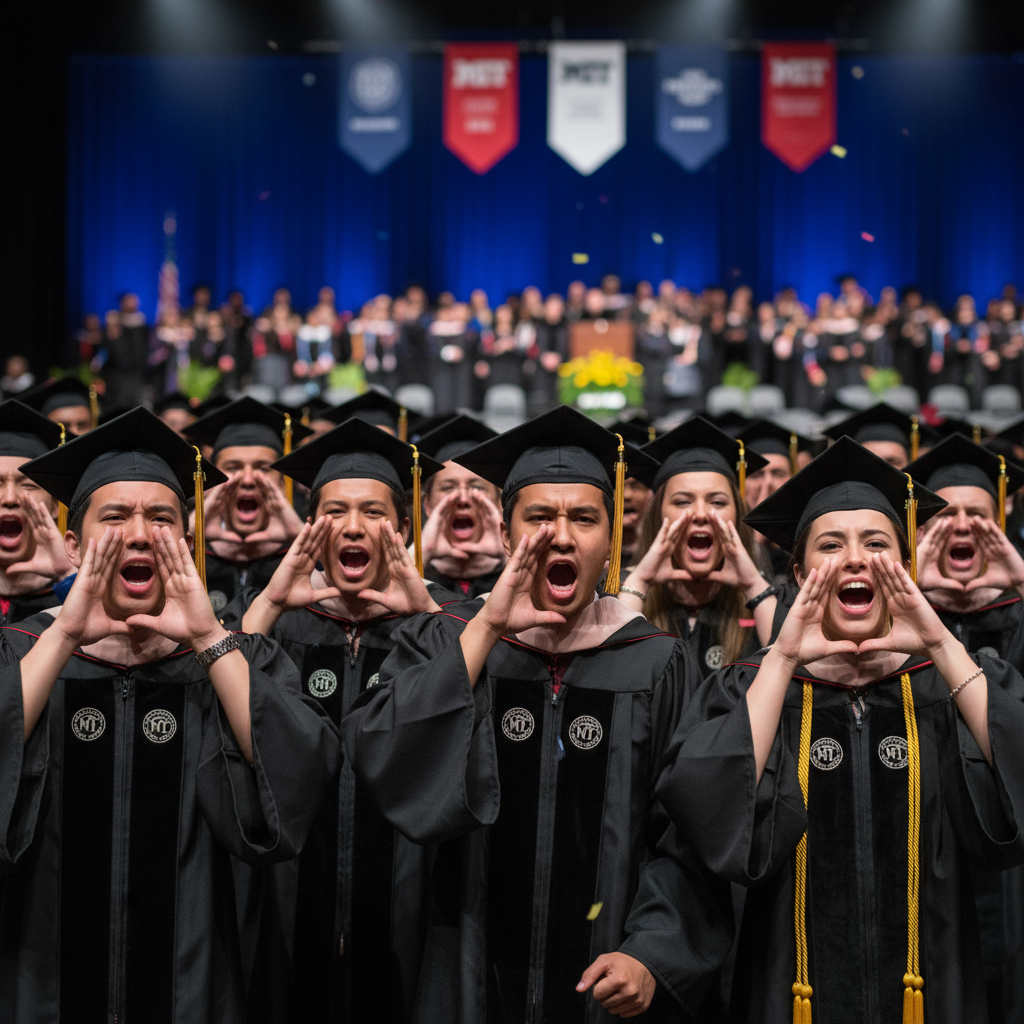
A surprising moment recently unfolded at the prestigious Massachusetts Institute of Technology (MIT) during a commencement speech that quickly captured the attention of the global tech community. As former Google CEO Eric Schmidt took to the podium, delivering insights to a new generation of graduates, one particular topic stirred an unexpected reaction. When Schmidt mentioned the burgeoning field of Artificial Intelligence, a wave of boos erupted from the graduating class, signaling a profound shift in sentiment towards this transformative technology.
This incident wasn’t just a fleeting moment of dissent; it highlighted a growing tension between the optimistic vision often championed by tech leaders and the anxieties increasingly felt by those entering a world shaped by AI. The contrast between Schmidt, a titan of innovation and a key architect of Google’s dominance, and the skeptical graduates offered a powerful snapshot of contemporary discussions surrounding AI’s future. It demonstrated that even at institutions at the forefront of technological advancement, critical questions about AI’s societal impact are very much alive.
The Unexpected Reaction at MIT
The scene itself was striking. Eric Schmidt, a figure synonymous with technological progress and a long-time advocate for AI, paused as the boos echoed through the hall. His expression, reportedly one of surprise, suggested he hadn’t anticipated such a strong, negative reaction to a topic he usually promotes with enthusiasm. This moment became a stark reminder that the narrative around AI is far from universally positive, especially among those who will inherit its consequences.
For decades, Schmidt has been a vocal proponent of AI, viewing it as a powerful tool for solving complex problems and driving human advancement. His career at Google, overseeing its evolution into a global tech giant, was marked by significant investments in AI research and development. Therefore, to be met with such a public display of disapproval from the very individuals poised to contribute to the tech landscape was undoubtedly a humbling experience, underscoring a deep divide in perspectives.
Understanding the Graduates’ Concerns About AI
What exactly triggered such a visceral response from MIT’s graduating class? The booing wasn’t a rejection of technology itself, but rather a reflection of mounting apprehensions surrounding AI’s rapid development and its potential societal ramifications. Many students, even those specializing in technical fields, are increasingly vocal about the ethical dilemmas, job displacement fears, and broader existential questions posed by advanced AI.
The fear of job automation is a significant concern, with numerous studies predicting that AI could displace millions of workers across various industries. Graduates entering a competitive job market are naturally apprehensive about a future where their skills might be rendered obsolete by algorithms. Beyond employment, there are pressing ethical considerations regarding algorithmic bias, data privacy, and the potential for AI to be misused, leading to a desire for greater accountability and thoughtful implementation.
Moreover, the academic community, particularly at institutions like MIT, is at the forefront of these critical discussions. Students are not just learning to build AI; they are also grappling with the philosophical and sociological implications of their creations. This leads to a more nuanced and often critical perspective on AI than what might be promoted by industry leaders focused primarily on innovation and economic growth.
Bridging the Gap: Schmidt’s Perspective and the Future of AI
Following the initial boos, Schmidt, ever the seasoned public speaker, attempted to pivot, acknowledging the concerns while reiterating his belief in AI’s potential for good. He emphasized that humanity has a crucial role to play in guiding AI’s development responsibly, highlighting its capacity to assist in groundbreaking scientific discoveries and tackle global challenges like climate change and disease. His message underscored the idea that AI is a tool, and its impact ultimately depends on how we choose to wield it.
This incident at MIT serves as a powerful microcosm of a much larger global conversation about Artificial Intelligence. It highlights the urgent need for a balanced approach that embraces innovation while simultaneously addressing ethical concerns, ensuring job security, and promoting equitable access. Engaging with these complex issues is paramount for creating an AI-powered future that truly benefits all of humanity, rather than deepening existing divides.
Ultimately, the boos heard at MIT weren’t just an act of defiance; they were a cry for a more human-centric approach to technological progress. They challenged the prevailing narrative of unbridled optimism and called for a more thoughtful, inclusive dialogue about the kind of future we are collectively building. The insights from graduating students, who will soon be shaping the very technologies they critique, are invaluable for guiding the responsible development of AI and ensuring its alignment with human values.
Source: Google News – AI Search
